
Explore the management of cyber risks in the construction industry: their impacts, specificities and mitigation strategies, to ensure the security and sustainability of your projects.
The digital age has amplified cyber risks, affecting various sectors, including construction. This article explores cyber risks, defining their nature and highlighting their specific impact in construction. We will dissect the vulnerabilities, the consequences of negligence, and present mitigation strategies. By better understanding these risks, construction industry players can strengthen their resilience in the face of digital threats, thereby ensuring the security, productivity and sustainability of their projects.
What do we mean by "cyber risks"?
"Cyber risks" refer to any threat associated with the use of digital technologies, encompassing "cyber fraud", "cyber attacks" and IT risks. These threats range from data breaches (The RGPD or General Data Protection Regulation) to malicious acts aimed at damaging or illicitly accessing information systems. Viruses, ransomware and social engineering techniques such as phishing, as well as more sophisticated attacks such as data exfiltration, are examples of these dangers.In the construction industry, cyber risk takes on a particular dimension. The increasing digitization of construction processes exposes sensitive information, project plans and other critical data to security risks. Specific vulnerabilities can result from the use of insecure technologies or inadequate data management practices. Risk analysis of a construction project therefore becomes essential to anticipate and prepare responses to possible incidents, thus guaranteeing continuity and security of operations. Case studies highlight the potential consequences of an attack, reinforcing the need for awareness and adequate preparation in the face of cyber risks in the construction industry.
What are the cyber risks specific to the construction industry?
In the construction sector, cyber risks manifest themselves in several ways, each with a distinct impact:
RGPD: Failure to comply with regulations can expose personal data, leading to severe penalties.
Tax fraud: The risks associated with fraudulent manipulation of tax data can affect reputation and finances.
Computer viruses: They disrupt software essential to project management, causing delays and additional costs.
Malicious acts: Acts specifically targeting industry to steal data or sabotage projects.
Intrusion into information systems: Unauthorized access can compromise the confidentiality of construction plans and contracts.
Ransomware: Blocking access to critical data until a ransom is paid, causing major delays.
Website blocking: Interruptions to communication and vital online services.
Telephone fraud: Scams that affect communications and can result in financial losses.
Data loss: Accidental or malicious loss of project-critical data.
Compromised funds transfers: Diversion of payments, affecting the company's cash flow.
Phishing, Hopping, Scraping, Aggregation, Exfiltration: These are various techniques for stealing information, affecting data security and integrity.
What are the consequences of unmanaged cyber risks?
Ignoring cyber risks can have devastating consequences. Business is lost immediately when operations are interrupted or the company's reputation is tarnished. Customer and partner confidence is eroded, which can lead to a significant drop in business opportunities. Projects can suffer substantial delays, leading to additional costs and missed deadlines.
On the legal front, companies are likely to face sanctions and prosecution if they fail to comply with cybersecurity regulations, including the RGPD. Finally, direct financial losses due to cyberattacks can be colossal, not to mention the indirect costs associated with restoring systems and repairing brand image. Adopting a proactive approach to managing and mitigating IT risks in business has never been more important.
Who are the key players in cybersecurity in France?
The main cybersecurity players in France include both public and private entities. ANSSI is the best-known public body, ensuring the IT security of government agencies and operators of vital importance. Intelligence services such as the DGSE (Direction Générale de la Sécurité Extérieure), and the army via COMCYBER, also play an important role.
On the private front, companies such asOrange Cyberdefense, Thales and Airbus CyberSecurity are major players. Together, these entities form a robust ecosystem to counter cyber threats in France.

What is the strategic framework for cyber risk management?
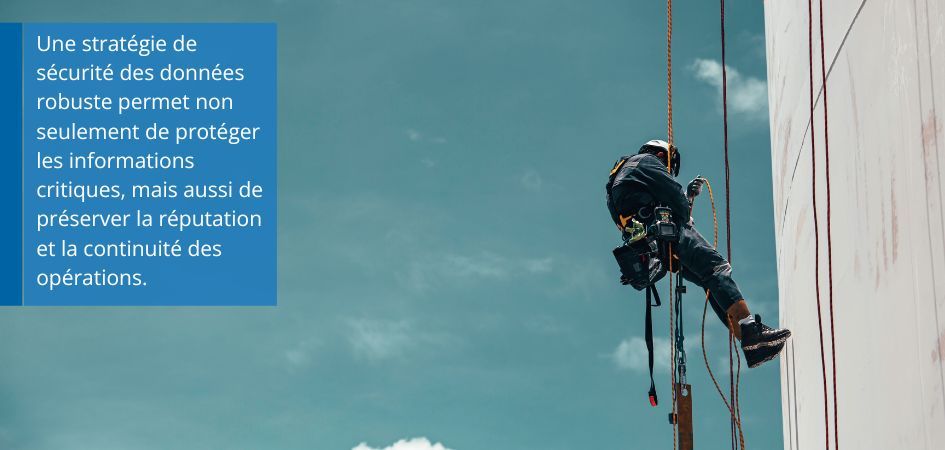
In the construction sector, 75% of companies suffered a cyber attack in 2023. It is therefore crucial to have a clear strategic framework for cyber risk management. A robust data security strategy not only protects critical information, but also preserves reputation and business continuity. It must include regular risk assessment, identification of the most sensitive assets, and definition of levels of exposure to different threats.
To establish an effective strategy, companies must follow several best practices:
Risk assessment: Understanding the nature and extent of potential threats. This includes identifying vulnerable assets and analyzing the potential impact of different types of attack.
Use of appropriate tools: Implement advanced technological solutions such as firewalls, antivirus and intrusion detection systems, specifically adapted to the needs of construction risk.
Training and awareness: Train staff in the basics of cybersecurity and the procedures to follow in the event of an incident.
Maintain vigilance: constantly monitor systems for suspicious activity and react quickly in the event of an attack.
With these measures, construction companies can considerably reduce their vulnerability to cyber-attacks, and ensure more effective management of IT risks in the workplace.

What are the concrete measures for the construction industry?
For effective protection in the construction industry, consider the following measures:
Multi-factor authentication: Strengthen identity verification before granting access to critical systems.
Secure portal access: Protect digital entry points with strong passwords and rigorous access policies.
Regular backups: Ensure frequent, secure backups of essential data.
Ongoing training: Regularly educate employees about security practices and current threats.
Regular cloud environment updates: Keep cloud infrastructures up to date to combat vulnerabilities.
Verify ransomware defenses: continuously test and improve defense mechanisms against ransomware.
Choosing the right Cloud providers: Opt for reputable suppliers offering secure solutions, such as Trimble.
Viewpoint For Projects is a solution renowned for its robust security in construction project management. It provides a centralized platform where data is securely stored and managed, offering protection against cyber-attacks. With regular updates, continuous monitoring and customization options to meet the specific needs of each project, Viewpoint For Projects is the preferred choice for securing operations in the construction sector.
Understanding and mitigating cyber risks is important for security and continuity in the construction industry. Taking a proactive approach, implementing robust security measures and fostering continuous learning are essential to guard against evolving threats. To strengthen your cybersecurity, consider specialized solutions like Viewpoint For Projects, and get ahead of the game for optimal protection today.


