

Every construction professional knows the feeling. The Request for Information (RFI) is the essential tool that keeps projects moving—the mechanism for clarifying design intent, resolving unforeseen site conflicts, and getting the critical answers you need to proceed. Yet, the RFI process can also be one of the most frustrating, often becoming a dreaded bottleneck that slows progress to a crawl.
If you've ever found yourself digging through an endless email chain, trying to match a cryptic question to a faded drawing, you understand the pain. Delays, miscommunication, and lost information are the hidden costs of a poorly managed RFI system.
But it doesn't have to be this way. The central thesis for modern project management is simple: Modern technology can transform the RFI process from a project bottleneck into a streamlined, high-efficiency workflow.
The traditional RFI process and its flaws
Before the rise of specialized project management software, teams relied on a chaotic mix of tools that were never designed with the complexity of construction in mind.
The problem with paper and spreadsheets
The old way of doing things was an administrative nightmare. It relied on email chains, shared spreadsheets, and physical paper trails—each step increasing the chances of error.
Common frustrations
Slow and cumbersome: drafting an RFI, sending it to the right person, waiting for a response, and distributing the answers can take days if not weeks.
Lack of context: an RFI often gets separated from the drawings it refers to. The office team receiving the request lacks the field team's visual context, leading to frustrating back-and-forth conversations and confusion.
Lost in translation: miscommunication between the field and the office—a simple question asked verbally but never formally logged—can lead to incorrect assumptions that result in costly mistakes.
Difficulty in tracking: how do you know who currently has ownership of an RFI, when it was sent, and when it's due? Without a centralized system, tracking becomes a manual, error-prone chore.
Costly surprises: when RFIs and their resulting Potential Change Orders (PCOs) are manually managed, data separation occurs. This prevents timely cost recognition and allows a silent margin fade to build, compromising profitability.
Cost & schedule impact
These process flaws are not just annoyances; they are expensive risks. Each delay in an RFI response pushes back subsequent tasks, leading to inevitable project delays. This lag often forces teams to accelerate other work or, worse, leads to costly rework because a question was answered incorrectly or too late.
The modern, tech-enabled RFI process
It's time to move beyond the clipboard and the endless reply-all email thread. The solution lies in a centralized project management platform built for construction teams.
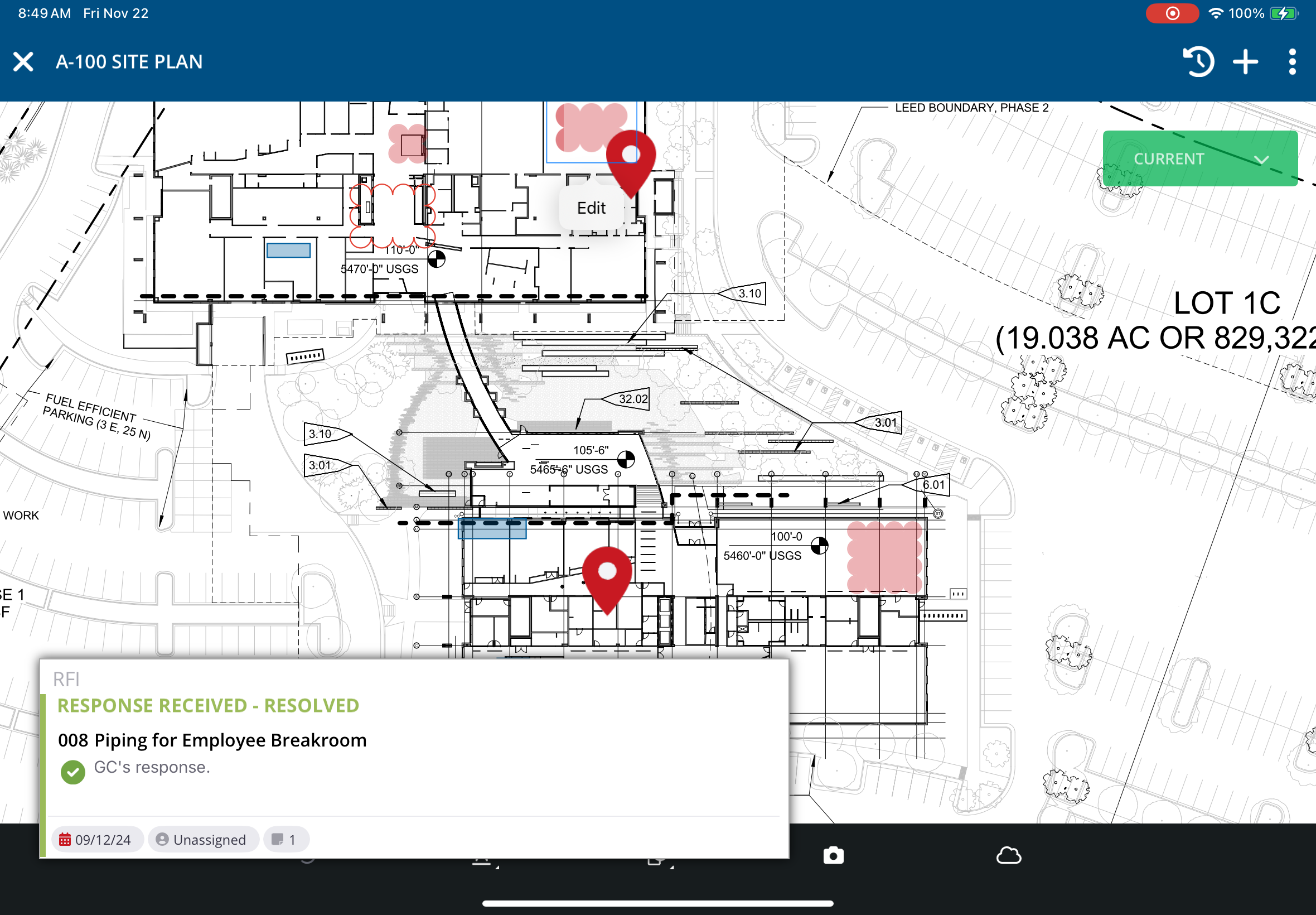
Tablet drawing viewer of ProjectSight.
Here's how Trimble ProjectSight specifically solves the traditional RFI pain points:
Instant RFI creation
Field teams using the ProjectSight mobile app can create RFIs directly from the job site. No more trying to remember the details until you get back to the truck. You can document the issue on the spot using your handheld device, adding photos and notes instantly.
Drawing integration
ProjectSight allows you to link the RFI directly to the specific point on the drawing or model where the conflict exists. This provides instant visual context to the architect, engineer, or project manager, drastically reducing confusion and cutting down on clarification time.
Streamlined communication
Forget manual distribution. ProjectSight provides automated notifications and a structured communication flow that ensures the right stakeholders—from the subcontractor to the project engineer—are instantly informed when an RFI is created, responded to, or updated.
Centralized tracking and auditing
The platform allows you to see the status of every RFI at a glance. You can filter by due date, responsible party, and status (e.g., Open, In Review, Closed). This creates a permanent, auditable record that is invaluable for risk mitigation and historical analysis.
Faster decisions
By removing manual friction and providing clear context, ProjectSight helps your team drastically shorten the RFI lifecycle. This leads to quicker responses and ensures the project stays on schedule and budget.
Proactive cost management
When an RFI suggests a scope change, ProjectSight allows you to immediately log the potential financial impact using its Potential Change Order (PCO) functionality.
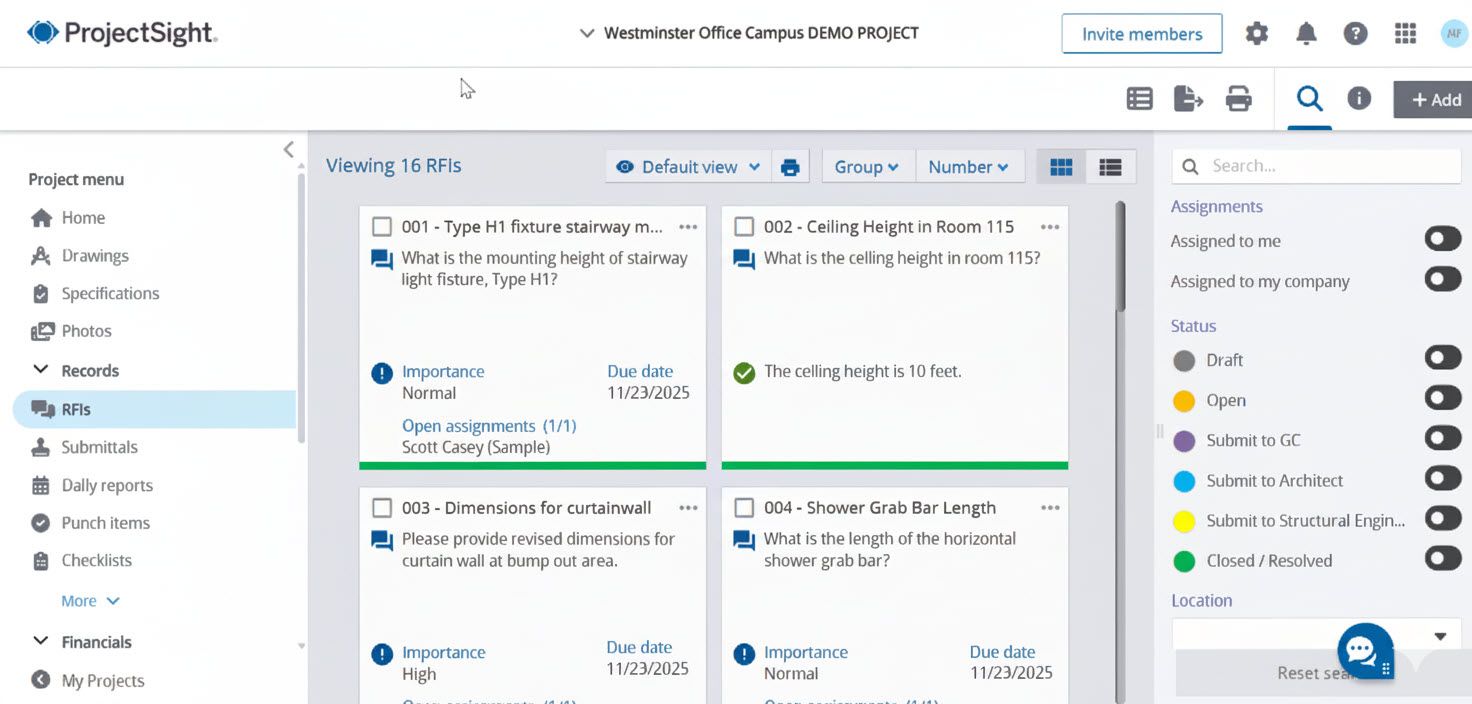
An RFI in ProjectSight.
Looking ahead
A modern RFI process is a direct investment in the success of your project. By adopting a platform like Trimble ProjectSight, your team benefits from:
Improved efficiency: spend less time on administrative work and more time doing what you do best — building.
Reduced risk: ensure no critical information is lost and that every decision is logged and auditable.
Better collaboration: connect the field and the office with a single, shared source of truth.
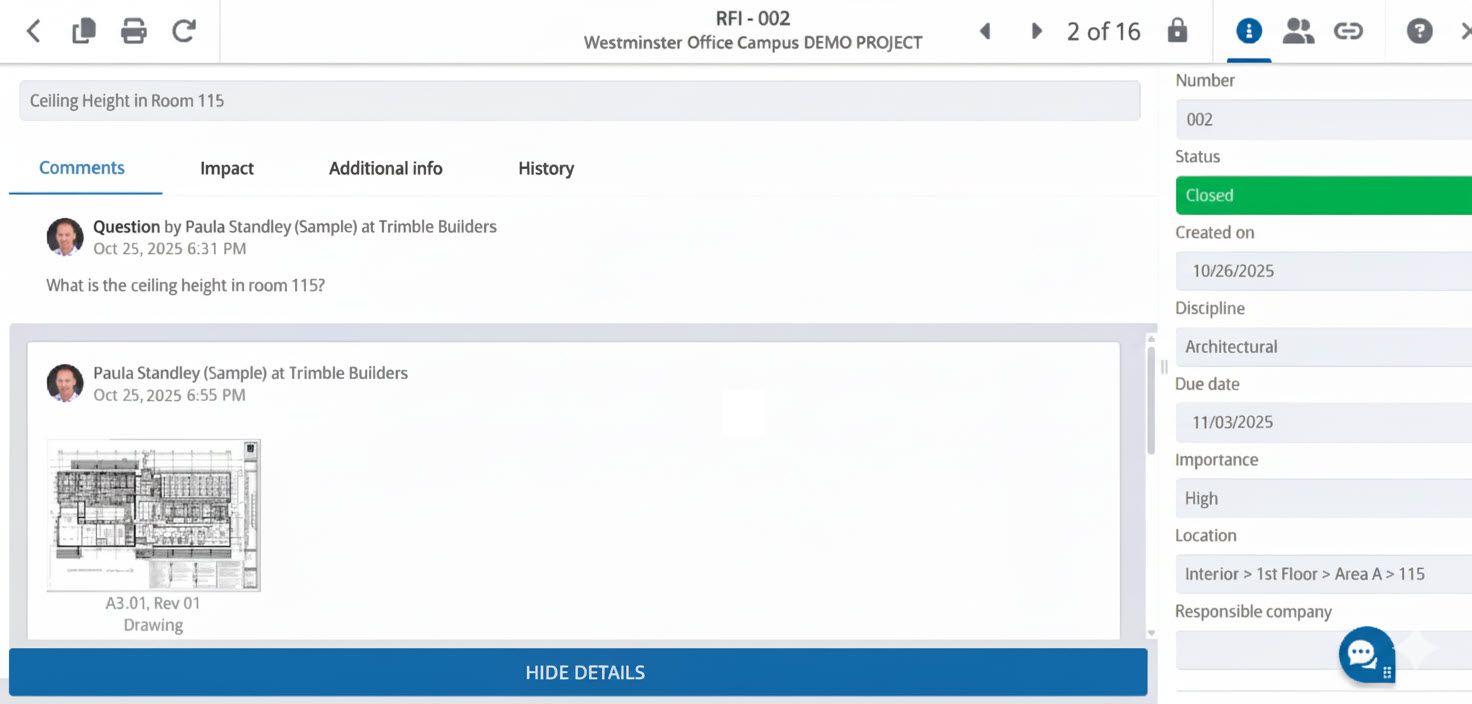
Comments for an RFI in ProjectSight.
Technology is fundamentally changing construction workflows for the better, transforming the RFI from a pain point into a smooth, reliable part of your project management workflow. Stop managing RFIs, and start mastering them.
Ready to streamline your RFI process today? Get started for free with ProjectSight Free. Learn more about advanced field management with ProjectSight Go.


