In times of climate change, extreme weather events are becoming more frequent - and often also the associated rainfall, which presents architects and engineers with new challenges when planning buildings. It is therefore important to calculate the drainage correctly.
The results are a critical factor in the planning and construction of buildings, roads or other public traffic areas. An incorrect result can lead to significant consequences such as flooding, erosion and damage to structures.
But which parameters are essential for a correct calculation? And what different types of drainage concepts are there? In this article, we break down all the relevant factors for a correct calculation.
The most important facts in brief
Correct calculation of the drainage is essential for safe building operation
The relevant guidelines are set out in DIN 1986-100
Modern software solutions increase efficiency and accuracy in the design of complex systems
How does a drainage calculation work?
Drainage calculation is a complex process in which various factors must be taken into account to enable an accurate prediction of drainage behavior.
The first step in the calculation is to analyze the terrain profile and determine the slope. The slope of the terrain is an essential part of the design, as it determines how quickly water can drain away.
This is followed by an analysis of the precipitation pattern in the region. This includes factors such as the frequency and intensity of rainfall as well as the type of precipitation. This data is integrated into a corresponding formula to calculate the maximum amount of runoff that can be expected.
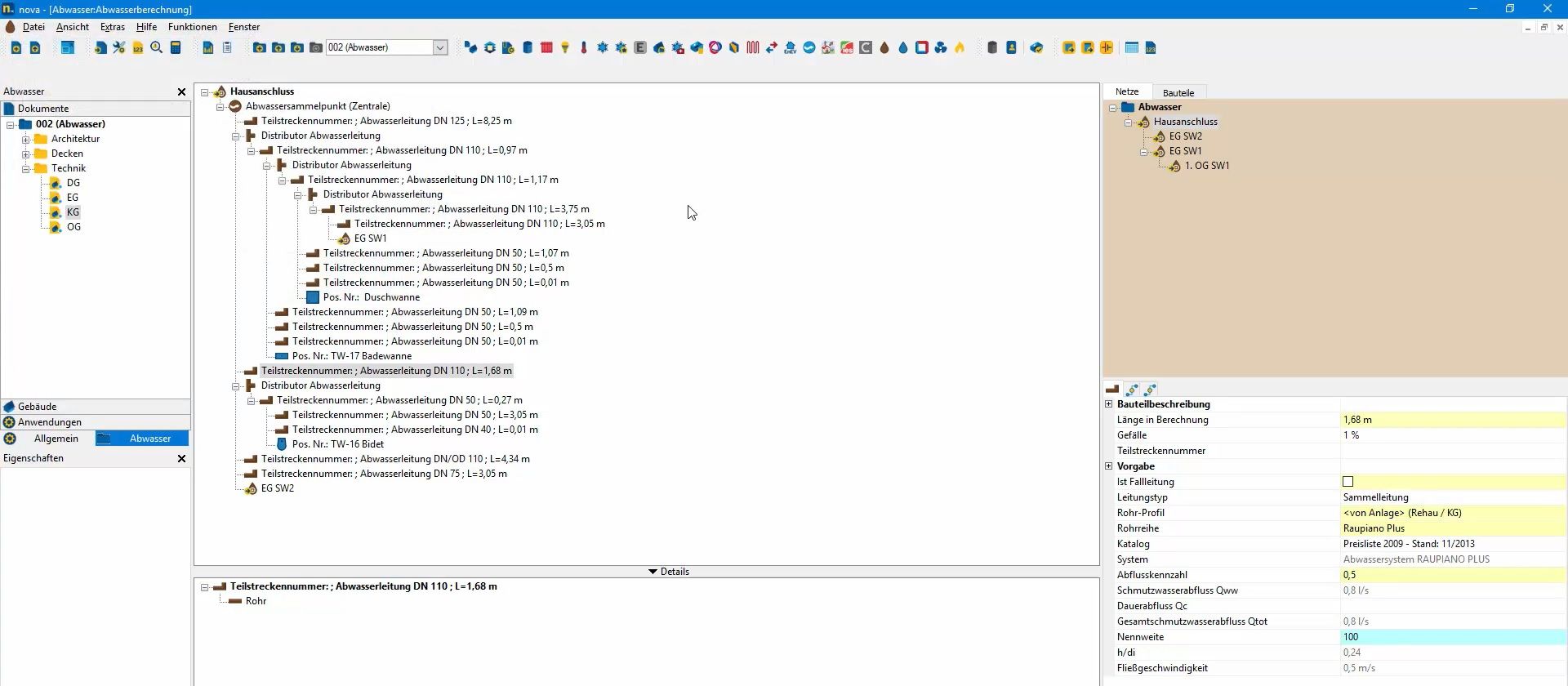
Another important factor in the drainage calculation is the type of surrounding soil. Different soil types absorb water differently. Sandy soil, for example, is significantly more water-permeable than a loamy subsoil.
Once all these factors have been analyzed and evaluated, a dewatering solution is developed that is tailored to the specific needs of the project.
This can include measures such as the installation of appropriate pipes, the use of ditches around the house and property or the creation of drainage ponds. A careful drainage calculation is essential to ensure that the infrastructure remains functional in the long term and that the risk of flooding and other damage is minimized.
What requirements must be taken into account for an effective drainage system?
Both DIN 1986-100 and the relevant fire and noise protection regulations are decisive for the design of corresponding systems.
To ensure that wastewater pipes that are laid horizontally function reliably and do not fill with water, they must be laid with a sufficient gradient. The DIN 1986-100 guideline specifies the minimum gradient for horizontal pipes in domestic drainage systems.
In Germany, it is also a legal requirement that every wastewater downpipe must be routed as a ventilation pipe up to the roof. Ventilation valves may only be used in exceptional cases.
Safe drainage of waste water
Dirty water creates a negative pressure as it drains, which must be balanced out by air flowing in. To prevent the odor traps from being sucked empty, the required air volume flow must be 10 to 35 times higher than the water volume flow.
The putrefactive gases produced in public sewers and building and property drainage systems must be safely discharged outside. Ventilation is carried out via the ventilation pipes of the building drainage systems, which must also be routed above the roof.
What different types of drainage are there?
When planning and designing construction projects, a correct drainage calculation is essential for trouble-free use of the respective buildings. Depending on the requirements and specifications of the respective project, different concepts with individually adaptable parameters are available. We have compiled a brief overview below.
The discreet alternative - internal drainage
This is a modern and discreet alternative to conventional, above-ground systems. In contrast to these, internal drainage systems are installed underneath the building envelope and are therefore invisible. This not only gives the building a tidy and clean look, but also protects it from the effects of the weather, which could damage the installed structures.
Thanks to the use of high-quality materials and modern production techniques, internal systems can be manufactured in various sizes and designs and, with the appropriate software support, can be produced to fit the specific project perfectly.
Another advantage of internal systems is that they are easy to clean. Access from the inside means that blockages and deposits can usually be removed more easily than with above-ground drainage systems.
The classic - external drainage
The external variant is one of the oldest and best-known types of such structures. Drains and pipes are laid above ground and direct rainwater and wastewater away from the building.
Although this system is frequently used and proven, it also has some disadvantages. On the one hand, the appearance is impaired as the pipes are visible. Secondly, the pipes and drains are more dependent on the weather and can be damaged by cold, heat and moisture.
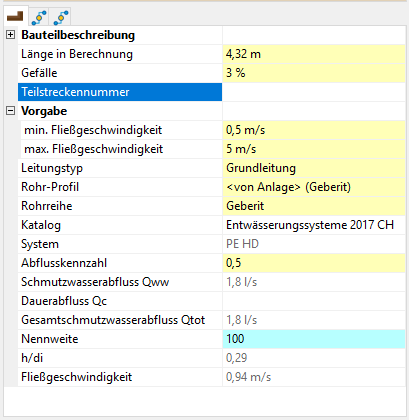
For some houses and properties, an external installation may be the most sensible option. For older buildings in particular, it can be difficult to retrofit an internal system. It can also be more effective for buildings with large roof areas, as this generally allows larger volumes of water to be drained away.
Emergency drainage
The frequent occurrence of heavy rainfall in times of climate change causes increased static loads, especially for roof structures. Accordingly, emergency drainage systems are indispensable and in some cases mandatory. The most important requirements are also defined in DIN 1986-100.
For example, every roof surface must now have a separate emergency drainage system that can withstand a potential century of rain - unless the surface is used for rainwater retention as planned and structural proof can be provided for this.
Planning requires a careful analysis of the potential risks. Various factors such as weather conditions, topography and existing infrastructure must be taken into account. A solid emergency drainage system can save lives and prevent serious damage in an acute emergency.
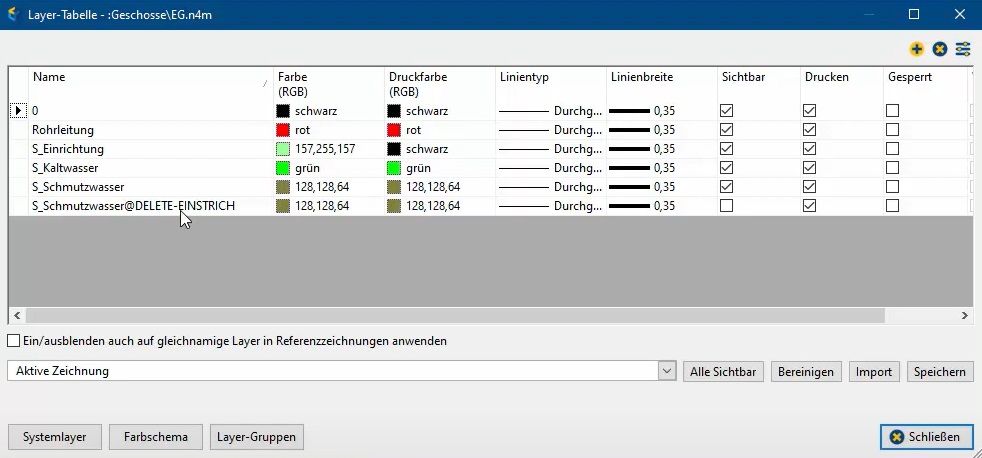
A common method for emergency drainage of roofs is the use of overflows and emergency overflows. This involves creating a type of catch basin in which the excess water is collected and drained away in a controlled manner. Mobile pumps and hoses can also be used quickly and flexibly in emergency situations to pump out the water and minimize the damage.
Important: According to DIN 1986-100, emergency drainage must not be carried out via the public sewer system. Instead, the accumulated water volumes must be drained onto a "harmless transferable area" on the property. This is the only way to detect whether the main drainage system is interrupted in an emergency, for example due to a blockage in the underground pipe.
Careful drainage calculation is easier than ever thanks to modern software
Climate change and the resulting increase in extreme weather events such as heavy rain pose new challenges for our everyday lives - and are accompanied by new requirements for the safety and design of construction projects.
Careful calculation is essential for the smooth operation of a building. Thanks to modern software solutions, the corresponding calculation process can be significantly accelerated. Software with integrated drainage calculation can provide all relevant data and results in a transparent and comprehensible manner for all project participants.
Trimble Nova is a particularly powerful CAD and calculation software that is capable of realistically modeling even highly complex systems. The software enables fast and intuitive parameter input in real time. It supports the user in the creation of 3D models and the visualization of results.
The integrated networking to Trimble Connect is essential for a shared data environment and also ensures that the calculated results are available to all relevant project participants - without any loss of efficiency or time.
On this software basis, planners and engineers can react effectively to new challenges - and ensure the long-term safe operation of buildings with a correct drainage calculation.

