

What is the design bid build project delivery method?
Firmly established in construction, and the go-to approach in the industry for decades, if not centuries, DBB, also known as design-tender, is clearly defined. Its advantages and disadvantages are also well understood. The design bid build project delivery method insists on transparency of costs upfront–which is not to say that ballooning change orders will not add to the bottom line later–and has made it a favorite in public contracts that are subject to rigorous oversight.
The construction industry too has dozens upon dozens of subspecialties, each of whom like to stay in their lane, a process that design bid build accommodates. The traditional DBB method has worked well for years but is seeing competition from a more nimble approach, the design build project delivery method. Design-build compresses the project lifecycle and time by encouraging overlap between the design and construction phases: construction can begin even when the design team is ironing out certain aspects of the design. Despite design-build’s growing popularity, the traditional design bid build approach continues to occupy key segments of the construction industry.

The design-bid-build process in construction
As the name implies, DBB comprises three distinct phases.
Design
In this phase, the owner or the agency contracts a design engineer or architect to develop a comprehensive set of construction drawings that forms the basis of the subsequent bidding process. The architect or design engineer first works closely with the owner to understand vision and translate that into a document. Design includes translation of these needs into a comprehensive set of engineering drawings that contractors can use to build the desired structure. An architect will sometimes work with other professionals such as plumbing and electrical engineers on specific sections of the design documents. A thorough reiteration of the documents then readies it for public bidding.
Bid (or tender)
General contractors bid on the design documents after consulting with subcontractors for various aspects of the construction process, including HVAC installation, landscaping, insulation, and more. The final bid typically outlines the cost of materials and labor. The scope for work might be refined during the bidding process. During this stage, the roles of the various entities involved are also well laid out. Once all bids come in by the specified date, the owner may decide to scrap or modify the project or proceed with a specific general contractor.
Build
The general contractor begins and completes the construction of the project while supervising and getting work done from a series of subcontractors. Work often executes in a specific sequence. The general contractor signs on to a specific scope of work and design cannot be altered at this late stage.
Design bid build vs design build
As opposed to DBB, design build is a newer project delivery method that does not include clear compartments between the owner and the builder. Contractors come in much earlier during the process and collaborate with the design team.
Advantages of design bid build
The traditional design bid build project delivery method process is advantageous because it has:
A clear distinction between teams
The architect or designer and the contractor each stay in their own lanes, which makes it easier to hold professionals accountable for missed deadlines or ballooning expenditures.
Greater transparency
Because roles are more clear cut in the DBB method, the project owner enjoys greater transparency into the process and might therefore be able to spot potential problems faster.
More opportunities for fair bidding
The bidding process is usually open to a wide set of professionals and the public bidding window ensures competitive quotes, which is especially beneficial for large-scale public works projects.
Encourages professionals to play to their strengths
DBB plays to designers’ and contractors’ strengths. In this project delivery method, they can concentrate and build upon their niche, instead of trying to be all things to all people.
Greater responsibility on owner
The owner in the DBB process creates two separate contracts for the designer and the builder. This can be an advantage where the owners need a greater say in project execution. However, there is a downside too: Any snags in the execution ripple up to the owner.
Disadvantages of design bid build
The DBB process has its fair share of challenges. They include:
Possibility of longer timelines
Because the sequential design bid build project delivery method waits for each party to completely finish its tasks before moving on to the next one, the project might have a greater chance of being delayed.
Challenging construction implementations
Not all designs are easily constructed. Keeping construction professionals divorced from the design process might encourage creativity but sometimes challenging designs can’t be easily translated into finished projects. A lack of input from all stakeholders early on in the process can highlight problems much further down the road and lead to more time crunches and expensive redesigns and rebids.
Owner bears brunt of project challenges
Change orders, busted timelines all fall on the owner’s shoulders as they develop two separate contracts–one with the designer and the other with the contractor. Since the owner supervises both parties, they are also responsible for the problems associated with each.
Advantages of design build
The design-build project delivery method enjoys a few advantages as well. They include:
Shorter timeline
Because the design-build process allows contractors to begin work on the project before the designs have been firmly established, the method enables faster turnarounds.
Fewer change orders
The DB process leads to greater collaboration between the stakeholders and, equally important, this collaboration takes place early in the project. As a result, all teams are able to put out any potential fires early. This leads to fewer problems down the road and fewer troublesome change orders and rework. Because of these efficiencies, design-build advocates also maintain that the process is less expensive than the DBB approach.
Disadvantages of design build
While design-build is growing in popularity, it is not without its own set of challenges. These include:
No ownership of problems
Because there is significant overlap between various stakeholders, it becomes easier for them to pass the buck to the other party when problems do occur. It is more difficult to track mistakes and find the entity responsible for the fix.
No competitive bidding
The design-build method leans on the design-builder to execute the project, which means the owner might not always get the most competitive price as the bidding process gets sidelined.
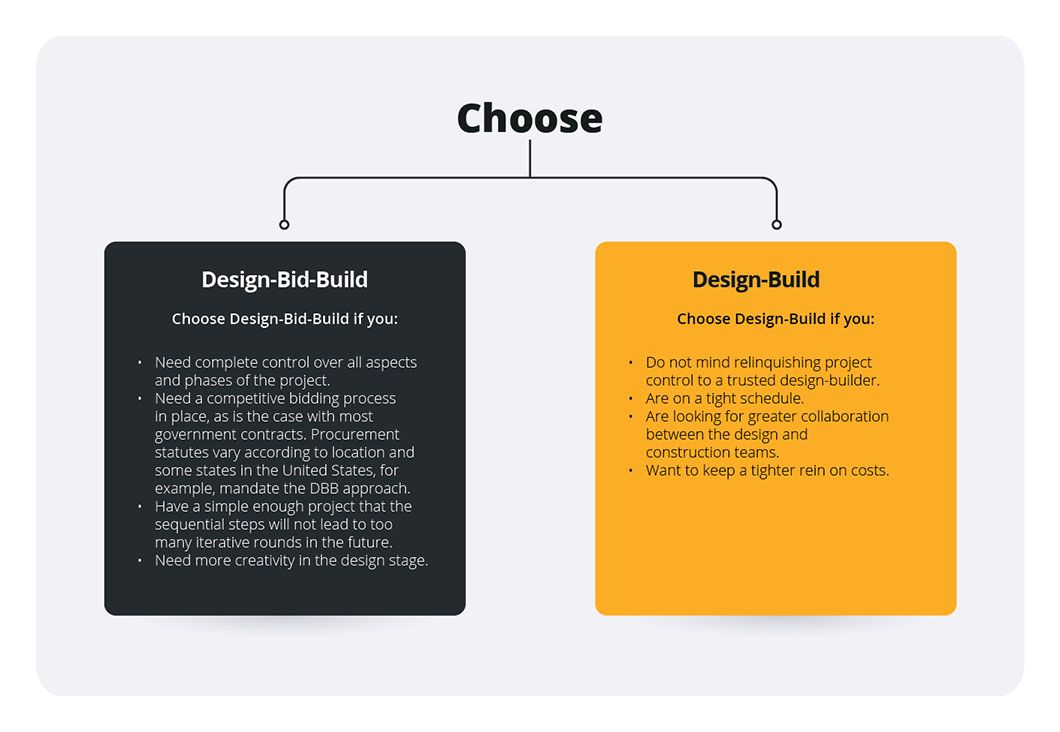
Design bid build or design build
Which method is right for your project?
Since each approach to construction project delivery has both advantages and disadvantages, it might be difficult to know which one to run with.
The impact of design bid build on the construction industry
Design bid build has been the dominant project delivery approach in the construction industry for a long time. The lump sum upfront estimation, with clear delineation between design and construction, have been the primary ways the construction industry has done business.
While DBB has been the traditional delivery approach, the industry itself is registering seismic changes: projects that are rooted in sustainability and a call for compressed time cycles. Construction is borrowing a few pages from the manufacturing industry. Modular construction, for example, is treating each built unit like a module that can be manufactured elsewhere and assembled onsite. In addition, projects themselves are growing in complexity to an extent that divorcing construction and design phases from each other no longer seems to make much operational sense.
A variety of such factors is moving the construction industry toward more flexible project delivery approaches. As a result, DBB is slowly ceding market share to the newer design-build method. DB is forecast to make up nearly half of construction spending in certain key geographies in the United States in 2025. While design-build might be making steady progress, do not expect the traditional design bid build process to fade away. The time-tested method will endure, but it will have to make room for alternative approaches–and that is a good thing.
Examples of design-bid-build projects
As the following examples illustrate, DBB projects can take a variety of forms–from buildings to arenas and infrastructure projects.
Museum
Renwick Gallery at the Smithsonian American Art Museum
Renovation for the Renwick Gallery at the Smithsonian American Art Museum in Washington, D.C. Aging infrastructure and updated building codes along with a few other factors necessitated a major renovation of the gallery, which has enjoyed a storied history. Design bid build was the primary approach for the project.

Tunnel
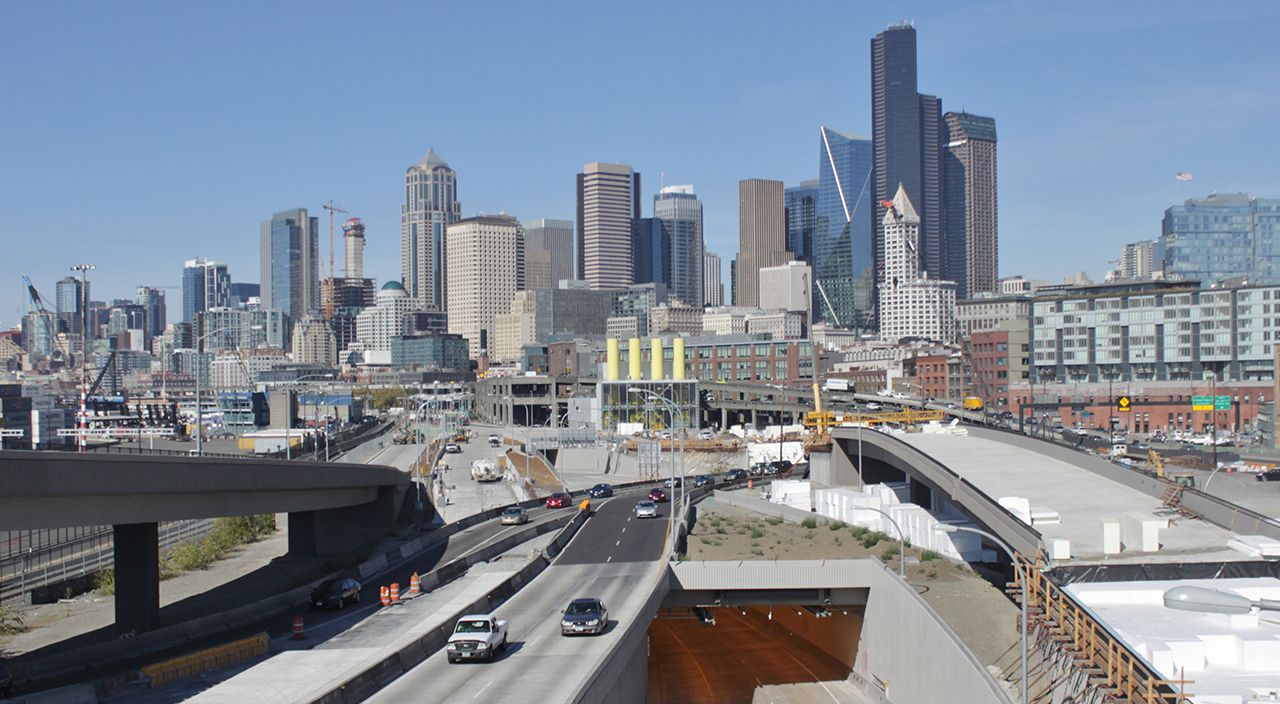
State Route 99 Tunnel | Seattle, Washington
A deep-bore tunnel to replace Seattle’s Alaskan Way Viaduct registered bids from multiple contractors with one winning the $1 billion contract. The Seattle Tunnel Partners promised to deliver a year ahead of schedule.
Skyscraper
Burj Khalifa | Dubai
The Burj Khalifa, the world’s tallest skyscraper, in Dubai, opened to the public in 2010. It followed the DBB model to realize the vision of leaning on the Islamic architecture of the region. Design was a big focus and was delivered by Skidmore, Owings & Merrill, the same firm that delivered Chicago’s Sears Tower.

Cloud-based construction projects
No matter which project delivery approach you choose, cloud-based construction management software involves all relevant stakeholders at the right stage and keeps everyone in the loop at all times.
Accessing updated information from the cloud ensures all parties are working with the same data. This aids effective communication, faster approvals, and speedier completion of projects. Trimble’s ProjectSight project management solution, along with the Trimble Connect collaboration platform empowers construction professionals to collaborate and manage their project easily and with the best outcomes.


