
Case study
Accelerating project delivery with connected workflows
Structural engineering firm Bennett & Pless partnered with detailers and fabricators to build a connected 3D workflow using Tekla, slashing weeks off the design-to-fabrication timeline.
OUTCOMES
- 3-4 Weeks faster design-to-fabrication
- 80 Pages of manual drawing reviews eliminated
- 80% Less detailing wait time
TRIMBLE SOLUTIONS USED
Moving from drawing-based workflows to using the model saved us 3–4 weeks. It compressed the gap between design updates and what we’re doing in fabrication, allowing us to move significantly faster.
Eloy Rodriguez Project Engineer, SteelFab
Background
About Bennett & Pless:
Firm Size: 180+ employees
Firm Type: Structural Engineering Firm
Focus Area: Commercial
Headquarters: Atlanta, GA
Projects: Data centers, pharmaceutical manufacturing facilities and complex industrial projects
Since 1964, Bennett & Pless has delivered structural solutions to complex projects. What began as a small Atlanta-based firm has grown into the largest single-disciplined structural engineering practice in the South, with deep expertise in complex manufacturing, industrial, life sciences and data center projects.
As demand for large, fast-tracked industrial projects increased, the firm looked for ways to improve coordination between engineering, detailers and fabrication partners.
A recent pharmaceutical manufacturing project provided the opportunity to advance that approach. Spanning more than 1.4 million square feet, the facility represents the largest life sciences investment in North Carolina’s history, at $4.1 billion.
Working with long-time partners SteelFab and Southern Detailing Co., Bennett & Pless implemented a model-based workflow centered on shared 3D structural data. Using Tekla Structural Designer, Tekla Structures and Tekla PowerFab within the powerful Trimble ecosystem, the team established a connected workflow linking engineering, detailing and fabrication.
The process reduced duplicative work, improved coordination and enabled partner teams to work in parallel while responding quickly to project changes and maintaining consistent data throughout the project lifecycle.
Challenge
On large pharmaceutical manufacturing projects, speed and flexibility are critical. Structural steel is often released early to keep projects moving as the design continues to evolve. At the same time, downstream teams need reliable information to begin procurement, detailing and planning.
Traditional workflows introduced delays and added complexity for Bennett & Pless and its partners. Design technicians translated updates into drawings that moved through multiple layers of coordination and approval before reaching the fabricator. By the time fabricators received the information, teams had to manually interpret changes across hundreds (or thousands) of drawings.
“It might be a few days between when we make updates in the model and when we’re actually submitting drawings, but it could be weeks before everything is fully approved.” – Michael Bain, P.E., structural engineer at Bennett & Pless
In most cases, downstream teams had to recreate the structural model from the engineer’s drawings for detailing and fabrication. This duplication of effort slowed progress and introduced opportunities for inconsistency between design and execution.
With an aggressive schedule and evolving requirements, the firm needed to move quickly while maintaining alignment with detailing and fabrication partners. Rather than defaulting to a drawing-based process, Bennett & Pless wanted to test a more collaborative, model-based workflow.
“We reached out to SteelFab and asked, ‘What can we do to streamline the process? Can we share the model and review it together?’ It really became a question of how we could work together differently to increase efficiency for the whole project team. Instead of communicating exclusively through PDF drawing sets, we can collaborate on the model itself and save everyone time and money.” – Michael Bain
Those early conversations drove Bennett & Pless, SteelFab and Southern Detailing Co. to explore how structural data could move seamlessly between teams.
Solution
With so many stakeholders, moving pieces and deadlines to meet, consistent data translation was critical as information moved between engineering, detailing and fabrication.
To maintain consistency throughout the project, Bennett & Pless implemented an integrated workflow within the Trimble ecosystem. The engineering team used Tekla Structural Designer for design, Tekla Structures for detailing and Tekla PowerFab for fabrication management. This truly connected workflow kept all project stakeholders working with the latest data.
Engineering and design
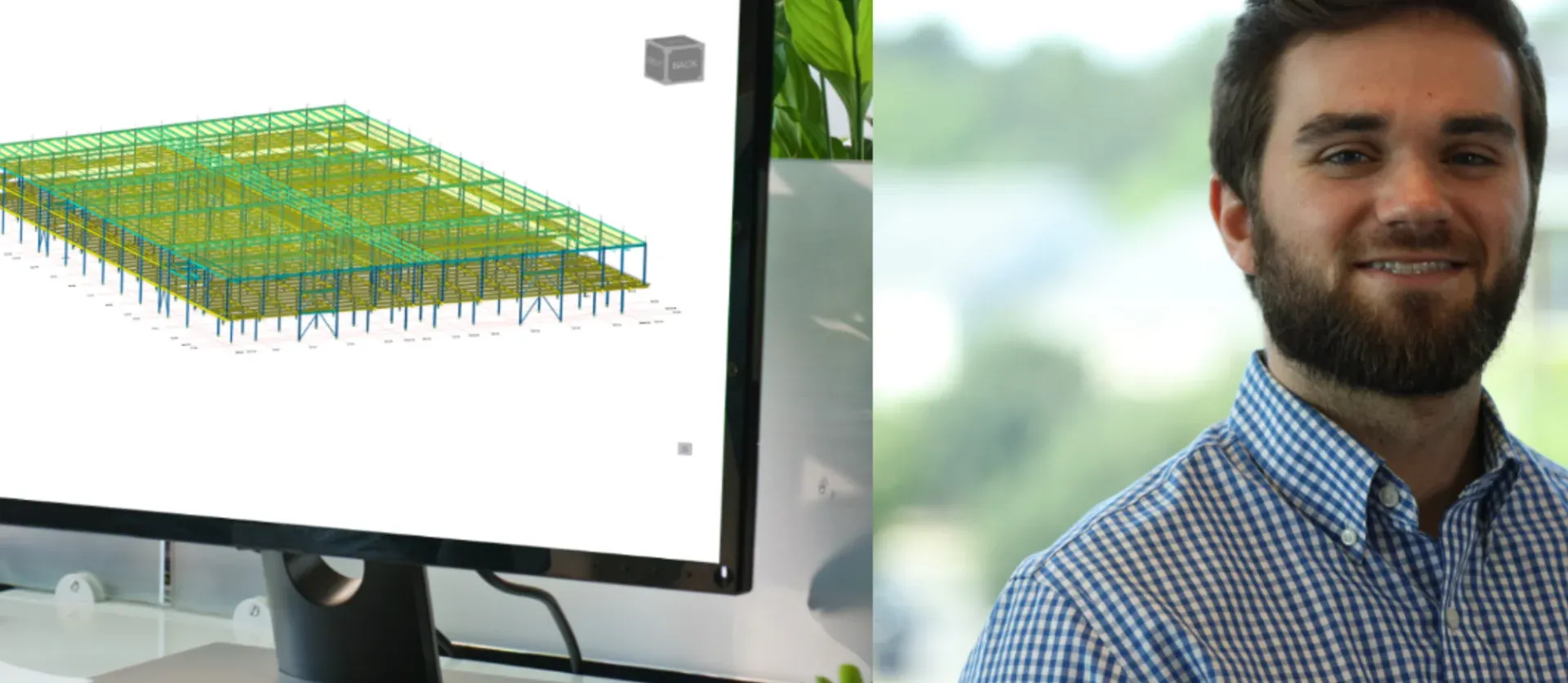
Using Tekla Structural Designer as the foundation for structural design and collaboration, Bennett & Pless developed a comprehensive model that captured full design intent, including geometry, framing and loading data.
Using a model-based approach shifted the workflow from a series of handoffs to a continuous exchange of 3D data, enabling design, detailing and fabrication teams to review updates, raise questions and make adjustments in near real time, staying aligned and maintaining momentum as the project evolved.
“It’s not that there are fewer questions—it’s that we can resolve them much faster.” – Michael Bain.
This allowed the team to design and analyze complex requirements, manage seismic and heavy wind loads, perform vibration analysis and meet strict deflection requirements for large glass curtain wall facades—all within a single environment. Additionally, while the project was designed in metric units, fabrication teams worked in imperial units, and the model accounted for conversions between the two.
Finally, Bennett & Pless was also able to isolate and share specific portions of the structure as separate models.
“The primary structural system was consistent across buildings, but elements, such as the facade steel, varied. We could send a separate model of just the facade steel, which allowed downstream teams to compare it directly in their model instead of manually figuring out what changed across dozens of locations.” – Michael Bain
Detailing
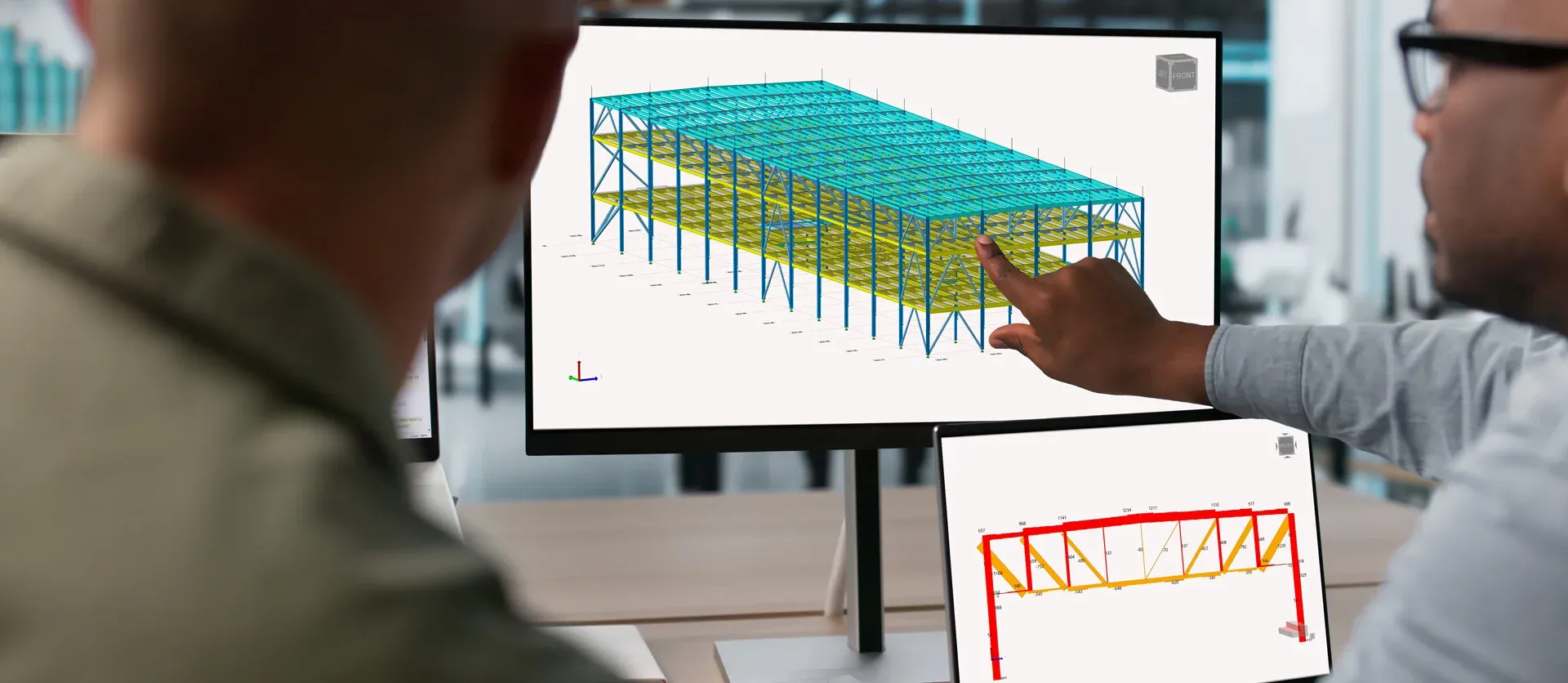
Rather than passing information through drawings, Bennett & Pless created a single 3D structural model and shared it directly with downstream partners, enabling seamless sharing of structural data between engineering, detailing and fabrication.
In this case, the Tekla Structural Designer model created by the engineer was brought into Tekla Structures by Southern Detailing, where it was reviewed, validated and used as the starting point for detailing.
“Instead of recreating the fabrication model from drawings, we built directly on top of the engineering model. It gave us an accurate starting point and helped ensure the model we delivered to SteelFab was aligned with the design intent and ready to support fabrication.” – Robert Krohn, owner of Southern Detailing Co.
This allowed detailing teams to begin working from the same structural data used to develop the design.
“They’re not starting from scratch. They’re starting from a fully built structural system.” – Michael Bain
Fabrication
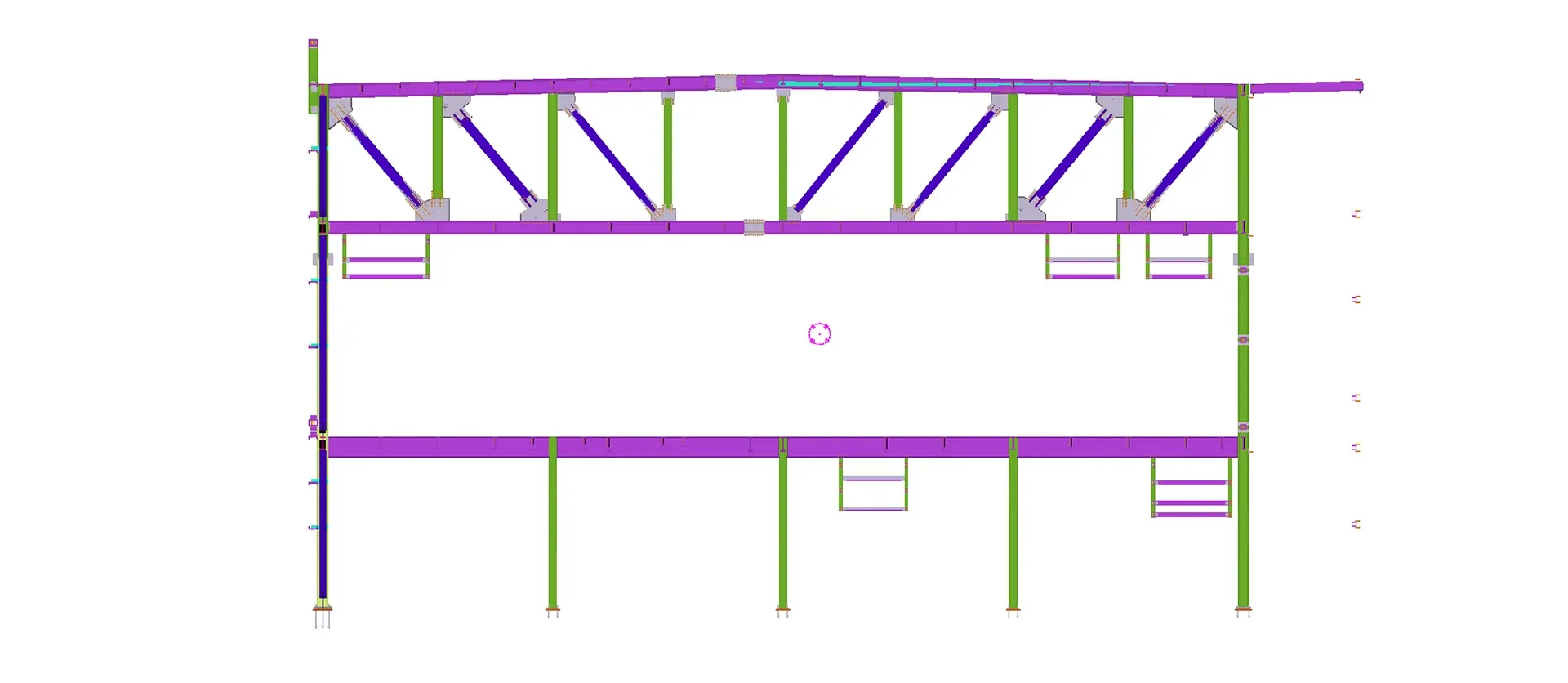
Once detailing was complete, model data flowed directly into Tekla PowerFab to support fabrication management, material tracking and production workflows. Because the information carried through from design and detailing, SteelFab was able to manage materials, track progress and coordinate fabrication activities without reworking data.
“That continuity is a big advantage. We're not reentering information or trying to reconcile different systems. The data is already there, so we can move straight into fabrication without extra steps.” – Eloy Rodriguez, Project Engineer at SteelFab
When updates were made, early visibility into model changes allowed SteelFab to make decisions sooner, reducing the lag between design changes and fabrication readiness. In some cases, the team could begin material planning and even move forward with ordering based on model data. This approach also scaled as the project scope grew to include multiple buildings.
“Multiple buildings shared a common structural system, so we used the initial model to generate mill orders. That allowed us to move forward with material for multiple buildings based on that first model.” – Robert Krohn

Collaboration
Before Trimble, Bennett & Pless would update the model and wait for architectural and MEP coordination before issuing drawings.
“It might be two weeks between when we make updates and when we submit drawings because we’re waiting on other trades. With a model-based workflow, that delay was removed. We can send SteelFab the updated model right away, and by the time drawings are submitted, they’re just confirming that everything has been incorporated. This can save days or even weeks on each submittal.” – Michael Bain
On this project, that approach was put into practice under particularly demanding conditions. Originally planned as an expansion of an existing facility, the project grew significantly in scope and shifted to a new greenfield site nearby.
“The change effectively restarted the design, but the entire project schedule had to be significantly compressed in order to meet owner deadlines. Having that integrated workflow was a huge benefit. It allowed us to keep moving, share updates quickly and stay aligned with the detailer and fabricator despite the reset.” – Michael Bain
As the design evolved, Bennett & Pless updated the structural model. Tekla Structures automatically flagged key model differences, giving teams immediate visibility into revisions without having to review drawings.
“Having a report right then and there of what changed without having to read 20, 40 or 80 pages of drawings is a huge advantage. We can immediately see what changed and respond to it, which makes it much easier to keep the project progressing.” – Eloy Rodriguez

Results
The shift to a connected, model-based workflow significantly reduced the time between design updates and fabrication by enabling earlier access to model data.
“Moving from drawing-based workflows to using the model saved us 3–4 weeks. It compressed the gap between design updates and what we’re doing in fabrication, allowing us to move significantly faster.” – Eloy Rodriguez
By enabling more direct communication and faster resolution of questions, Bennett & Pless and its partners maintained progress and alignment throughout a complex, fast-moving and ever-evolving project.
“It allowed us to keep moving despite changes that would typically introduce delays.” – Michael Bain
Finally, the new connected workflow also strengthened collaboration across all project stakeholders and helped ensure smooth project delivery.
“Instead of working in silos, we were able to have a much more collaborative process between engineering, detailing and fabrication. Overall, despite how big, complicated and ever-changing this project was, it went really smoothly from start to finish.” – Robert Johel, vice president at SteelFab


