
Case study
Solid Rock Steel minimizes rework with Trimble
Solid Rock Steel leveraged Trimble technology to capture precise site conditions upstream, eliminating costly jobsite rework and ensuring complex steel assemblies fit the first time.
Key achievements
- Ensured complex steel assemblies fit the first time on site
- Eliminated expensive field rework, extra crane time, and schedule delays
- Captured mm-accurate site data to adjust base plates before fabrication
- Synchronized office, shop and field teams through real-time model sharing
Solutions leveraged
- Trimble® X7 3D laser scanning system
- Tekla Structures®
- Trimble Connect® collaboration platform
Summary
Model-based design translates to time saved in the field. Even if we spend more time up front, the payoff comes when installation goes smoothly.
Simon DurkinDetailing and digital workflows leader, Solid Rock Steel
Stopping steel rework before it starts: How Solid Rock Steel leverages Trimble technology for first-time fit
Background
A focus on complexity in custom steel fabrication
Solid Rock Steel is a Canadian steel fabricator operating with roughly 60 employees across its shop, office and field crews. Running two shifts and maintaining its own dedicated installation teams, the company delivers fabricated and erected steel for a wide range of construction projects. Rather than focusing on repetitive structural steel work, Solid Rock specializes in intricate custom designs, including architectural staircases, canopies, bridges and made-to-order steel assemblies.
This emphasis on complexity defines how the company approaches fabrication. Every project involves unique geometry, extremely tight tolerances and intricate interfaces with concrete, embedded elements and existing structures. To maintain quality across these complex assemblies, the fabricator relies on seamless coordination among its detailing team, shop personnel and field installation crews.
Escalating errors at the interface of design and reality
In complex steel construction, critical interfaces between steel components and other jobsite materials routinely present severe challenges. Anchor rods rarely align precisely with design drawings, curved concrete seldom matches theoretical geometry, and existing structures frequently differ from original plans. Historically, these physical discrepancies only became obvious once installation was already underway on the job site.
When real-world site conditions do not align with design models, field crews are forced to make emergency adjustments. These discrepancies often lead to field welding, re-drilling, torch cutting or even removing and re-installing large assemblies. On-site rework magnifies the cost of even small errors, places unnecessary strain on installers, disrupts downstream trades and threatens the successful completion of highly visible structures.
Simon Durkin, who leads detailing and digital workflows at Solid Rock, explains the traditional challenge clearly. “In the past, you would model from design drawings, fabricate the steel, and only find out in the field that the embeds or anchor bolts were not where you expected them to be.”
Solution
Bringing field data into a controlled digital environment
To eliminate on-site surprises, Solid Rock transformed its operations by shifting verification upstream. Working with BuildingPoint Canada in Burnaby, British Columbia, the company integrated Trimble hardware and software technologies directly into its fabrication and quality control workflows.
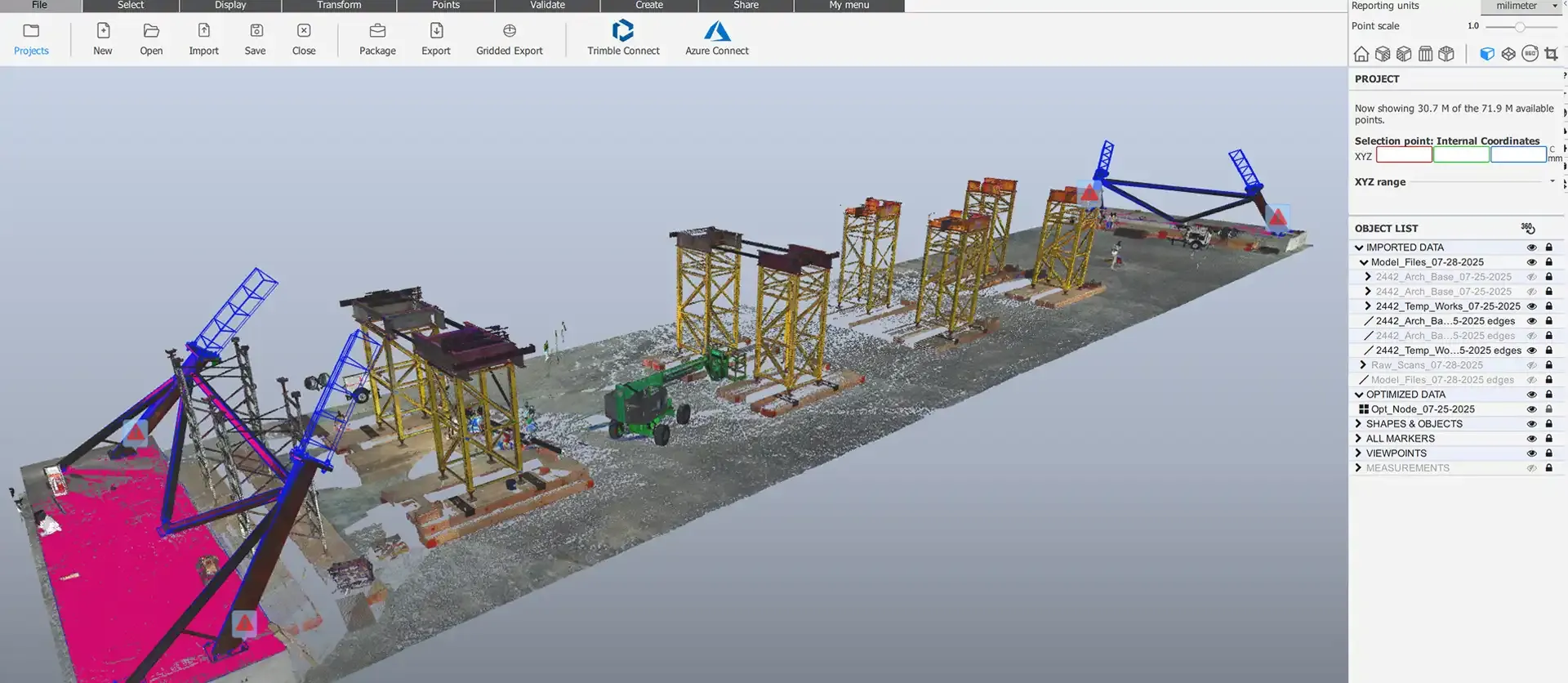
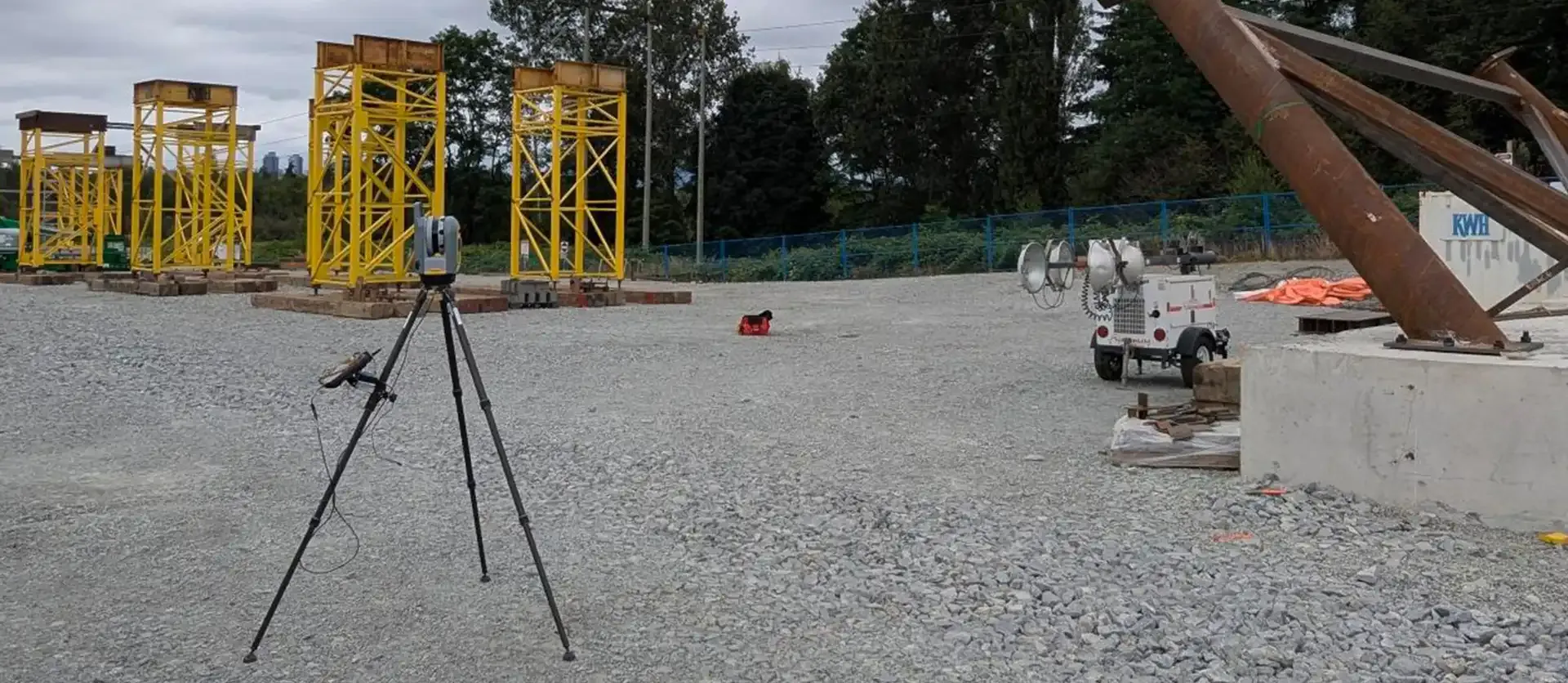
The process begins in the field. Solid Rock uses a Trimble X7 3D laser scanner to capture precise current site conditions and surrounding structures. This accurate point cloud data is imported alongside Tekla Structures, the company’s primary 3D detailing software. In Trimble Cloud Engine, the constructible model created in Tekla is overlaid and compared directly with the scan data to easily identify deviations between the design and real-world conditions.
Once the model reflects verified field conditions, shop drawings and fabrication details are updated. The team uses Trimble Connect to share models, drawings, point clouds and daily progress exports across project managers, shop staff, subcontractors and field crews. Additionally, survey crews use total stations on site to measure and mark critical locations of anchor bolts, column bases and connection points with millimeter accuracy, feeding data directly back into the model.
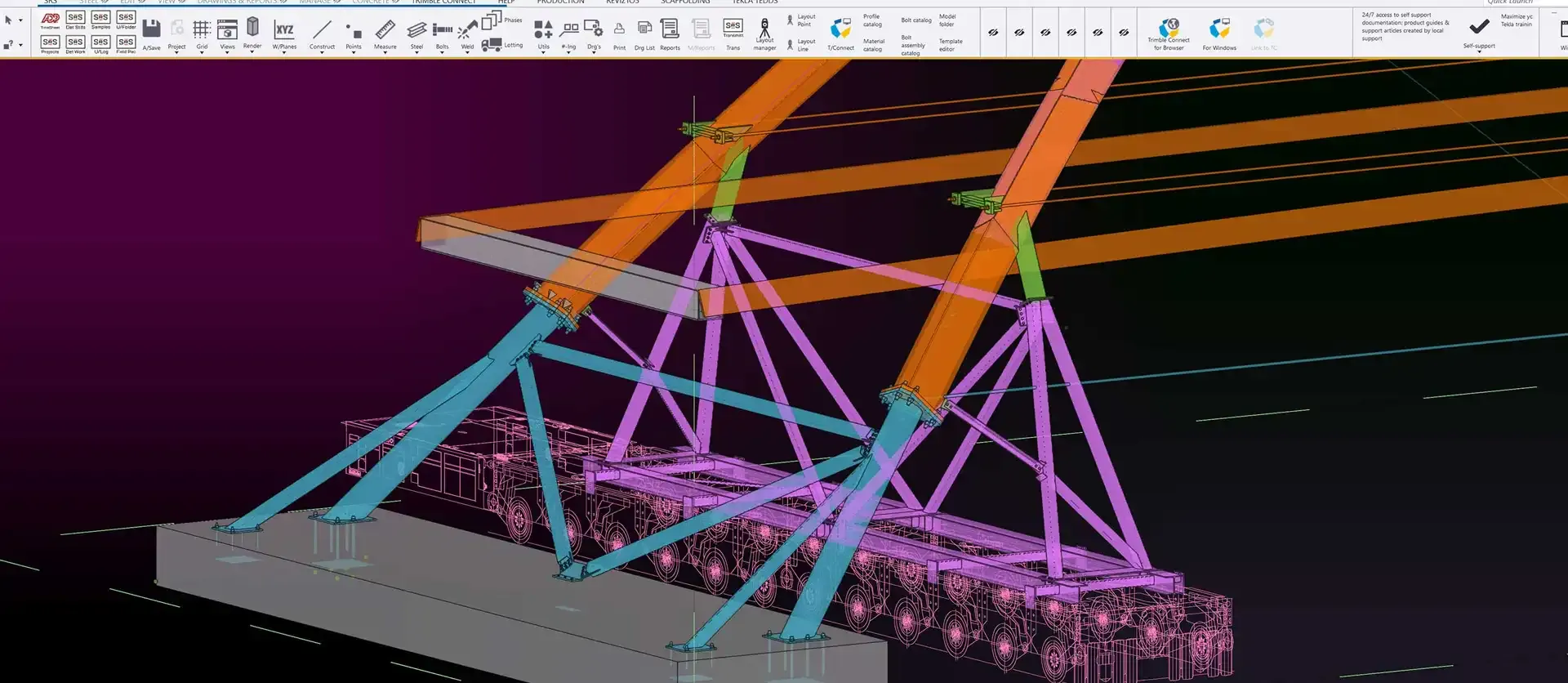
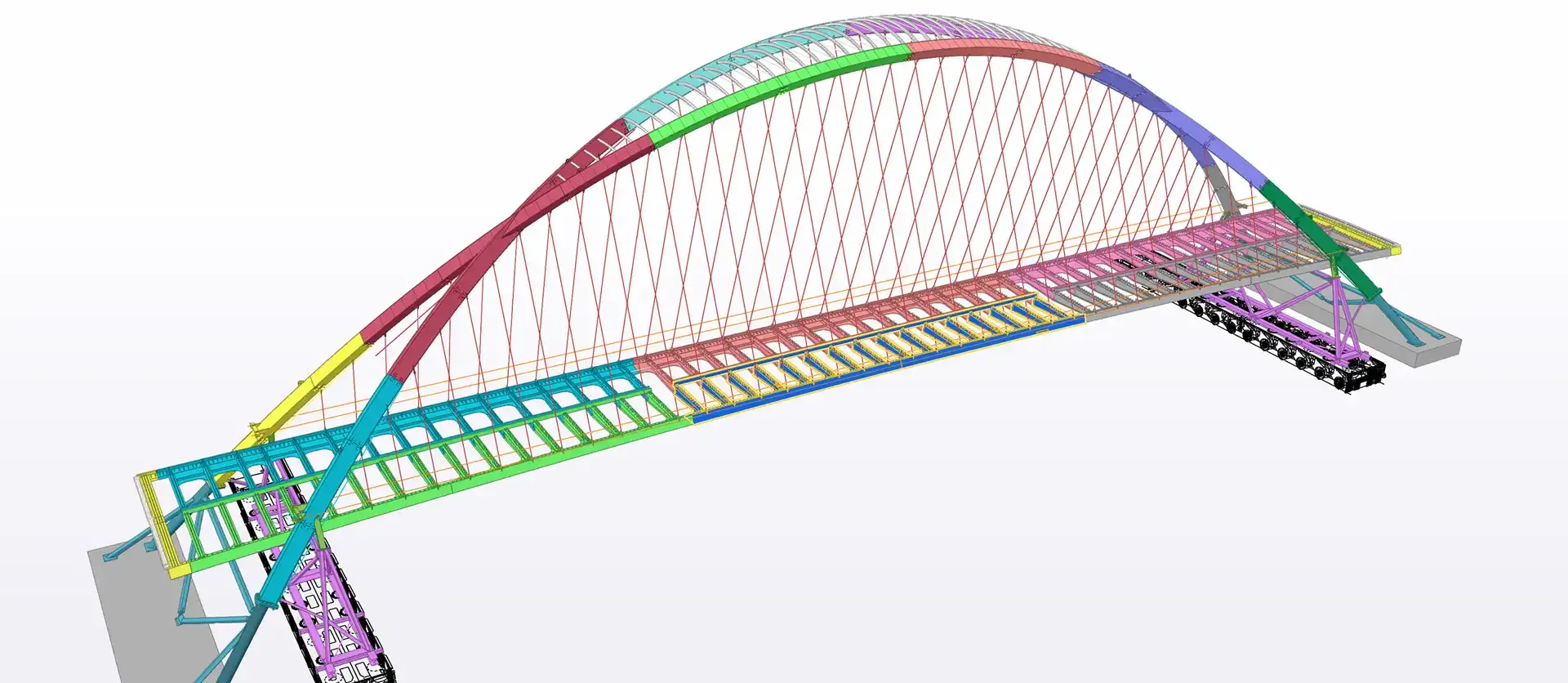
Solid Rock also applies Trimble scanning for shop-based quality assurance on complex assemblies, such as the 95-meter-long, 441-ton Burnaby Lake Pedestrian Overpass. The team scans fabrication jigs before assembly to verify geometry and alignment. As Durkin notes, “We scan the jig first because it becomes the foundation for everything else. If the jig is not right, nothing built in it will be right.”
Results
Better data drives smoother builds and first-time fit
By resolving spatial conflicts digitally before cutting steel, Solid Rock addresses potential conflicts in the shop rather than the field, ensuring complex assemblies fit the first time.
On a high-rise roof project involving framing with hundreds of cast-in-place concrete anchor rods, site scanning revealed that most rods were misplaced. Rather than repeatedly modifying components in the field, Solid Rock adjusted base plates in the shop. “We had about 360 anchor bolts, and only 10 or 15 were in the right place,” says Durkin. “By doing the work up front, we were able to lift the frames into place and have them fit the first time.” This approach avoided extra crane work and eliminated on-site fabrication.
Similarly, on a canopy for a curved building façade, scanning embeds allowed the team to adjust steel components in Tekla Structures to follow the true curvature of the structure, iterating scanning steps across project phases for an exact fit.


