

2025 marks the 15th year of the Digital Construction Report produced by NBS—a global leading technology platform that combines content and connectivity for anyone involved in the design, supply and construction of the built environment.
What is the 2025 Digital Construction Report?
The 2025 Digital Construction Report reveals what over 550 industry professionals really think about artificial intelligence (AI), building information modeling (BIM), cloud technology and sustainability, as well as how these technologies are reshaping the built environment.
From the rapid rise of AI to the maturing role of BIM the report provides a snapshot of the current usage of, and attitudes towards, a range of technologies, and reports on their impact on the sector. Here are some of the key takeaways from the report.
BIM adoption: here to stay
What is BIM? BIM is an acronym for Building Information Modelling. It is a highly collaborative process that allows multiple stakeholders and architecture, engineering and construction (AEC) professionals to collaborate on the planning, design and construction of a building within one 3D model. Data from the buildings is made available to stakeholders allowing them to make informed decisions.
Despite the apparent benefits, the adoption of BIM is not universal, but there has been a significant rise in usage over the past decade. According to the 2025 Digital Construction Report, BIM adoption remains strong with a significant majority of construction professionals (72.3%) saying that they have adopted it, which represents a slight increase on 2023’s (70%) and 2018’s (71%) surveys. The proportion of respondents adopting and using BIM has remained largely consistent over the past seven years.
Why is BIM still essential in 2025?
BIM has the capacity to transform and enhance performance by decreasing inefficiencies, improving productivity and increasing collaboration among project stakeholders. With nearly 88% of respondents either already using BIM or planning to do so, this suggests that BIM continues to be a fundamental aspect of digital construction, and further implies that BIM has found its natural market penetration level. Rather than seeking dramatic increases in adoption, the focus has shifted to deepening implementation quality and extracting greater value from existing BIM workflows.
In the 2025 Digital Construction Report other key improvements that those surveyed noted were; improvement in digital object availability and use by designers as well as ranking BIM as a top technology or way of working that has the potential to transform the built environment over the next five years.
One of the most significant developments supporting BIM usage has been the dramatic improvement in digital object availability. 73.4% of manufacturers and suppliers surveyed said they currently provide BIM/digital objects for at least some of their products.
And on the building designer side, there is an even stronger engagement with 88.3% of consultants already using manufacturer-provided BIM objects.
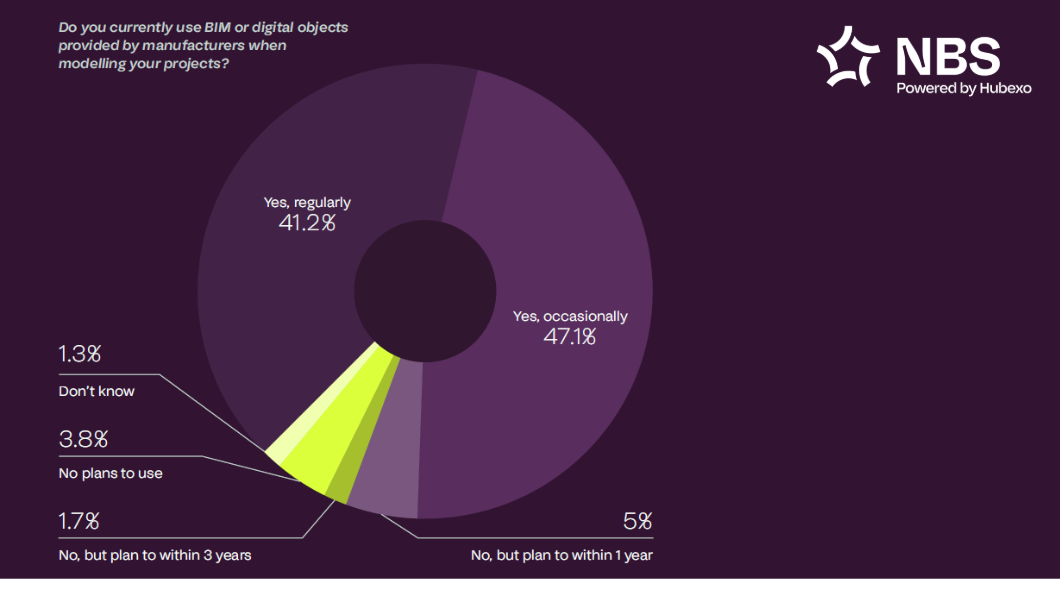
Consultants' high use of BIM objects, versus fewer suppliers providing them, suggests growing pressure on suppliers to create digital product representations that meet designer needs.
Respondents were also asked to rank technologies for their potential to transform the built environment over the next five years.
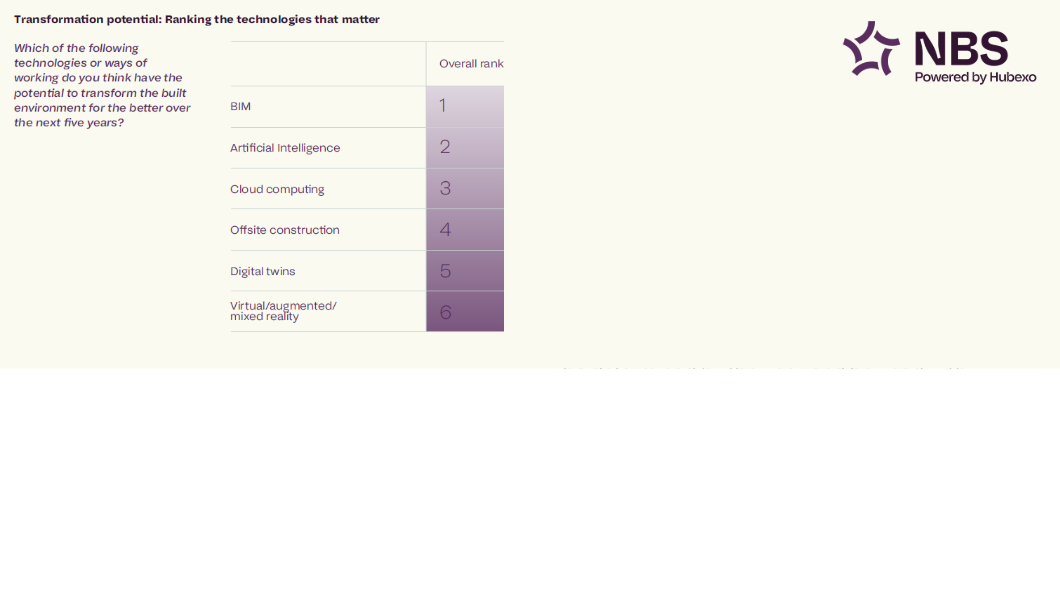
BIM’s top ranking reflects its role as essential infrastructure for digital construction, while AI’s second-placing demonstrates industry recognition of its transformative potential. Cloud computing is widely used, but its third-place ranking might seem low because it reflects its role as more of a supporting technology rather than a direct transformer.
The Viewpoint Professional Services team provides full on boarding to all customers to make the transition into using BIM technology as seamless as possible. Customers also receive check-ins with the team to make sure their solutions are working for them to help achieve their goals. Consultancy can be requested at any time to enhance product knowledge during your journey with Viewpoint construction solutions.

