

As an economist, I’m exceedingly fond of writing about what I know. And at the risk of coming off as immodest, I know quite a bit about the construction industry’s present situation. Borrowing costs are too high. Materials prices are rising. The data center segment is hotter than the surface of the sun. Certain job openings remain far too difficult to fill, especially in a variety of skilled occupations.
“What I don’t know” is a subject I find altogether less appealing, but alas, it’s just as—if not more—telling about the state of the industry. And at the present moment, there’s one economic subject that stands alone in terms of just how much I don’t know—the future of interest rates.
Where are interest rates headed?
The future path of interest rates is shrouded in mystery, and I’m not alone in holding that opinion.
The Federal Reserve has cut the target range of the Federal Funds Rate by the equivalent of seven 25-basis point decreases since it began loosening monetary policy in the middle of 2024. The most recent of those cuts, which has done little to lower borrowing costs, came at the Fed’s December 2025 meeting, and the Fed held rates steady at its first three meetings of 2026.
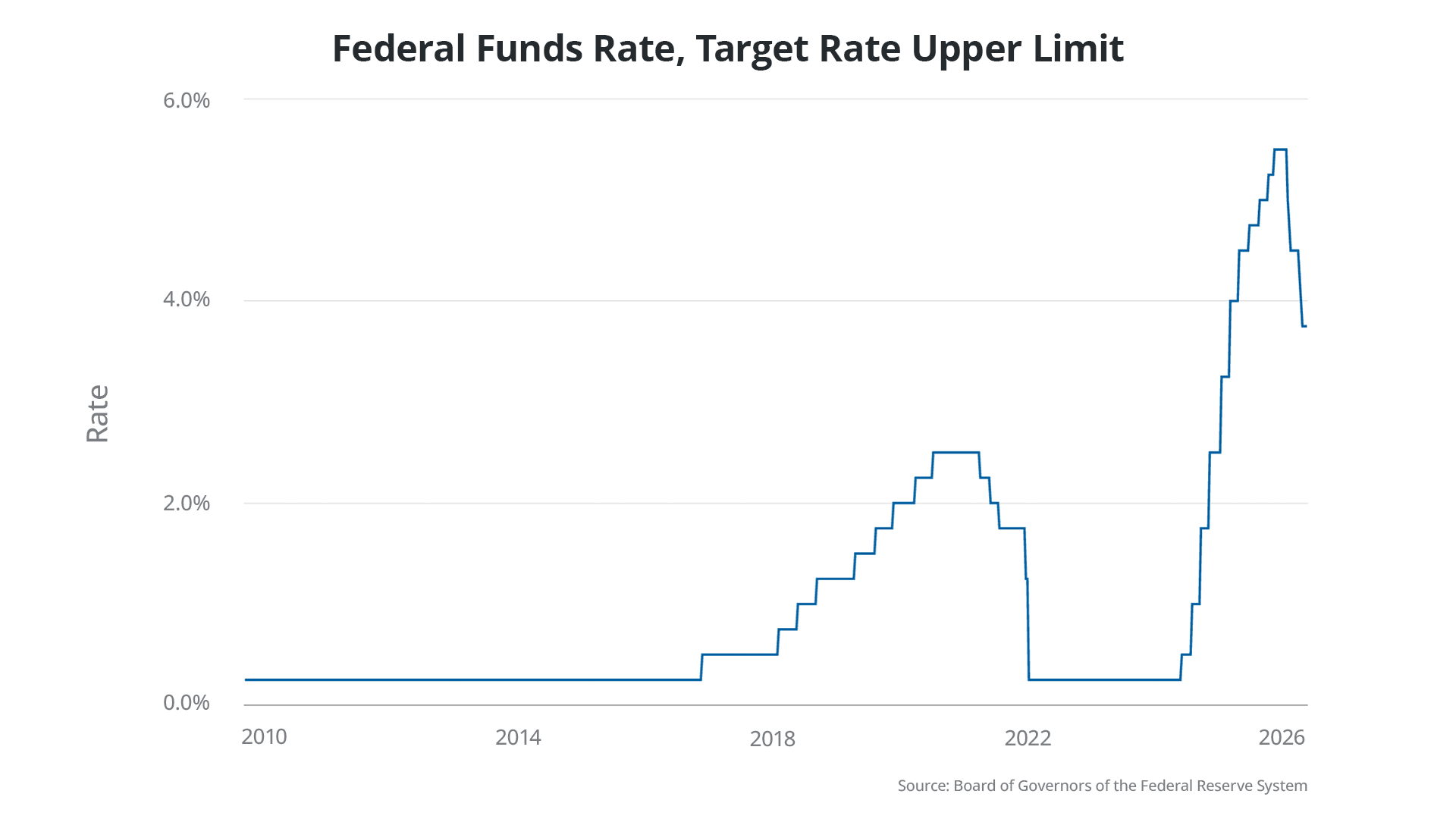
The Fed has held tight on rates recently, but the markets (which are good at predicting the next move) believe a hike is far more likely. Source: Board of Governors of the Federal Reserve System
The Fed didn’t lower rates at its June meeting either, and that wait-and-see approach should hold through the ensuing few meetings as well.
After that? Nobody knows.
Markets overwhelmingly point toward the next move being a rate hike rather than a cut, the result of resurgent inflation and a surprisingly steady labor market. That’s a rapid change from the start of the year, when the median forecast pointed toward approximately three rate cuts in 2026.
If I had to bet, I’d wager that the Fed’s next move is a hike, possibly even by the end of this year. But I’m glad I don’t have to bet. There are, put simply, too many moving pieces to account for right now, including:
Inflation has surged since March. That has a lot to do with oil prices, which could conceivably fall with the U.S. and Iran on the verge of an agreement (potentially for real this time). Even if oil prices fall, however, businesses have experienced jarring input cost escalation in the past few months, and it’s unclear how that will be passed through to consumers.
Kevin Warsh, the new Fed chair, is currently presiding over his first meeting as Fed chair. Mr. Warsh lobbied for lower rates the past few years but was a notorious hawk when he served as a Fed governor from 2006 to 2011. His views are just as uncertain as his ability to influence the other voting members of the FOMC.
Consumers could crack. Higher gas prices have had a bruising impact on consumer finances, and that’s caused many households to overextend in recent months; the personal saving rate has plunged this year, diving from 4.6% in March to 2.6% in April. That’s near a four-year low and suggests that at least some consumers may be close to tapping out.
Fed cuts may not even work at this point. Bond markets need to know with some confidence that inflation is heading back to a 2% annual rate. Barring that, the Fed will have little ability to affect borrowing costs.
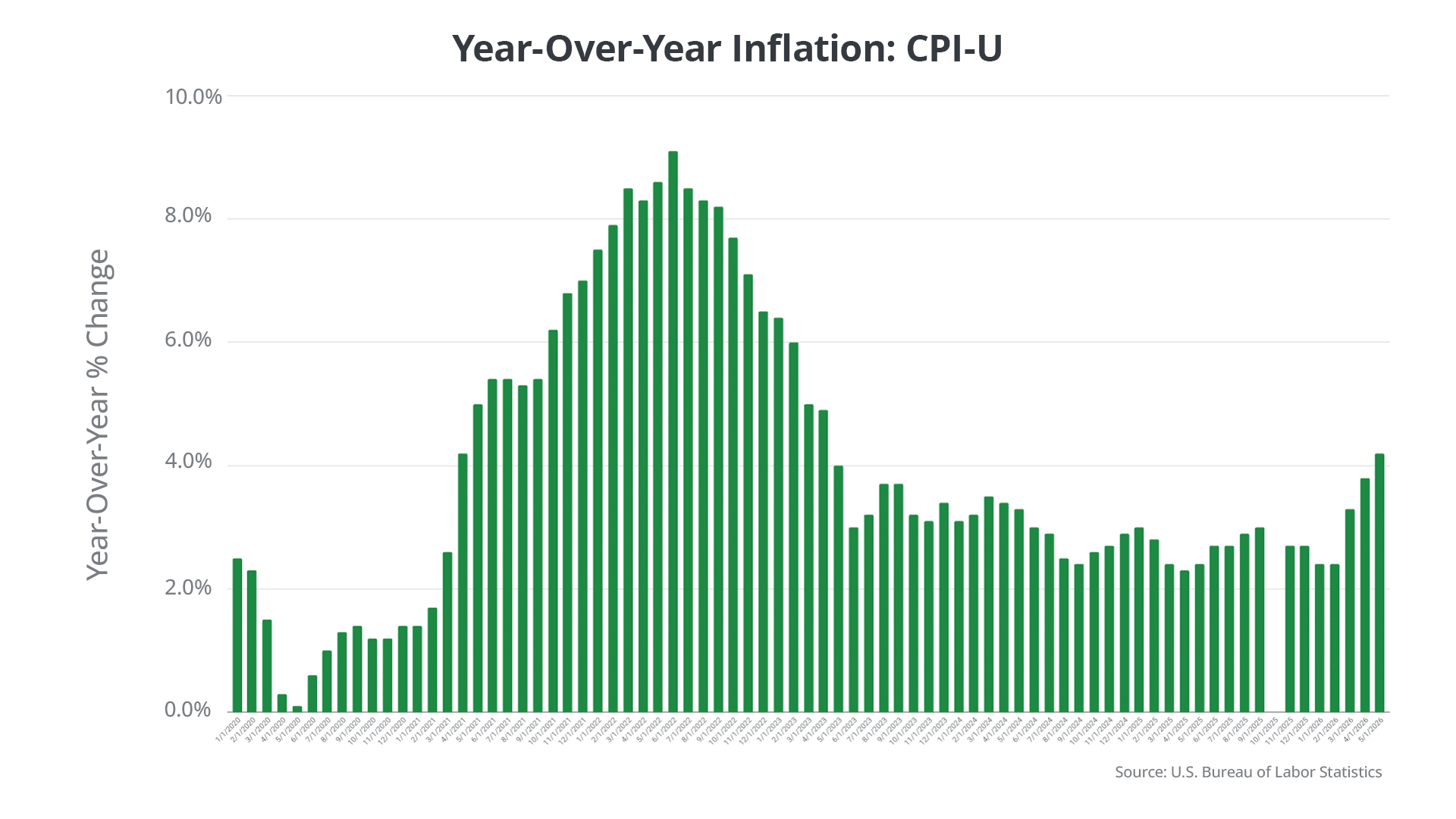
The recent CPI reading came in red-hot, suggesting a 4.2% inflation rate for 2026, more than double the Fed’s annual target of 2%. Source: U.S. Bureau of Labor Statistics
Back to solid footing: What I know this means for the construction industry
With materials prices surging once again and signs of intensifying labor shortages, cost pressures will serve as a brisk headwind for the construction industry over the coming quarters. Sure, data center investment will remain in the stratosphere regardless of what happens with rates, but many categories are struggling just to stay afloat and won’t gain buoyancy until borrowing costs fall meaningfully lower, and I think I know that we’ll have to wait for that.
Recording of last month’s economics webinar—how right was Dr. Basu in his predictions?
Disclaimer:
The views and opinions expressed in this article are those of Dr. Anirban Basu and do not necessarily reflect the official policy or position of Trimble Inc. This content is provided for informational purposes only and should not be interpreted as financial, investment or economic guidance from Trimble.


