Case study
Single source of truth builds strong foundation for construction
Hensel Phelps is eliminating data silos using Trimble cloud platforms and AR to create safe, cohesive workflows. By establishing a single source of truth, the team drives efficiency and reduces rework on complex projects like Harbor-UCLA and LAX.
Key achievements:
- Improved risk scores
- Reduced rework
- Enhanced jobsite safety
- Boosted collaboration
- Gained Trimble Innovation award
Solutions used:
It’s fun to see the switch flip when people are able to visualize the project and easily understand the big picture. VDC technology is helping reduce rework, which is where accidents tend to occur. With less rework, we maintain a safer jobsite.
— Kyle Tomak
Virtual Design and Construction (VDC) Manager, Hensel Phelps
Introduction
The construction industry is rife with challenges, but a consistent flow of accurate data between the office and the field doesn’t have to be one of them. For over a decade, Kyle Tomak, virtual design and construction (VDC) manager at Hensel Phelps, has been leading the charge for end-to-end digital workflows that address common pitfalls like miscommunication and costly construction errors. At Hensel Phelps, a leader in digital construction innovation, Tomak’s philosophy is simple: technology isn’t just a tool; it's a strategic asset.
Framing a digital future
In the fast-paced world of construction, coordinating resources is essential for maximizing productivity while maintaining high-quality standards. This is especially true on large-scale projects where multiple contractors contribute data using various kinds of hardware and software, all of which must be checked for accuracy. According to Tomak, data silos are a major hurdle to overcome. “To expand everyone’s access to data, we have to get rid of data silos and make information easily available in the office as well as in the field.”
His team's field-oriented strategy goes beyond merely adopting tools, focusing instead on scalable integration and creating a comprehensive ecosystem where digital tools are part of practical construction workflows. This is where cloud platforms such as Trimble Connect® come in. Trimble Connect serves as a central hub where all project data is stored and is accessible to all stakeholders, creating a single source of truth.
Blueprint for success
The Harbor-UCLA Medical Center Replacement Program is a prime example of the value of this approach. The team used Trimble SiteVision®, an augmented reality (AR) system, to precisely map out demolition requirements and visualize spatial constraints in real time. The system also helped the team with quality control throughout the construction process.
“It’s fun to see the switch flip when people are able to visualize the project and easily understand the big picture,” Tomak said. The system makes on-site work safer and more efficient by anticipating conflicts, helping avoid utility strikes and mapping out what’s next.
Hensel Phelps also used Trimble SiteVision on the LAX American Airlines T4/5 Redevelopment Program. They loaded design models directly onto iPads in the field to help visualize demolition and utility installation with amazing precision. The team even used Trimble Connect to color-code models and push them to Trimble SiteVision to collaboratively validate safety plans, a critical innovation in the process.
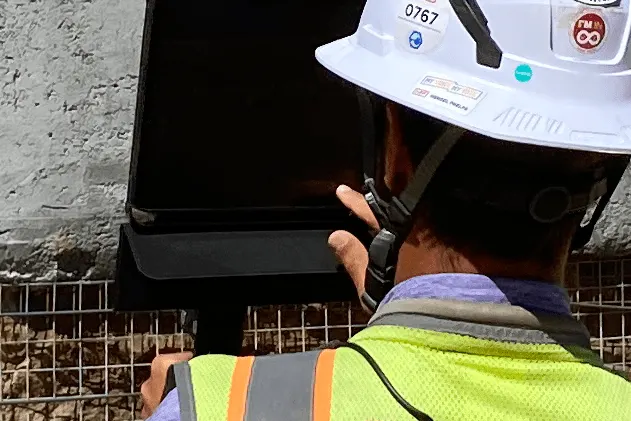
Tomak’s team works to expand the use of technologies like BIM and AR throughout Hensel Phelps by identifying which ones simplify and advance construction processes. Tomak believes these new tools can fundamentally reshape how construction projects are conceived, planned and executed.
The solution
Hensel Phelps leverages Trimble Connect as a central hub for all project data, creating a single source of truth that powers BIM, 3D coordination and AR tools for maximum productivity and safety.
By focusing on scalable integration and comprehensive digital ecosystems, Hensel Phelps has moved beyond just adopting tools to fundamentally reshaping how projects are conceived, planned and executed. This integrated approach resolves potential conflicts, tracks accountability and improves cost control, earning them safety and innovation awards.
Learn more: Article | Trimble SiteVision at UCLA | Trimble SiteVision at LAX
The result
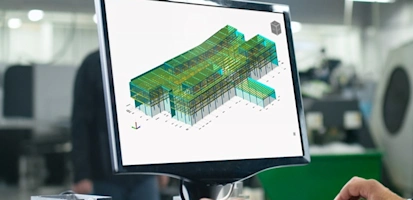
An integrated and cohesive workflow — Tomak’s VDC approach integrates BIM, 3D coordination and other digital collaboration tools to create detailed virtual representations of projects. These visualizations help workers identify and resolve potential conflicts, track accountability and improve cost control, leading to significant benefits.
The company's commitment to educating leadership and adopting emerging technology as it becomes available has paid off in multiple ways, including a positive impact on insurance rates due to improved risk scores. “VDC technology is helping reduce rework, which is where accidents tend to occur,” Tomak explained. “With less rework, we maintain a safer jobsite.”