

By Aviad Almagor, Vice President of Technology Innovation, Trimble
Challenges of rendering complex scenes for animated movies like Toy Story are strikingly similar to those of coordinating 3D mechanical, electrical and plumbing models in construction.
I hosted a panel discussion at the most recent Trimble Dimensions user conference where innovators from Pixar, NVIDIA, Adobe and Trimble explained the similarities and emphasized the importance of the Open Universal Scene Description (OpenUSD) initiative for overcoming common hurdles: managing massive complexity, enabling simultaneous collaboration and solving the interoperability headache of moving data between diverse applications.
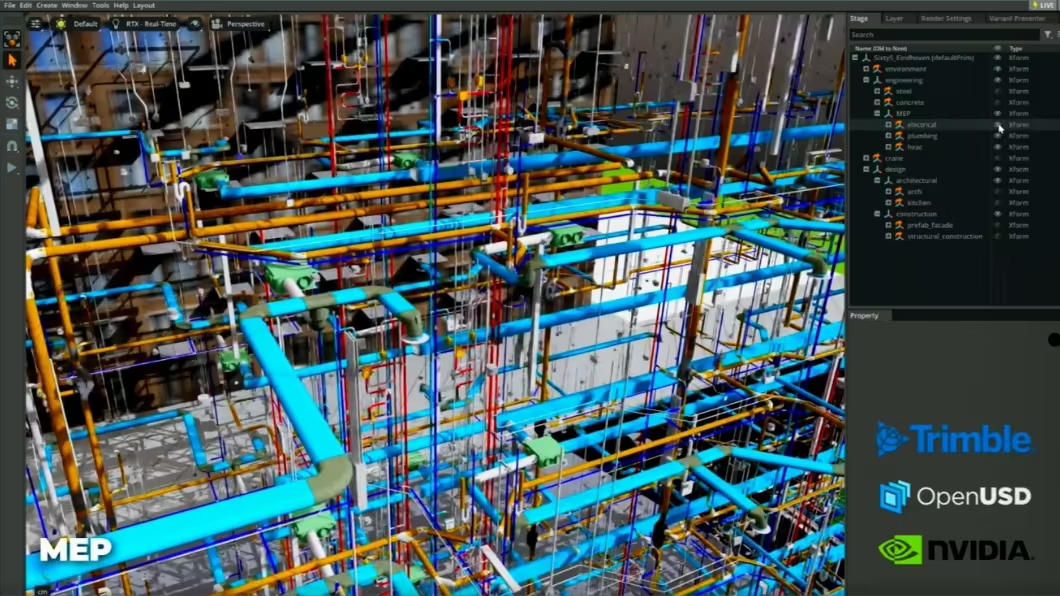
The universal language of 3D
OpenUSD is not just another file format born in a CAD lab. It is a framework born out of necessity at Pixar to handle the exponentially increasing complexity of the studio’s films.
"We were trying to solve three main problems," explained Steve May, CTO of Pixar and chair of the Alliance for OpenUSD. "How to manage, edit and render incredibly complex 3D scene data. How to allow a large number of artists to edit that scene data at the same time. And how to move data from application to application."
The magnitude of the challenge was evident in a scene May showed from Toy Story 4 featuring an antique store filled with thousands of individual props, from lamps to furniture. Rendering required a system that could handle massive complexity without crashing.
This is where the AEC industry should sit up and take notice. If OpenUSD can handle the geometry, lighting and physics of a Pixar film, it can certainly handle the complexity of the built environment.
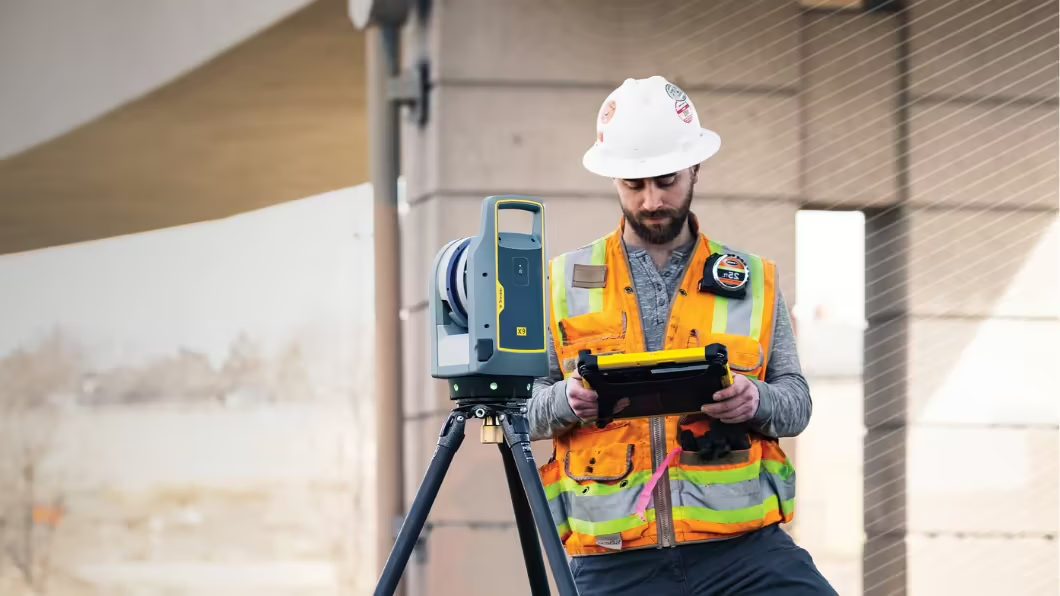
A solid foundation for innovation
Pixar envisioned OpenUSD as a tide that could "lift all boats," but open standards require governance. This led to formation of the Alliance for OpenUSD to ensure that, as companies like Apple, Autodesk and Trimble build on this framework, the foundation remains stable.
Stability has allowed other industries to step in and innovate. Guy Martin, director of open source and standards at NVIDIA, shared how the company took this "media and entertainment" technology and applied it to heavy industry.
"We realized that we actually needed to build a system of libraries to enable physical AI simulation and digital twins," Martin said. "It’s really interesting to see something taken from the media and entertainment space but expanded out to serve real-world problems."
NVIDIA is using OpenUSD to help simulate and visualize weather and climate predictions at a global scale for its Earth-2 project. NVIDIA also utilizes OpenUSD to help train robots in virtual factories before they are deployed in the real world.
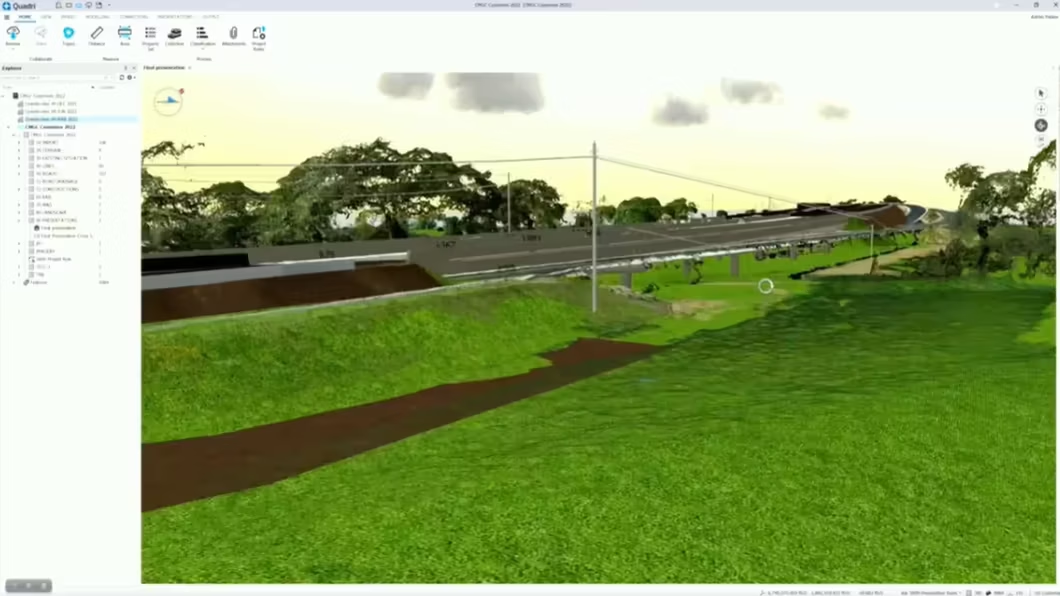
The ‘Photoshop of construction data’
OpenUSD handles data in ways that are different from those that many of us are familiar with. In AEC, we often suffer from the "big data blob" problem. As Sean Snyders, a Distinguished Engineer at Trimble (and a Wētā FX veteran who worked on Avatar), put it, "You throw the file over the fence, and somebody else is going to read that in for their workflow. As soon as you do that, you have a duplication issue. You don't have traceability to the source."
OpenUSD solves this through layering. Guido Quaroni, senior director of engineering for 3D&I at Adobe, worked on Toy Story 2 with May. He described it as similar to layers in Photoshop. For example, you can have a layer for the foundation, a layer for the framing and a layer for the HVAC. You can change the "winter" layer to "spring" to see different lighting without destroying the underlying geometry.
"The value is that it allows you to make changes in selective areas of this scene or this world without changing everything, every time," Quaroni explained. "It gives you the confidence that the system is designed to scale."
This "non-destructive editing" can prove invaluable for construction collaboration. A structural engineer can update a beam, and the architect sees that change referenced instantly, without needing to export and import massive, monolithic files.
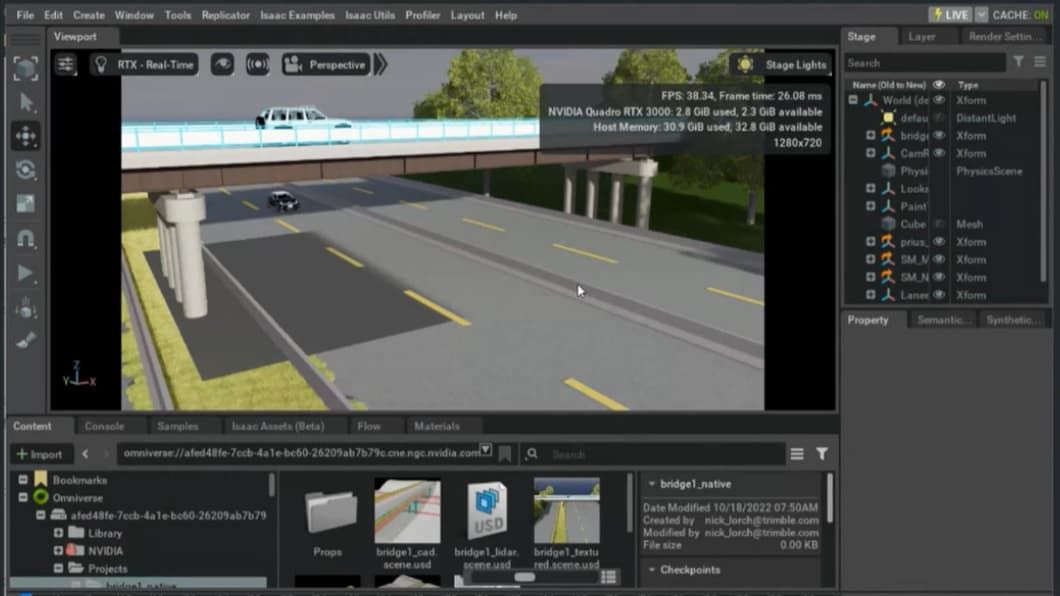
From ‘digital cousins’ to digital twins
We hear the term "digital twin" everywhere. Martin made an important distinction, claiming that what we have today are in fact "digital cousins"—representations that look like the asset but don't behave like it. OpenUSD provides a pathway to true digital twins because it can aggregate data from different sources—CAD, geospatial, IoT sensors—into one unified, queryable environment.
Snyders painted a vivid picture of this future for Trimble. "I like to refer to Trimble as one giant construction robot," he said. "All our robotic total stations, all our autonomous machine control, our software contribute to this vision of automation for construction. And I believe OpenUSD can help."
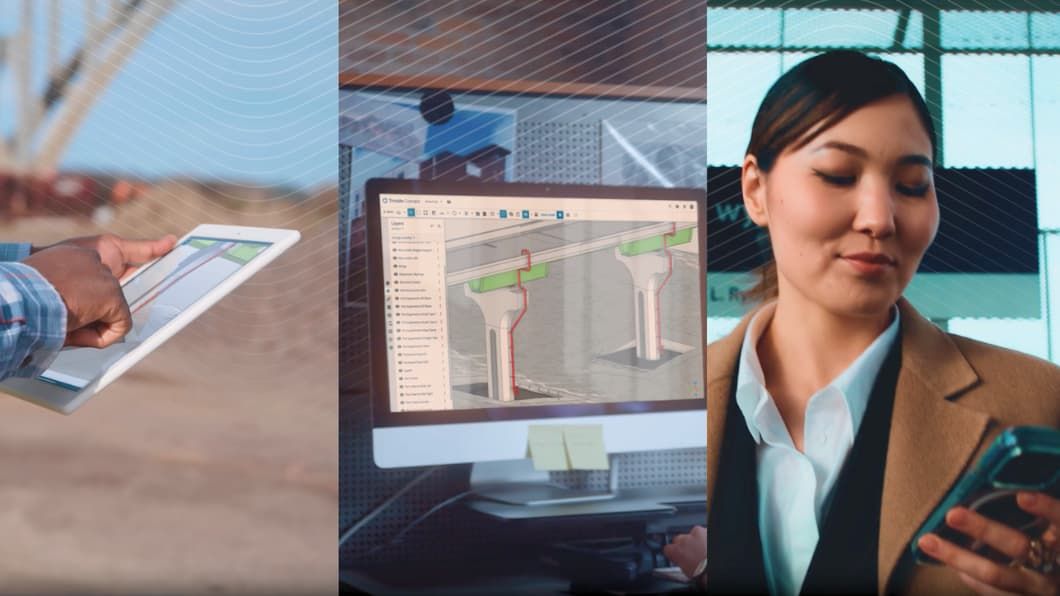
OpenUSD has the opportunity to create the connective tissue where we can move from simply viewing a 3D model to interacting with a live digital asset that helps connect the office to the field. It has the power to unlock new pathways for visualization, simulation and digital twins, while maintaining full fidelity with highly specialized, domain-specific datasets from Trimble.
Bridging the digital and physical worlds
What are the barriers to adoption and why isn't everyone doing this yet? The consensus is education. The technology is here, and the Alliance is working hard to standardize the schemas so that a "door" in a Pixar movie and a "door" in a BIM model are defined in ways computers can understand.
As we closed the panel discussion, I was reminded of why I love this industry. We are builders. Whether we are building stories that captivate the world or infrastructure that sustains it, we are creators. OpenUSD represents a bridge between these worlds; an invitation to stop working in silos and start speaking a universal language of 3D.
The Alliance is open. The technology is open. The only question left is: Are you ready to join the conversation?


