Customer profile
Family-owned and operated Aldridge Electric is an electrical contractor headquartered in Libertyville, Illinois. Founded in 1952, the company has nearly 70 years of experience completing complex and challenging projects in the transportation and power markets. The company has regional offices in California, Maryland and Wisconsin.
Business challenge
Fabricate and install power network for energy efficient data center.
Solutions:
Benefits:
Improved operator confidence
Faster issue resolution
Improved field coordination
Reduced rework
Reduced emissions
Greater accuracy
The new Dekalb Data Center located on a 500-acre campus in Dekalb, Illinois, is on track to be one of the most sustainable facilities of its kind. Designed to be LEED Gold Certified, the facility incorporates energy and water conservation as well as waste reduction processes. According to the owner, the facility will run on 100% renewable energy and use 80% less water than the average data center.
Building a facility to achieve those sustainable goals and perform necessary functions requires a comprehensive network of routers, switches, firewalls, storage systems, servers and controllers — and it’s up to family-owned and operated Aldridge Electric to put much of the network into play.
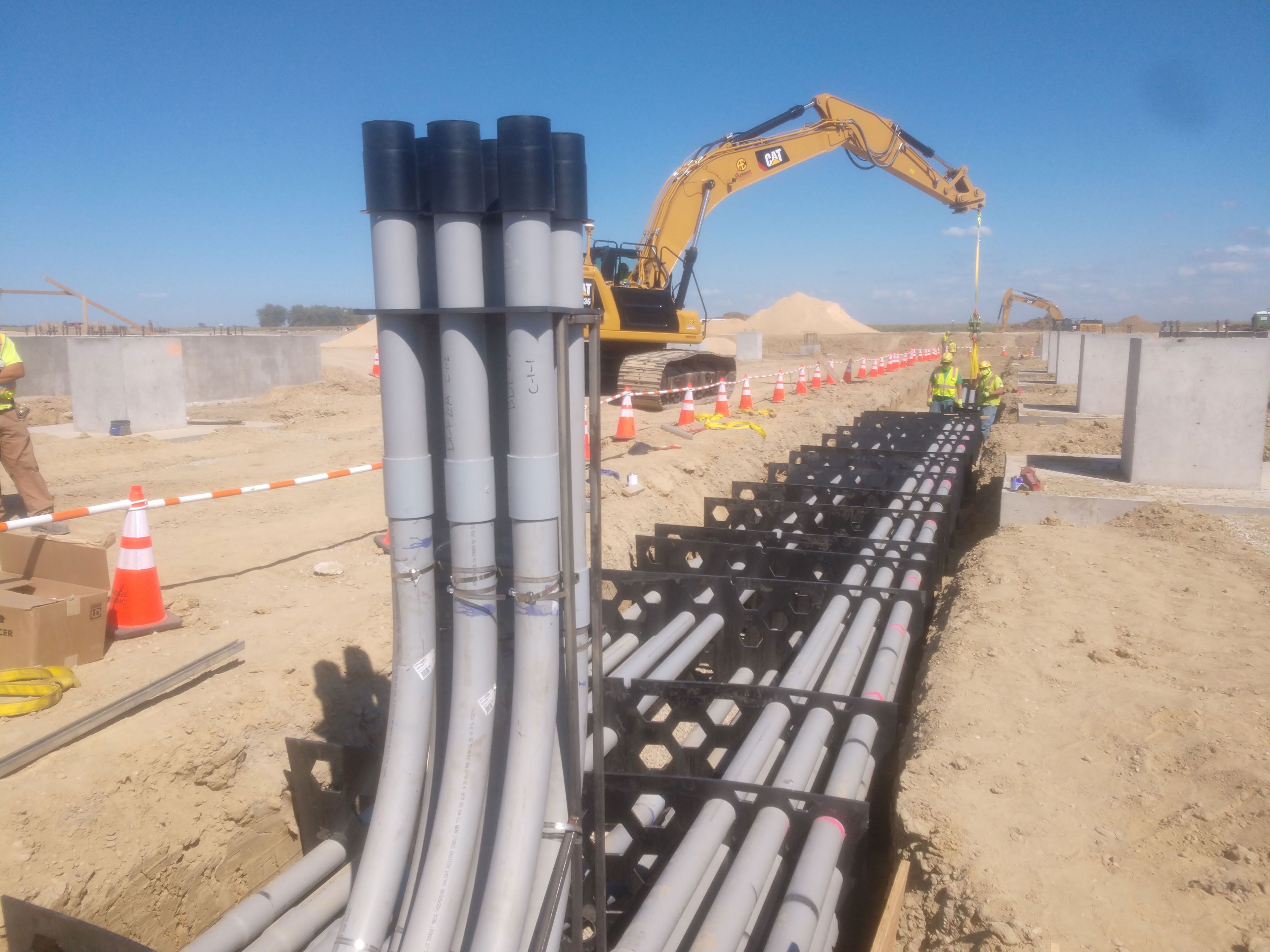
With headquarters in nearby Libertyville, Illinois, the firm is the electrical utility contractor for the one-million-square-foot, state-of-the-art data center. The scope of the project included fabricating and installing 60,000 linear feet of cable, 100,000 linear feet of duct bank, 1.2 million feet of conduit and 225 manholes that link the substation and the data center.
To meet the 14-month construction timeline, Aldridge initiated a connected, technology-enabled planning, design, fabrication and installation workflow that spans seamless concept-to-construction workflows.
Design-to-delivery
Designing, fabricating and installing millions of feet of cable, conduit and manholes requires considerable planning, coordination and collaboration to ensure timely delivery and safety.
At Aldridge, collaboration begins early. The BIM team’s background is critical to understanding the sequencing of work, identifying prefabrication opportunities and developing a bill of materials to use on bulk material purchases. To facilitate the process, the BIM team modeled the entire data center site in 3D to facilitate subsequent design reviews and clash detection with project partners, and to maximize prefabrication opportunities.
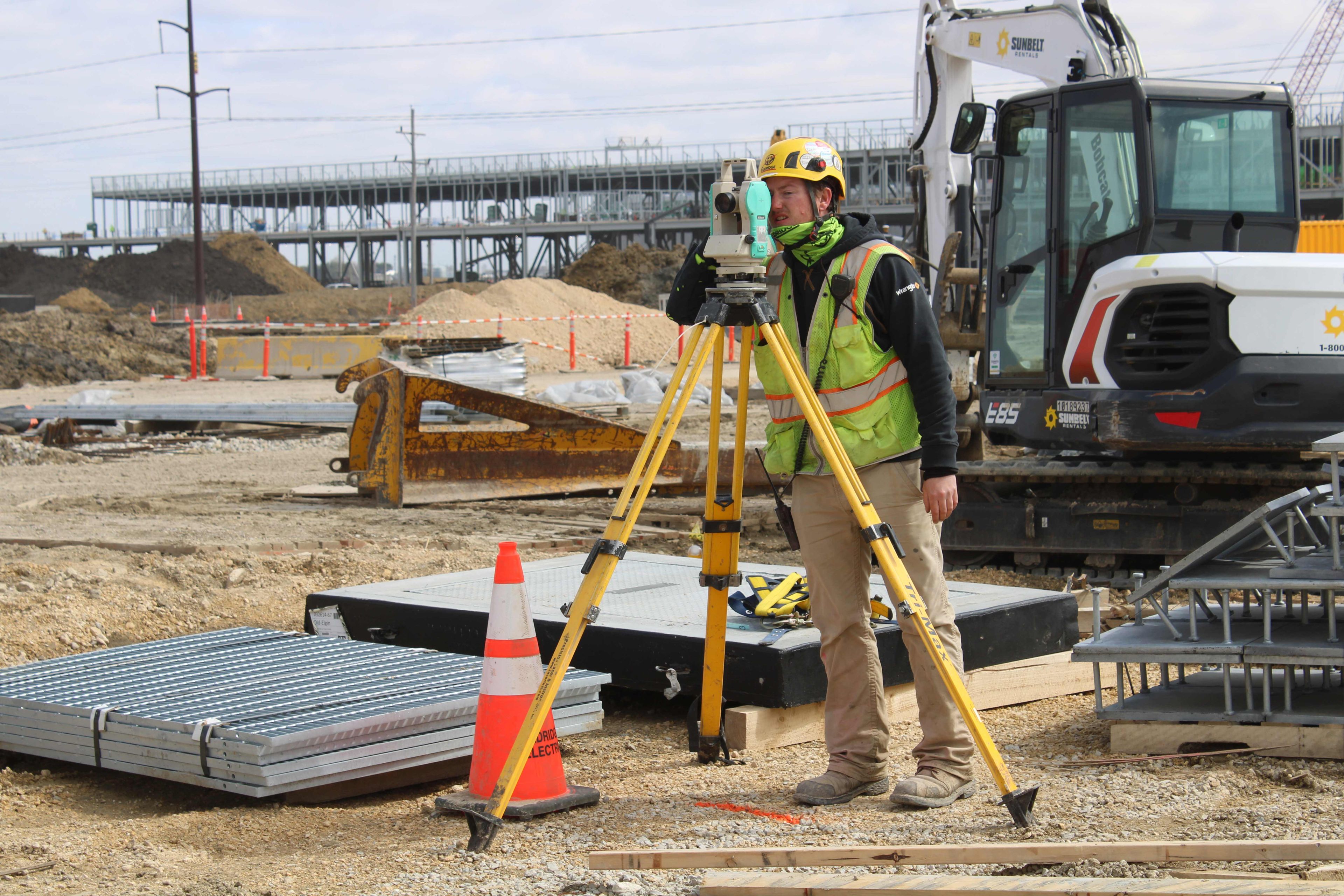
To further streamline work on the massive data center project, the site was broken into a plan grid, or lots, with survey control set throughout the site.
Jeff Buckley, PreFab/BIM program manager at Aldridge, explained, “We had two surveyors on site during peak construction, but usually have just one — and that’s largely thanks to the use of GNSS-enabled equipment.”
The project team relies on the Trimble SPS986 GNSS Smart Antenna with a SPS855 base station for layout, and, for the first time, Aldridge incorporated grade control into its technology-enabled workflows.
Optimized to grade
Devin White, BIM coordinator at Aldridge, said, “With the magnitude of this project, we started looking at different grade control opportunities with our equipment partner SITECH Midway. SITECH gave us a demonstration and then worked closely with our layout team and operators to get everyone trained.”
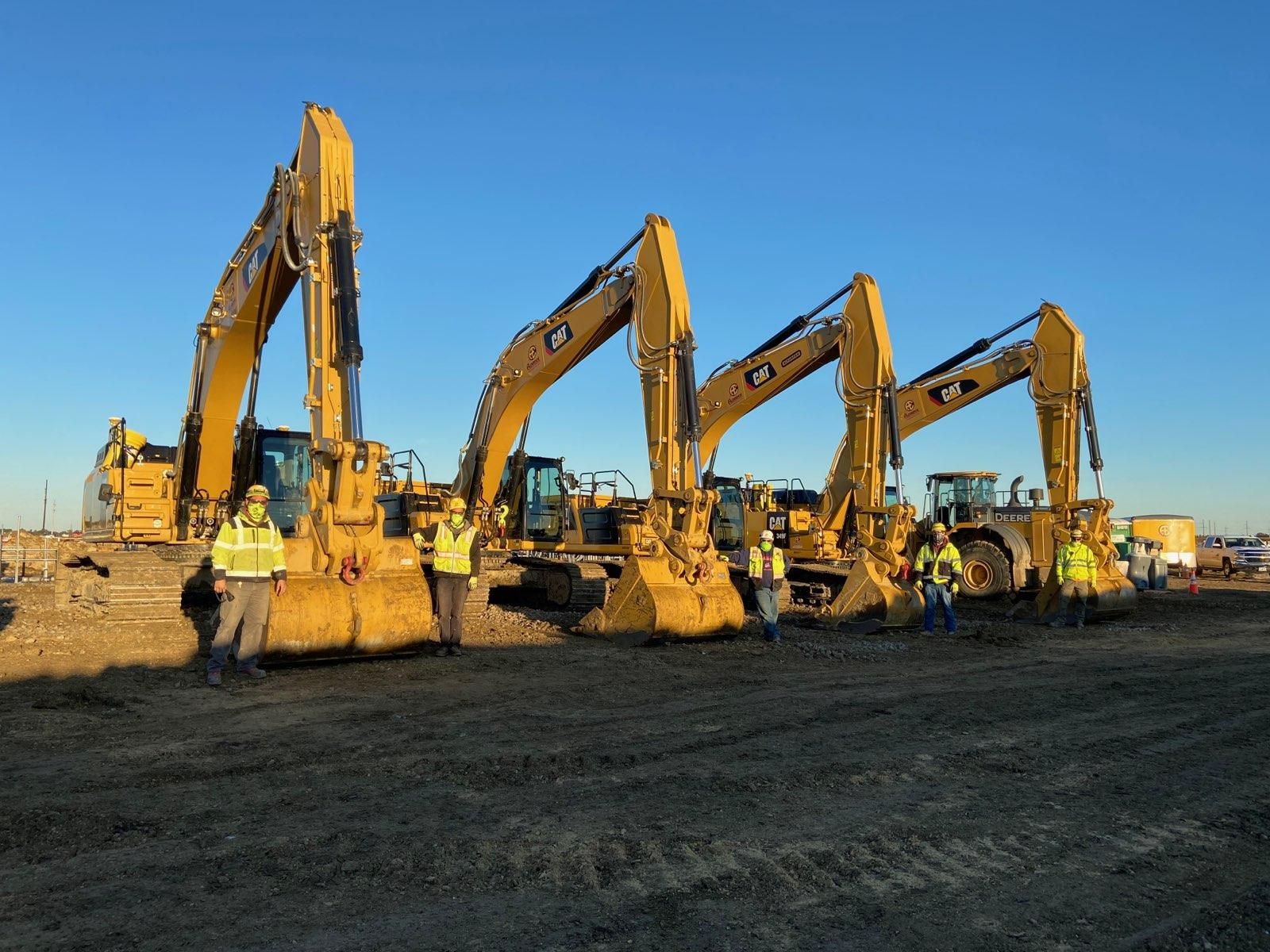
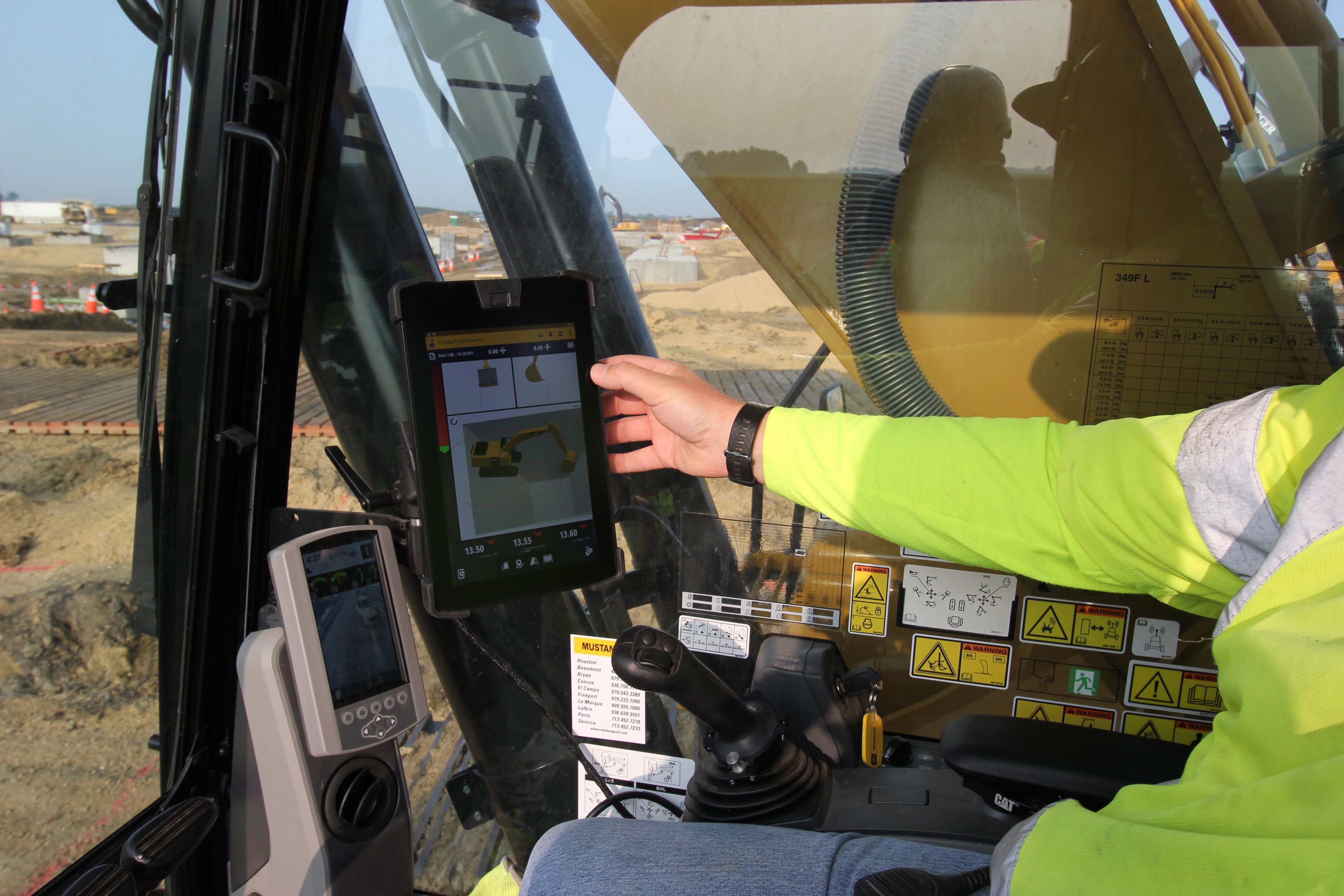
Aldridge initially purchased two Trimble Earthworks grade control platforms for excavators. Soon after, the company added two more Trimble Earthworks systems, one for an excavator and one for a dozer. The grade control systems fit seamlessly into the company’s connected workflow. White transfers the 3D models to Trimble Business Center and then to the machines.
“Setting up the models for grade control is pretty straightforward,” said White. “The operators, many of them first time users of grade control, really like the technology because they can see what they’re going to be digging and what it’s going to look like, and the machine keeps them positioned accurately. They don’t need a surveyor every time they put a bucket down. We have one excavator without grade control, and nobody wants to use it.”
Buckley added, “The site work is so accurate that the general contractor often looked to us to verify work completed by other contractors. That was a big confidence builder for us, knowing the new program we learned for this project provides value beyond our own scope of work.”
The Trimble Earthworks models are used to represent the exact locations of structures, duct bank and utilities, so that the machine operators knew exactly what they needed to do at all times. “This made our excavator operators more efficient and reduced rework while reducing emissions and fuel. With GNSS, our crews could install objects to within a half-inch tolerance,” said Buckley.
AR advantage
The most challenging aspect of the data center project, according to Buckley, is the schedule and coordination between the Aldridge team, the GC and the other subcontractors on the job. “It’s important that we are clear about where we’ll be and how long it’s going to take,” he said.
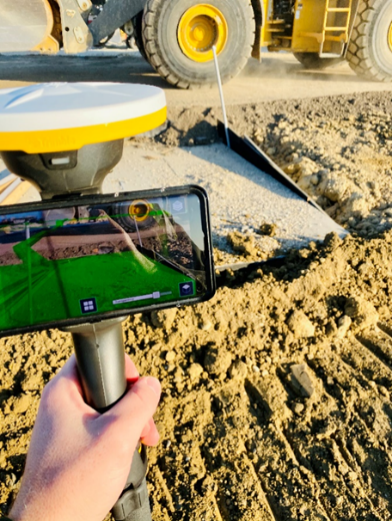
The next piece of Aldridge’s ever-expanding digital workflow to be added to the data center project is augmented reality (AR) — specifically Trimble SiteVision, a solution that enables project teams to see spatial data in a real world context.
Trimble SiteVision allows operators to use their Android phones to give a rough layout prior to beginning a designated lot work package — and the technology allows for 6” tolerance precision when trenching.
“What we really like about it is the connectivity and the communication between the office so everyone knows they’re using the latest drawings,” said Buckley. “While the AR is still a new technology for us, we are already seeing value. In the few times we’ve used it on the data center job, the project team has loved it because it’s a nice visual representation of what we model versus what’s in the field.”
The program’s connectivity provides ease of information sharing back to the office, and crew access to the latest drawings in the field. In one case, White used SiteVision running on his phone to check the specified offsets of a duct bank package. He recalled, “The electricians weren’t clear about how it was to be installed because it had kind of a corkscrew feel to it. I uploaded the design onto the screen and they got it immediately. It was kind of an Aha! moment. That’s happened a few times.”
White noted that he has also used it to provide the general contractor with a daily map of where crews would be working on the job prior to crews getting on the site to assure site readiness. He said, “The idea was for the field engineers to see existing conditions compared to the planned work. It’s a great way to make sure there aren’t any obstacles or concerns, which minimizes the chance of delays. They were really impressed.”
It’s also the perfect tool for resolving issues in the field. “We can record as-built conditions and overlay with models back in the office to resolve issues and execute changes,” Buckley said.
Currently, Aldridge has invested in three SiteVision systems.
When asked about ROI of its connected digital solutions, White noted that project teams see clear advantages in production, attitude, quality and safety. “With how fast everything has gone, there is no way we could have worked as fast and accurately without the technology as we have with it. We probably would have had to quadruple the manpower to get the project done in the given timeline,” he said.
The connected technology workflow — from BIM to AR — that has been realized on the data center job is translating to other jobs throughout Illinois and across the country.
“Technology allows us to deliver a product that is not just built “as planned,” but is delivered “as intended,” often allowing us to make recommendations and deliver a final outcome that exceeds original expectations,” Buckley concluded.