

By Nathan Patton, Senior Manager, Trimble Office-to-field and AI Solutions
The gap between office expectations and field reality is a fundamental threat to construction performance and profitability. Now, reality capture is changing the game, and contractors that embed modern capabilities within their project management solutions maximize the visibility and collaboration advantages.
Discrepancies between design, schedule, budget and operational understanding in the office and actual as-built status and dynamic, daily adjustments made on the jobsite are not surprising. Keeping teams on the same page is inherently difficult, and contractors have historically relied on fragmented, labor-intensive processes to do it.
Field-fit changes not communicated to the office can have downstream effects. Office updates and assumptions not relayed to the field lead to operational errors. Even when communication is effective, the information often flows outside of the tools needed to operationalize it and must be entered manually.
Sharing visual documentation
Reality capture is essentially the process of creating a digital depiction of a physical jobsite at a point in time. Advances in 360-degree cameras, mobile devices, cloud computing and AI have made it easier than ever for contractors to digitally capture jobsite activity without the limitations and lag time of logs, phone calls, photos and other outdated tools. This is enhancing opportunities to visually document and analyze progress, improve collaboration and make more informed decisions throughout construction.
As technology has advanced, the number of reality capture solutions available has exploded. Today, contractors can choose from a rapidly growing list of standalone options. But capturing reality is only part of the equation.
Value multiplies when photo and video data from the jobsite is seamlessly integrated within tools contractors already use to manage projects. Standalone solutions require them to upload imagery into a separate application, switch between platforms or manually connect data. Natively embedded reality capture solutions allow visual site documentation to become part of everyday project workflows—making information easier to access, collaborate around and act upon.
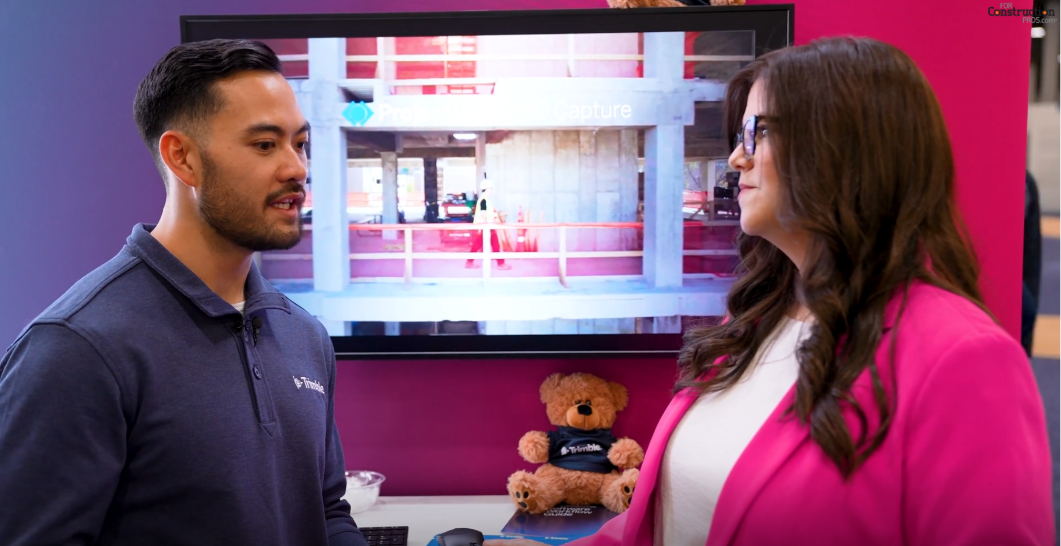
Nathan Patton discusses how to bring reality capture into project management workflows in a six-minute interview with Kathy Wells from the ForConstructionPros trade publication.
The connected ecosystem approach
This is the approach Trimble is taking. Trimble ProjectSight 360 Capture integrates directly with standard 360-degree cameras, and the imagery flows seamlessly into the Trimble ProjectSight project management application and the Trimble Connect collaboration platform. Reality capture is a native part of the same environment where project teams already manage construction.
Walk the jobsite with an off-the-shelf 360-degree camera, such as an Insta360 device, and ProjectSight 360 Capture does the rest. Instead of managing another application, separate logins and additional integrations, ProjectSight 360 Capture embeds reality capture directly into existing project management workflows.
Using AI, the solution automatically maps captured images to project drawings, creating an interactive visual timeline that teams can access from anywhere. Teams can quickly navigate from a floor plan to a specific location, compare progress over time and collaborate around visual project information—all without leaving the ProjectSight environment.
Everything lives within the Trimble ecosystem. Imagery, drawings, RFIs, issues, documents and collaboration tools remain connected. Project teams get a more complete view of the jobsite while eliminating the friction of disconnected workflows. The results? Faster access to information, better visibility into progress and fewer surprises.
Contractors confirm the benefits
Early users of ProjectSight 360 Capture see the big advantages the Trimble approach to reality capture provides over standalone options.
“We are heavily invested in the Trimble ecosystem, and having 360 Capture within the ecosystem just makes it a huge selling point for us because we can do everything in one place,” said Gabriel Asante-Boado, head of design at AV Unibrak, a mechanical contractor based in the United Kingdom.
Bruno Morais, Construction Manager at SKYGRiD, echoed that sentiment. “One great thing about this is that it's all under one roof,” he said. “The user interface is very familiar to what we already deal with day-to-day, and I think that will make it a lot easier for people to access and review the data.”
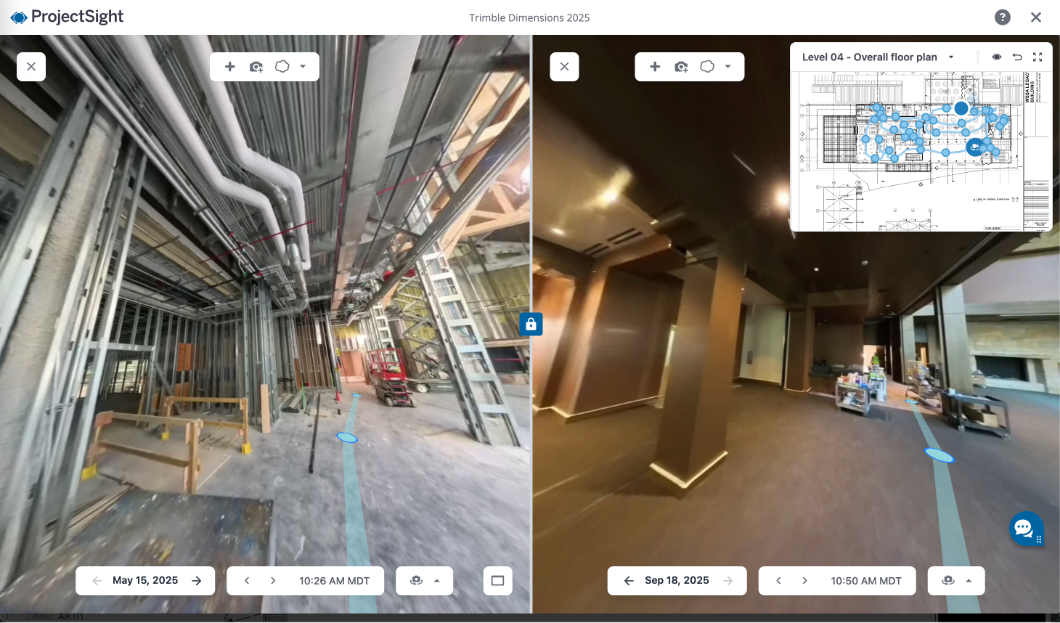
More confidence on the jobsite
Contractors should manage projects, not a collection of applications. ProjectSight 360 Capture consolidates photo and video evidence directly into one construction management ecosystem, replacing scattered files, multiple software applications and contracts and confusing integrations with a single ground truth and proof of accountability.
Capturing the job walk takes no technology expertise, and the data works natively right inside the ProjectSight project management platform with no other integration or import/export steps required. The result is the ability to identify, visualize, communicate and document events on a project with ease and context.


