

The seamless integration of technology has revolutionized how lynchpin industries operate, ushering in unprecedented advancements and efficiencies. By leveraging modern innovations, these industries have enhanced their operational capabilities and set a precedent for the indispensable role of technology in driving progress and competitiveness.
The evolution of SaaS systems in industry operations
One of the most transformative shifts in industry operations has been the adoption of Software as a Service (SaaS) systems. These cloud-based platforms offer unparalleled convenience and flexibility, providing real-time access to critical data via mobile devices. Teams can access and update blueprints, change orders and project specifications from any location, ensuring alignment across all parties. The immediate access to current information significantly reduces errors from outdated documents, enhancing operational efficiency.
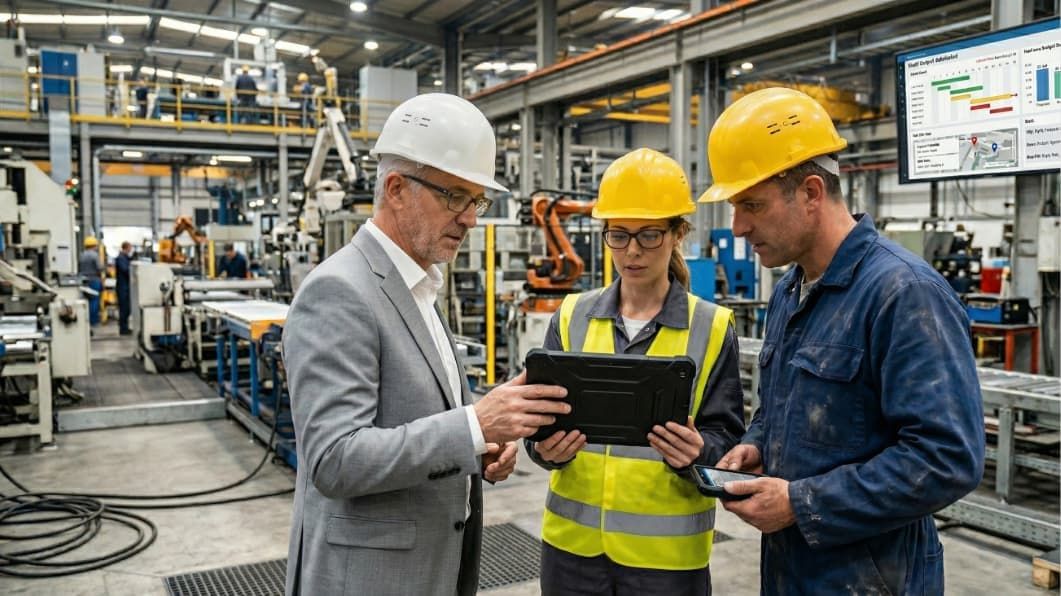
Integrating SaaS systems has also facilitated improved collaboration among various stakeholders. Project managers, field workers and executives can communicate effortlessly, share insights and make data-driven decisions. This level of connectivity is vital for keeping projects on track and within budget. By leveraging SaaS solutions, industries can more readily adapt to evolving conditions and requirements, bolstering their agility and resilience.
Geospatial technology as a game-changer
Geospatial technology has emerged as a transformative force for key industries, revolutionizing how data is gathered and analyzed. Companies can significantly enhance operational efficiency by leveraging geographic information systems (GIS) and location data.
In construction, geospatial technology offers precise mapping and site analysis, streamlining project planning and execution. Project managers can visualize site topography, assess soil conditions and plan logistics more effectively, reducing costly delays and errors. The ability to quickly generate accurate measurements and evaluate multiple site options enhances project feasibility and strategic decision-making.

Furthermore, geospatial technology facilitates improved regulatory compliance and risk management. By providing detailed geographic insights, companies can ensure that their operations adhere to zoning laws, environmental regulations and safety standards. This proactive approach to compliance mitigates risks and fosters trust and transparency with stakeholders.
Overall, geospatial technology catalyzes efficiency, precision and innovation across key industries, making it an indispensable tool for modern business operations.
The commitment to innovation among industry executives
Industry leaders recognize that innovation is crucial for maintaining a competitive edge in today's fast-evolving landscape. A recent McKinsey survey reveals that 70% of construction and building executives have identified “getting smart and investing in innovation and R&D” as a top priority. This highlights a shared understanding among industry executives that their companies risk falling behind without emphasizing technological advancement.
These leaders are not merely acknowledging the importance of innovation; they are actively implementing transformative changes within their organizations. By allocating significant budgets to research and development and fostering a culture that promotes experimentation and continuous learning, they are committed to exploring new possibilities. This proactive stance ensures companies can swiftly adapt to emerging tools, processes and market demands.
Moreover, executives are acutely aware of the need to stay ahead of regulatory changes and market shifts. By prioritizing innovation, they position themselves to navigate complexities and uncertainties better, ensuring their companies remain agile and resilient. This approach is vital in industries where technological disruption is increasingly common. Additionally, this commitment goes beyond internal operations and includes forming strategic partnerships with tech firms and startups. By leveraging cutting-edge technologies through these collaborations, industry executives can integrate advanced solutions more seamlessly and scale them effectively across their operations. This collaborative mindset accelerates innovation and opens up new pathways for growth and efficiency.
Efficiency and cost reduction as key drivers of technology adoption
In an era where profit margins are increasingly squeezed, companies in lynchpin industries are keenly focused on enhancing operational efficiency and reducing costs. Technological innovations provide a pathway to achieve these goals, offering various solutions, from automated machinery to advanced data analytics. By incorporating these technologies, companies can streamline their processes, reduce waste and minimize downtime, ultimately driving significant cost savings.

For instance, automation technology enables companies to perform repetitive tasks more accurately and consistently, freeing human resources for more complex and strategic activities. This not only boosts productivity but also reduces the likelihood of costly errors. Advanced data analytics further complement these efforts by providing real-time insights into operational performance, enabling better resource allocation and predictive maintenance. This proactive approach helps avoid unexpected breakdowns and extends the lifespan of equipment, thereby reducing overall maintenance costs.
Energy-efficient technologies and intelligent resource management systems also contribute to cost reduction by optimizing the use of materials and energy. By embracing these technological advancements, companies achieve immediate financial benefits and build a more resilient and adaptable operational framework. This adaptability is crucial for maintaining a competitive edge in an increasingly dynamic market, where staying agile can make all the difference.
The role of consistency and reliability in advancing Automation
Consistency and reliability are pivotal in driving automation within critical industries. Automated machinery and processes have become indispensable for maintaining high-quality and operational efficiency standards. For example, automated systems in construction can execute repetitive tasks such as bricklaying, welding or concrete pouring with a precision that manual labor cannot achieve. This ensures uniformity and significantly reduces the likelihood of errors that could lead to costly rework.
Automated processes significantly enhance safety in regulated and controlled environments. In aerospace, for instance, automated inspection systems consistently check for structural integrity and compliance with safety standards, reducing human error and increasing overall safety.
Ultimately, consistency and reliability in automation are about maintaining standards and pushing the boundaries of what these industries can achieve regarding efficiency, safety and innovation.
The future of industry advancements
As lynchpin industries progress into the future, they are set to leverage cutting-edge technologies to drive transformative advancements. Emerging trends such as enhanced interoperability of digital design initiatives and cloud-based data systems will facilitate seamless integration across diverse platforms. Machine learning and artificial intelligence are on the brink of revolutionizing processes by offering predictive analytics and refining decision-making capabilities. These technologies will optimize operations, improve precision in project estimates, and elevate compliance protocols through sophisticated monitoring systems. As companies increasingly adopt these innovations, they will boost efficiency and cost-effectiveness, paving the way for groundbreaking developments that can redefine industry standards.

In summary, lynchpin industries have demonstrated a robust dedication to embracing innovation and integrating new technologies. Prioritizing efficiency, cost reduction, consistency and interoperability have been pivotal in adopting advancements like SaaS systems, geospatial technology and automated machinery. As these industries continue to invest in innovation and R&D, incorporating digital design, cloud-based data systems and machine learning/artificial intelligence will further propel progress and growth. The trajectory of lynchpin industries will undoubtedly be influenced by their capacity to adapt to and harness technological advancements, ensuring sustained success and development.
The construction industry has significant opportunities and challenges in the current dynamic landscape. As a leader, your role is pivotal in steering this essential sector toward future advancements. Adopting innovative approaches and integrating state-of-the-art technologies can enhance efficiency, cut costs and ensure consistency and interoperability. Envision a future where SaaS systems, geospatial technology and automated machinery operate harmoniously, optimizing processes and achieving unparalleled precision. By investing in digital design, cloud-based data systems and machine learning/artificial intelligence, you can foster a construction industry that is more sustainable, efficient and productive than ever before. The future is within your grasp—embrace the chance to contribute to building a better tomorrow for the construction industry.
Discover innovative solutions designed to boost your efficiency and ignite your business's potential.


