

High building material costs, continued shortages, and shipping delays continue to affect business operations
Contractors, consumers, and anyone who spends money have high hopes that inflation will continue to abate, and supply chains and prices will stabilize back to normal levels.
While inflation has cooled in recent months, construction material costs have been uneven, and contractors are still plagued with supply-chain problems.
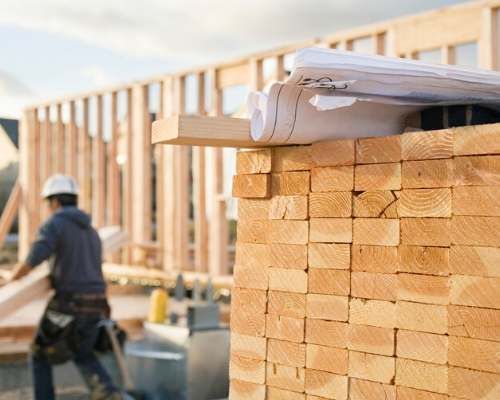
Why are building materials in short supply?
The obvious question is—if the pandemic is no longer at its height, why are building materials still in short supply? The answer is multi-faceted, but the major reasons include the following:
Domestic issues like the construction labor shortage, and stricter immigration policies
International affairs like the Ukraine-Russia war and China's COVID-19 shutdowns
Continued high demand combined with supply chain reshuffling and trade tariffs, which have increased the costs of even the most basic goods
The labor sh
ortage has affected the material supply chain in numerous ways. For example, truck drivers and warehouse employees are hard to come by, turning transition points in the supply chain into bottlenecks. Material production also suffers as a result of the labor shortage. While some of these struggles were predictable as a result of the retirement of the Baby-boomers, no one saw COVID-19 coming, and no one knew that many employees would never return to their pre-pandemic jobs.
Even before COVID-19 there were concerns in the construction industry around the supply chain and building material costs due to international trade. Trade tensions across the globe, especially between two key supplier-buyers—the United States and China—led to rising costs and issues with the materials acquisition process for some contractors.

"The cost increase of imported materials from China as a result of the newly implemented tariffs have shown the most significant impact on material costs so far this year,” Marc Padgett, president of Summit Contracting Group Inc., told National Real Estate Investor back in November 2019. “Approximately 60 percent of the cost increases we’ve seen recently are directly related to tariffs.” Now four years into the China-U.S. trade war, contractors are still dealing with this issue today.
All combined, continued high demand for goods and services, labor shortages, and foreign affairs (most of which originated from the COVID-19 pandemic) have produced inflation the likes of which we haven't seen in four decades. In fact, the pandemic was actually a major contributing factor to rising demand for construction materials in the housing sector. During the last three years, spending has shifted from consumable goods to durable ones, such as building materials. This investment in long lasting materials is usually a sign of a healthy economy, but combined with a labor shortage, it is the perfect recipe for high prices and low supply.
Even though the pandemic is mostly in the rearview mirror in the U.S., we've seen inflation slow only moderately so far, with the supply chain regaining some fluidity as new relationships are built. Reflecting both on the tumultuous past and the uncertain future, it's clear that contractors must have construction management processes in place that are capable of helping businesses respond to building supply issues as they arise.
Learn how Great Basin Industrial added integrated Field Ticketing to increase T&M Billing
How materials tracking reduces building material costs
While there’s no crystal ball for predicting tomorrow’s materials costs, preventing material waste is among the toughest—and costliest—challenges contractors can face. With so many moving parts on projects today, it’s easy to overlook just how materials, parts, tools and more are being utilized and accounted for. However, with already razor-thin profit margins and supply chain uncertainty, it’s clear that contractors need to be scrutinizing their materials processes more.
Misuse of materials, theft, destruction and other material waste issues cost contractors tens of millions of dollars each year in potential profit. And, the volume of annual construction waste is expected to reach nearly 2.2 billion tons by 2025 worldwide, leading to a greater push for closer material tracking and recycling programs in construction.
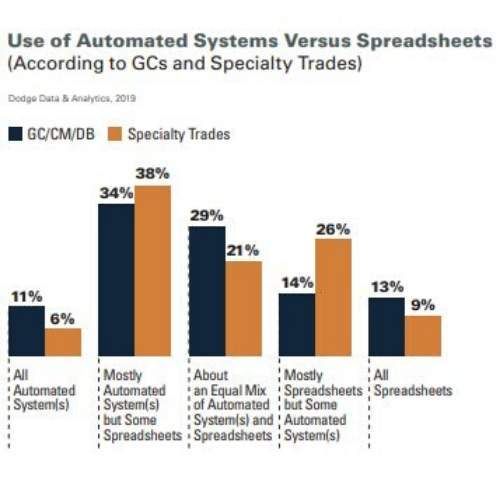
The problem though, is that many contractors are not equipped with the right tools to effectively do so. As noted in one report, Improving Performance with Project Data, produced by Dodge Data & Analytics and Viewpoint, many contractors are still on some form of manual processes like spreadsheets or paper. In fact, in a comparison on the use of automated software solutions versus spreadsheets, more than half of the contractors involved noted spreadsheets still account for at least half of their data collection processes. And, 13% of general contractors and 9% of specialty contractors relied on only spreadsheets.
Spreadsheets, paper, and disconnected software solutions all leave the door wide open to errors, misinformation and delayed information, meaning that contractors are hard-pressed to achieve accurate material counts in real time or effectively track material usage and waste—while there’s still time to make course corrections or plan ahead.
How Trimble Construction One solves building supply issues
To effectively track and manage materials, contractors need a modern, connected software solution that can provide real-time updates from the jobsite to the warehouse to the vendor supply chain.
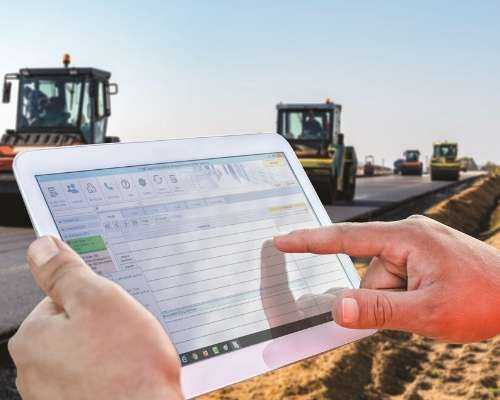
The Trimble Construction One suite of cloud-based construction management solutions provide just that. Trimble Construction One gives construction companies a truly connected software suite that collaboratively ties back-office professionals with field operations and entire project teams together with real-time workflows. Hosted in the cloud, Trimble Construction One combines leading-edge construction ERP offerings with collaborative team and field products and in-field mobile applications, giving customers a single source of data truth across the construction organization.
Trimble Construction One helps contractors get ahead of their materials and supply chain issues, allowing them to:
Track raw materials inventories and easily manage inter-company sales and inter-plant transfers
Track inventory and costs across multiple locations, with automatic updates recorded to accounting
Automate material reordering
Easily process material tickets, with ability to upload from scale ticketing systems
Seamlessly track quoted, ordered and actual units sold
Automatically generate and track surcharges for fuel and other fees
Track both owned equipment and independent haulers
Create real-time reports and dashboards to inform project teams and materials managers
Staying on top of construction materials, whether prices rise and supply chains struggle, or prices fall and materials are in long supply, will help contractors gain a competitive edge over their competition. When a contractor can show owners their house is in order and run a tight ship to control costs, they’re much more likely to develop long-term relationships and win more work.
Up Your Game: The Construction Labor Shortage Toolkit
Contact Viewpoint today to learn more about how Trimble Construction One can help your organization gain control of its materials management, and operate in a more productive, seamless cloud environment.


