

By Jonathan White, Product Manager, Trimble and Jason Rossback, Director, Energy Solutions, Trimble
Today’s solar projects are larger and faster moving, making innovative construction technology a key part of getting the job done right. To manage tight schedules, challenging terrain and growing expectations around quality and documentation, automation and connected digital workflows are spurring changes in what a typical day in the field looks like.
Solar represented 54% of new electricity generation capacity in the United States in 2025, according to the Solar Energy Industries Association (SEIA). U.S. Energy Information Administration data indicates the growth continued in the first quarter of 2026, when utility-scale solar had the highest growth rate among electricity generation sources at 24 percent. The largest operating solar farms exceed 7,000 acres and produce over 600 MW of power each. Bigger projects are under development.
Autonomy increases the pace in the field
Automation is delivering exponential gains in piling speed, accuracy and efficiency for solar installations by eliminating some steps between each install. Traditional methods require operators to stop and reposition machines while verifying locations, adjusting alignment and confirming depth before repeating the process a few feet away. Across an entire project, those interruptions result in inefficiencies and lost time.
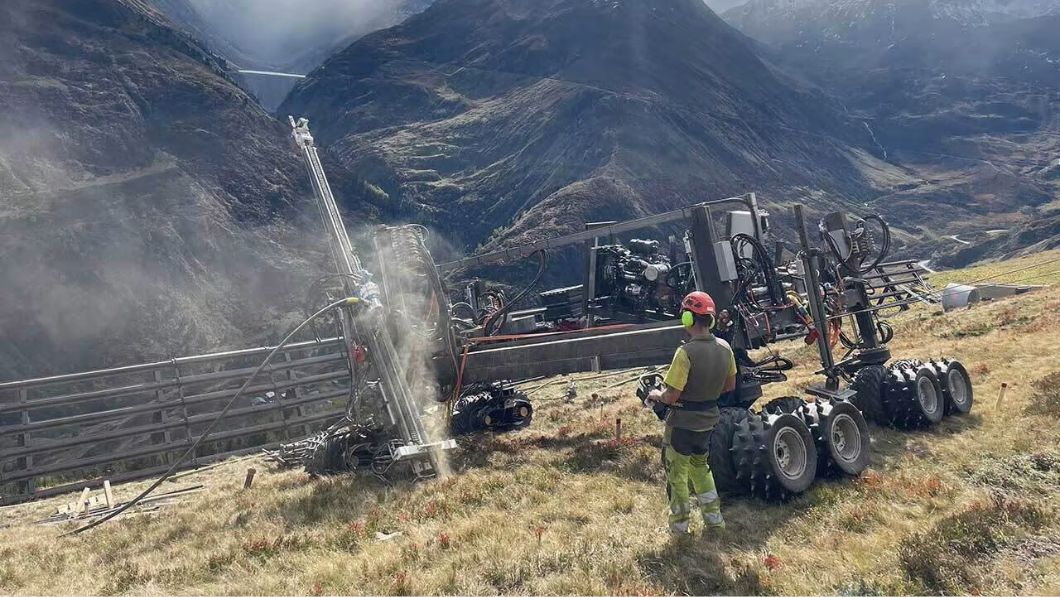
The Trimble Groundworks machine control system reduces those stops and adjustments by simplifying the pile installation process. Integrated with Vermeer PD10 and PD25 remote-control pile drivers, the system uses digital site data to guide the machine directly to the planned location and support accurate installation with minimal operator input.
Installers have all post locations from the pile plan on the display in the machine. Without string lines and stakes, the pile driver navigates using high accuracy real-time kinematic (RTK) positioning. Embedment depth notifications and pitch and roll features provide further guidance to avoid errors.
Saving a minute here or there may not sound dramatic, but the benefits are noticeable on large solar projects when multiplied across a high volume of pile installations. More speed and less rework combine to significantly affect project timelines.
Spanish multinational company Ferrovial reported that Trimble Groundworks and Vermeer automation resulted in up to 30% faster performance compared to traditional methods on solar projects in Texas.
The operator experience also changes. Experienced operators aren’t being replaced. They’re being freed from highly repetitive positioning and correction work and given more time to focus on higher-value management work.
Collecting site data before construction
A commercial solar farm can stretch across thousands of acres in remote areas where rugged terrain, elevation changes and incomplete site information make accurately placing each pile a major challenge. Small inconsistencies can affect the installation and future operations of solar trackers and panels, so pre-construction preparation is critical.
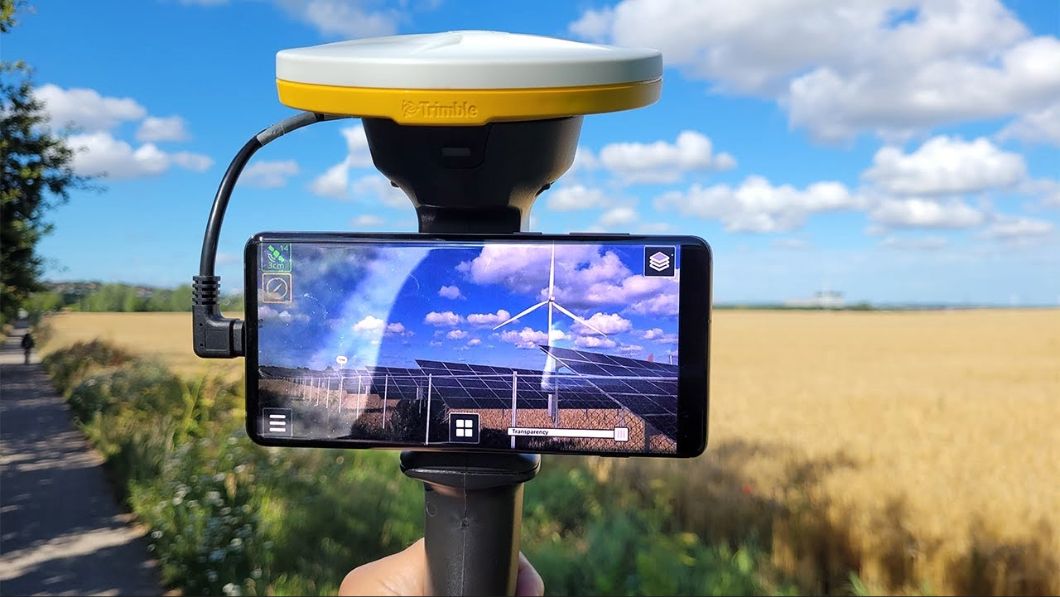
Better site data helps teams make better plans and decisions before crews and machines are fully mobilized and during installation. The advantages grow even more obvious on difficult or remote sites.
In Switzerland, Solar Express projects are bringing renewable energy construction into Alpine environments where steep topography, severe weather and short construction windows make planning especially important. For one high-altitude project, InfraDigital AG captured aerial imagery and laser scans to create a digital twin of the site. Trimble SiteVision then helped stakeholders see the proposed installation in the actual mountain landscape. That early visibility helped move the conversation with local residents from abstract plans to a clear shared picture of what would be built.
This visualization capability extended to the technical side as well. Local Trimble distributor ALLNAV was instrumental in creating a custom Trimble Access application to simplify the stakeout process for the anchors of the solar panels.
Capturing progress as the project is built
As solar projects become larger and more complex, teams need a reliable method for tracking construction progress and making sure what is installed matches what is planned. Traditional verification often depends on spot surveys and manual checks that capture only portions of the site, leaving potential gaps in documentation across thousands of acres.
Mobile mapping provides a more complete view. With Trimble mobile mapping solutions, contractors can capture detailed 3D scans of installed piles and surrounding site conditions. Those scans can then be compared with the original design model to verify alignment and identify discrepancies earlier in the process.
Construction teams get a snapshot of project progress in the form of classified point cloud regions with extracted features that provide accurate height-above-ground measurements and pile-to-pile spacing. The spacing is a required metric dictated by the type of racking being used, and in many utility-scale projects, the rack will track the sun to maximize energy production.
This mapping insight becomes especially valuable for collaboration. Engineers, surveyors, construction teams, owners and other stakeholders can reference the same up-to-date information when coordinating activity, reviewing progress or resolving field issues.
A record that keeps working after construction
Once the last pile is installed, the data collected during construction continues to pay off, supporting proactive asset lifecycle management. A utility-scale solar facility may operate for decades, and owners benefit from reliable historical information about the infrastructure they are managing. Detailed 3D scans linked to GIS data create a comprehensive digital record that can help teams plan maintenance, verify asset locations and improve long-term visibility.
Platforms such as Trimble Connect® can help centralize project data from machine control systems, mobile mapping solutions and design models so project information stays organized throughout the asset’s life. Everyone benefits from a shared place to access the latest plans, models and field updates from virtually anywhere.
Projects run more smoothly when teams, machines and data stay aligned from start to finish. Site models, machine guidance, as-built verification and project records all contribute to a record that remains useful long after construction ends. For contractors managing increasingly large and data-intensive projects, that continuity creates a smoother path from planning to execution to long-term operations.