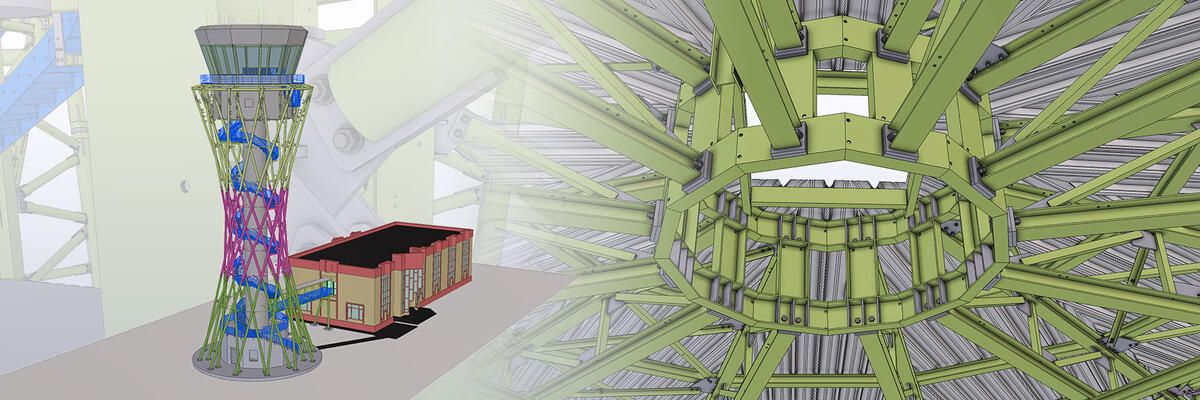
Visual scripting allows engineers to unlock the full power of parametric design - building customized workflows, automating repetitive design tasks, and handling complex shapes.
Modeling through visual scripting
Visual scripting offers a way to create geometry based on input data or parameters, by visually setting up logical and geometrical relationships in a graph. This way of working can be highly efficient and consistent. Any BIM information can be added or updated together with the geometry and managed from a central place.
Modeling of both simple and complex geometries can be significantly faster than traditional modeling and its engineering accuracy is assured since the engineer can create and manage the design as a whole, rather than manually insert and manipulate individual parts. Because all the parts can be automatically generated and updated based on the parameter values, the engineer can effortlessly iterate through different design alternatives.
Value engineering is a simpler process since the engineer can easily test or discover solutions that they may otherwise not have had time to consider, allowing them to provide a better service to the client and the design team.
The visual script can be connected to input data from various sources, including CAD tools and Excel, which then drive the resulting geometry and the attributes.
Visual scripting for Tekla software
Tekla offers visual scripting capabilities for both Tekla Structural Designer and Tekla Structures through our integrations with Grasshopper.
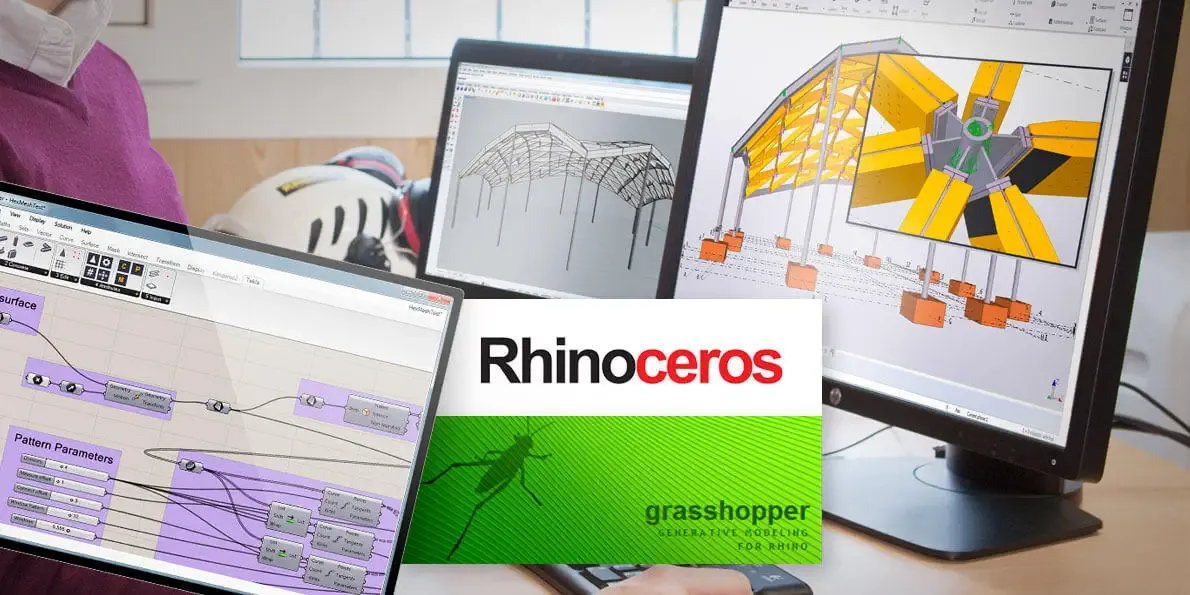
Grasshopper is a visual scripting platform that is part of Rhino, a powerful 3D modeling software solution popular across multiple industries for its ability to create accurate models at any scale. Rhino/Grasshopper is commercially available from Robert McNeel & Associates. (Please visit their website to learn about evaluation/trial possibilities).
Using Grasshopper with Tekla Structural Designer
The Grasshopper-Tekla Structural Designer live link enables algorithmic modeling, parametric design exploration, and data-driven design for Tekla Structural Designer using Rhino/Grasshopper.
The link is a set of Grasshopper components that loads into the Grasshopper user interface and interacts with Tekla Structural Designer.
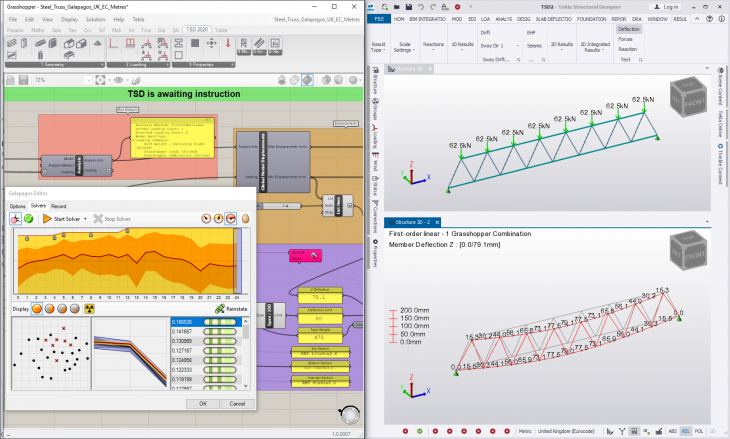
Prerequisites: You need to have Rhino (download) and Tekla Structural Designer (version 2019i or later) installed on the same machine.
Learn more and download from Tekla Warehouse.
More information in Tekla User Assistance.
Watch webinar: Parametric workflows with Tekla Structural Designer
Using Grasshopper with Tekla Structures
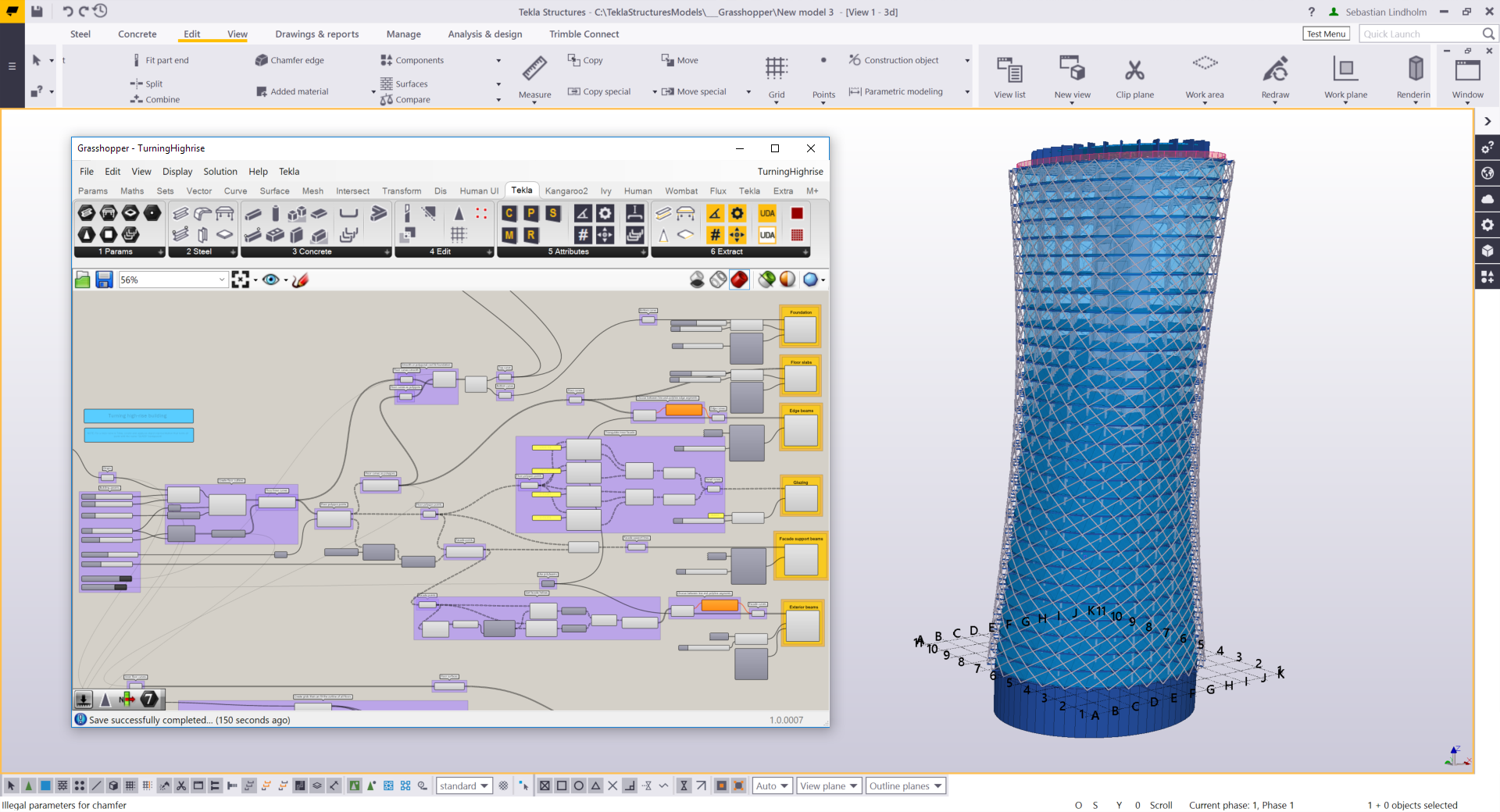
With the Grasshopper-Tekla live link, you can create and manipulate native Tekla objects in real-time from Grasshopper and query the Tekla model for information like attributes and object placements.
The link is a set of Grasshopper components that loads into the Grasshopper user interface and interacts with Tekla Structures.
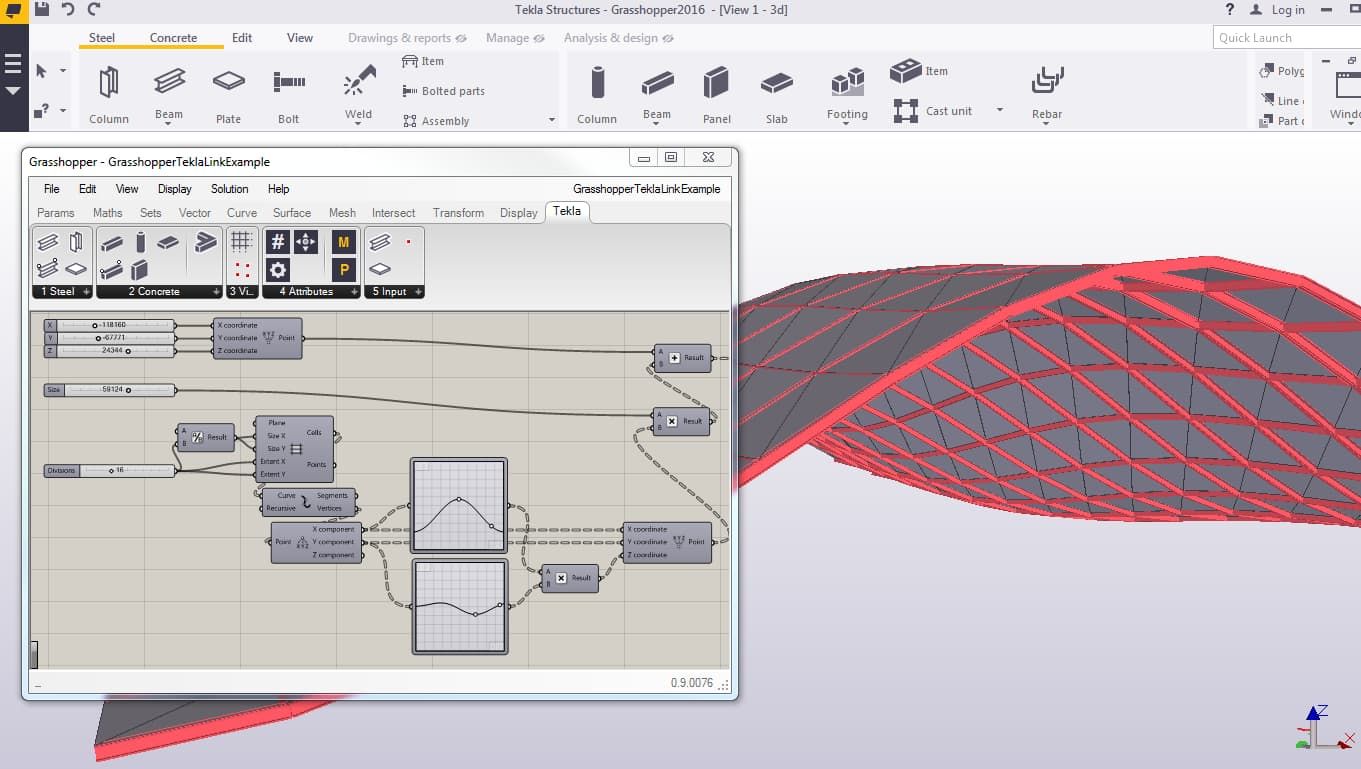
With the components, you can even bring complex Rhino shapes straight into Tekla Structures as items.
Prerequisites: You need to have Rhino (download) and Tekla Structures installed on the same machine.
Learn more and download the link from Tekla Warehouse.
More information in Tekla User Assistance.
Check out the frequently asked questions on Grasshopper-Tekla link.
Watch webinar: Easy steps to more efficient bridge design workflow
Custom components created with visual scripting for Tekla Structures
The Grasshopper Component uses the Rhino. Inside technology in Tekla Structures lets users benefit from visual scripting tools without being exposed to the visual script itself.
The component shows up in the component catalog in Tekla Structures as any other Tekla component and has a traditional component dialog. The component can, however, trigger any Grasshopper definition in the background to generate objects in Tekla, without all the end users needing knowledge about visual programming.
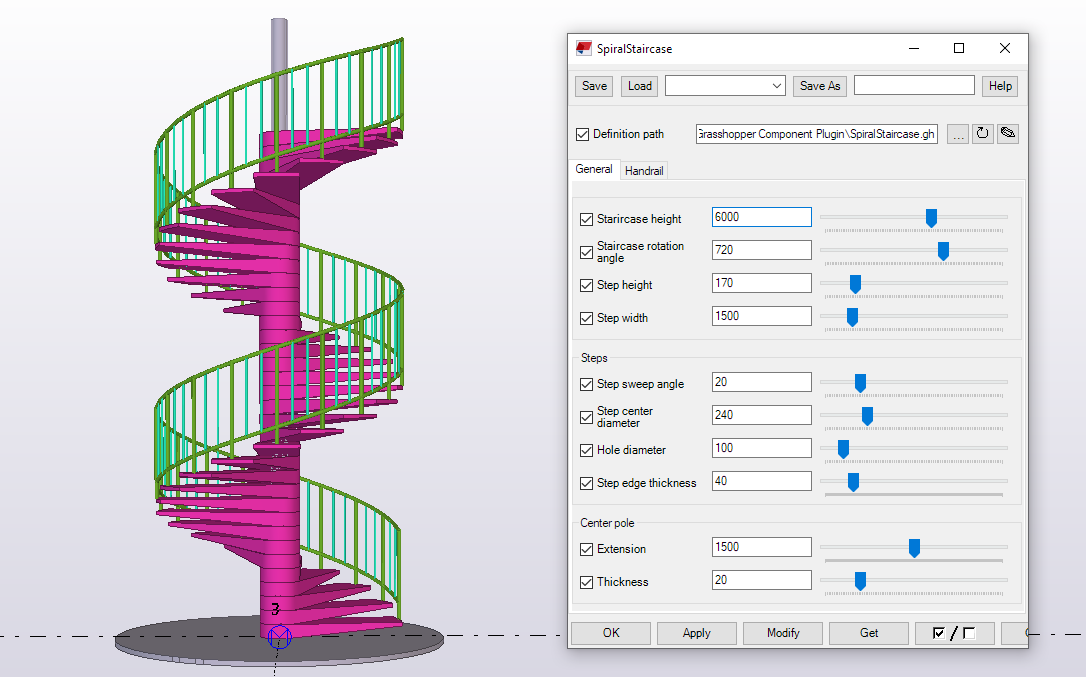
This means that visual scripting becomes a new way to create new Tekla component types, alongside the existing custom component editor and pure API programming.
First, select a Grasshopper definition in the component dialog to use the component. The dialog is automatically populated with properties extracted from the definition's parameters, including distances, text input, and Tekla catalog pickers. Once triggered, the component will ask you to pick the required inputs in the Tekla model, and Grasshopper will then generate objects in Tekla.
Prerequisites: In addition to the Grasshopper Component extension, you need to have the following installed on the same machine:
Rhino 7 or newer (not WIP) (download),
Tekla Structures 2019i or newer and
the Grasshopper-Tekla Live Link version 1.10 or newer (download)
Learn more and download from Tekla Warehouse.
More information in Tekla User Assistance.
Start your free Tekla software trial today