

Construction is a complex field with multiple organizations taking on roles throughout the process, each with their own data processes and workflows. Achieving a successful outcome on projects requires excellence all the way from the design phase to on-site execution. Getting the process right every step of the way means money in the bank and a solid reference that brings in more projects down the line, while delays and miscommunications can mean taking a loss, or even losing a customer.
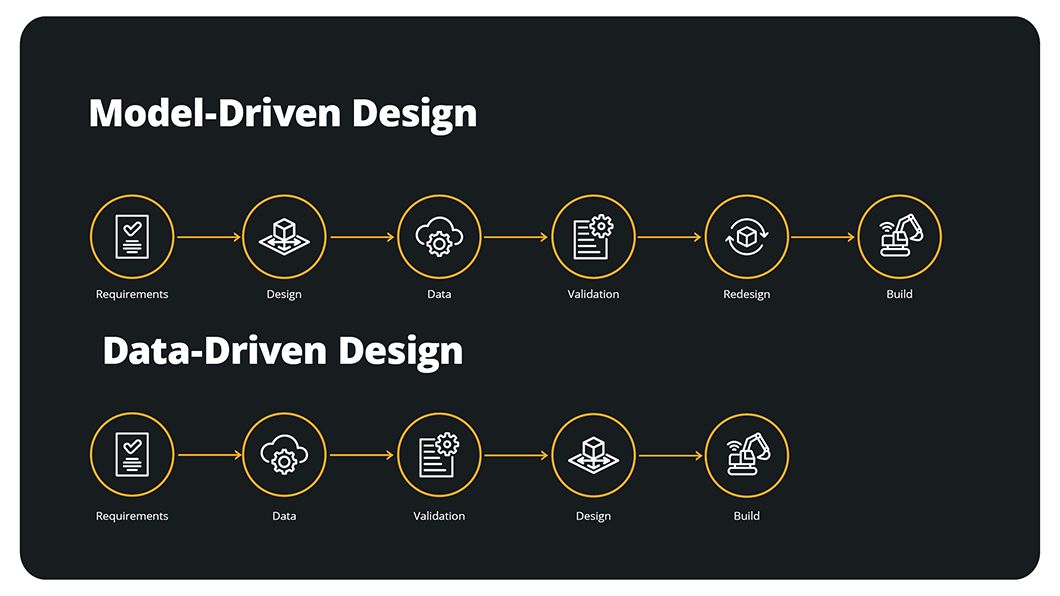
While it’s perhaps more commonly associated with the architectural discipline, today’s structural engineers are finding that they can achieve far wider and greater benefits with a data-driven approach that involves creating a data-accurate, 3D model all the project participants can work from and contribute towards in order to bridge the gap between design intent and constructability.
Here are three key benefits data-driven design offers to structural engineers, from the automation of repetitive tasks to effectively dealing with last-minute design changes and seamless interoperability.
1. Automating tasks
With a manual workflow, determining the most efficient design is an incredibly time-consuming process, involving the engineering team having to manually change each variable, run an analysis, note the results and then repeat an indefinite amount of times.
Performing calculations manually can delay projects by days, or even weeks, while performing calculations and analysis with automated tools helps engineers make faster, more collaborative decisions. Additionally, communication is much more straightforward if the information is easily visible for review and validation.
Using automation this early in the design process to increase efficiency has far-reaching benefits all the way down the chain. For instance, being able to quickly provide accurate analysis enables the structural engineer to present different options to other project participants, including alternatives for construction materials, labor-related costs and the environmental impact of different choices.
2. Efficient change management
A common challenge on any construction project, last-minute design changes can be incredibly time-consuming for structural engineers to resolve; as well as involving a high degree of repetition, particularly on the more complex BIM models.
The 3D models created with data-driven design allow late change requests to be accommodated more easily into the structural design process because the building or structure has already been modeled in a connected way. All parameters, inputs and outputs are interconnected and the data relationships are strictly maintained, meaning that if you have to change a single parameter, all the associated components automatically adjust in line with the new inputted data.
3. Seamless integration
The benefits of data-driven collaboration are also evident in creating drawings, material lists and other documentation. After the structural engineer has performed the necessary calculations and analysis, the next step is to create any documents needed for the project. When this data is linked to an information-rich 3D model, it passes seamlessly to everyone involved in a project. And because all changes are automatically tracked, it’s possible to retrace steps if necessary.
Should you change something in the 3D model, the associated schedules and 2D drawings connected to the model are also easily updated, enabling data to be efficiently transferred and remain connected throughout the whole design process, from the model through to the drawings. With this level of integration, structural engineers are able to deliver a high level of data quality and accuracy throughout the construction process.
Data-driven design has the potential to be the driving force behind streamlining digital processes and seamlessly connecting design data throughout a project. When everyone involved in a project is working from a clear and accurate model, their jobs are more straightforward, there are fewer last-minute change requests and the work goes more smoothly in the shop and on-site.
For structural engineers who are still dealing with time-consuming, repetitive tasks, multiple change requests and miscommunication on projects, the key to solving the dilemma is to embrace the power of data to create information-rich 3D models that can be easily shared with other project stakeholders. This is a proven way to increase design quality and personal productivity, while simultaneously keeping costs under control and mitigating the risk of errors.

