
Any complex electrical installation is at potential risk of an arc due to the dangerous interplay of energy and power within the components. The number of electric shock fatalities is significantly lower than the number of installers maimed by an arc.
An arc explosion can generate extreme heat up to 19,427 °C. This heat is four times hotter than the surface of the sun! It is dangerous for electricians and also potentially dangerous to other construction workers, passersby and the site.
In this piece, we take a closer look at the causes and why you should employ arc prevention practices when working on electrical systems.
What can cause an electric arc?
Several scenarios can lead to an arc. The most common are:
Faulty equipment: Any damage to transformers, switches or circuit breakers can cause an arc. It can also happen due to wear and tear, loose parts or failing insulation.
Inadvertent contact: When tools and equipment come into contact with live electrical components, it can also cause an arc. For example, imagine a technician accidentally drops tools and they come into contact with two live electrical phase wires that were not insulated. The resulting explosion could destroy the entire facility and leave the technician with life-threatening injuries.
Overheating and overloading: Overloading an electrical system with excessive voltages or prolonged exposure to high temperatures can degrade insulation or damage electrical components, causing this type of explosion.
What is an arc study?
As an electrical engineer or electrical professional, the NEN 3140 requires you to have a risk inventory - and thus an arc calculation/study - performed for all work to assess the electrical system and prevent the possible occurrence of an accident involving an arc. To perform this study, you must critically assess the components of the electrical system to determine the level of energy that can be released during such a burst.
As an electrical engineer or safety expert, you must examine the design, components and operating conditions of the electrical system at the molecular level. If you do this well, you will get accurate calculations and analysis to find the best solution for the system.
Steps for conducting an arc study
These are the steps to follow when conducting an arc study:
STEP 1: Ask for the as-built documentation. You need this to understand how they built the components, layout and designs of the electrical systems.
STEP 2: On-site verification: After reviewing the documents in Step 1, you should visit the facility for an on-site inspection and to take some relevant measurements. This will help verify the pre-existing data.
STEP 3: Load information: Gather and load all the data you have collected on electrical load, power, connected equipment and usage patterns.
STEP 4: Perform a short-circuit study: Perform the necessary calculations to find the short-circuit currents at various points in the system. This is useful to find areas prone to high current faults.
STEP 5: Selective coordination: Analyze protections such as switches and circuit breakers.
STEP 6: Evaluation: Evaluate the potential hazards. The information generated is useful in determining the appropriate PPE.
STEP 7: System evaluation: Evaluate the system to determine if another area needs improvement.
Personal protective equipment (PPE)
You must always wear proper personal protective equipment (PPE) when working with hazardous and high-voltage equipment. The most essential safety equipment - category 1 - includes insulated clothing, a face shield or visor with arc flash detection, a helmet with arc flash detection, insulated gloves, insulated footwear, flame-resistant undergarments and earplugs or ear muffs.
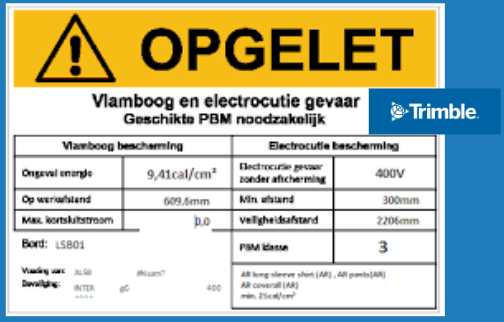
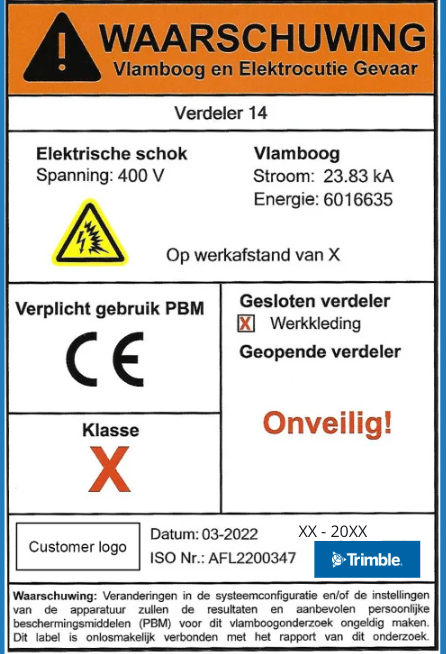
Arc Labels
In addition to wearing personal protective equipment, you should also apply warning labels around electrical systems. These labels should provide crucial information about the hazardous nature of areas around electrical systems. They include information about hazards in cal/cm² (calories per square centimeter), arc limit, date of last analysis and examination, required personal protective equipment (PPE) and voltage level.
What are the limitations of an arc analysis?
While it is true that performing an analysis helps reduce risk and better manage these hazards, it has some limitations. Pitfalls such as inaccurate data, dynamic system changes, incident variability, human error and the scope of the analysis can reduce the efficiency of your final solution.
Therefore, you should regularly review and update your analysis and electrical design tool, including software.
How Trimble helps you
The best way to prevent electric arcs and protect workers and property from their danger is to use high-quality data-driven electrical designs created with advanced electrical design software.
Trimble Electrical Designer 2D is a comprehensive product suite that provides electrical designers with a simple and comprehensive design solution for electrical systems in buildings.
Trimble Electrical Designer 2D comes with a range of features, including multi-region calculations, a selector for protections, manufacturer-approved component data, and calculations and reports for arcs.
Trimble Electrical Designer 2D helps you reduce the risk of design deviations and minimize safety hazards, including electric arcs.
Contact our team now to learn how you can use Trimble Electrical Designer solutions to protect your electrical systems from preventable disasters.

