Asset management tools support data-driven decisions.
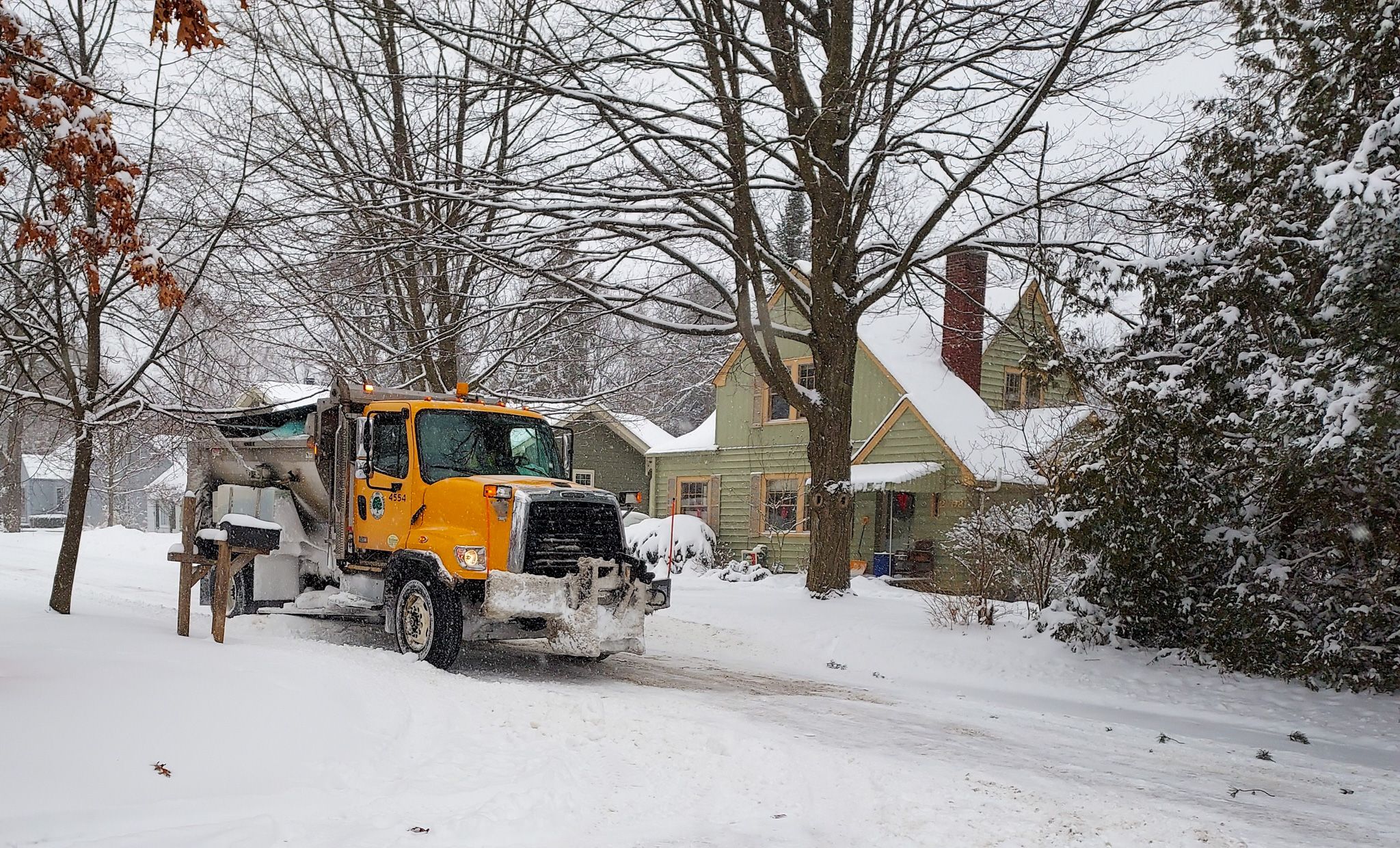
The first official patents for snowplows date back to the 1840s, according to the National Snow and Ice Data Center. Yet, the records show this equipment—a rudimentary blade attached to a cart and pulled by a team of horses—was not actually deployed until 1862.
Today, winter maintenance technologies have evolved by leaps and bounds. Yet, like the early snowplow, adoption of these technologies is often slow and steady. In recent years, however, the use of digital solutions is increasingly gaining momentum and proving quite advantageous both at the local and state level.
In Ann Arbor, Mich., winter maintenance crews began using a digital solution for enterprise asset management in 2000. In the years since, the city’s public works department has become reliant on digital capabilities for asset and work management.
Today, Ann Arbor’s infrastructure and associated data, work activities, and business processes throughout the various public works divisions, including winter maintenance, are all managed using consolidated data and digital workflows that enable seamless collaboration, efficiency, and cost savings.
Ann Arbor’s public works team streamlined winter maintenance efforts by automating its spreadsheet-based data entry processes. This step toward digitization helped work crews and office staff manage day-to-day operations more accurately, efficiently, and effectively by eliminating hours of time-consuming manual data entry.
Data entry for winter maintenance is complex. In Ann Arbor, individual snow routes may have as many as four different accounts that need to be tracked separately because different sections of the road assets are managed by different funds.
The public works team is responsible not only for assigning routes, but also for tracking snow removal crews’ hours daily, as well as keeping a detailed record of truck routes using a specific number that is assigned to each piece of equipment.
“A simple dusting of snow may require literally hundreds of data entries,” said Paul Matthews, interim public works manager for Ann Arbor. “With more severe weather events, data-entry requirements rapidly escalate. We’re typically running two shifts with anywhere from 25 to 35 crew members each. The need for streamlined solutions is critical so our team can focus on keeping the community safe during storms rather than on manual data entry.”
Because Ann Arbor’s enterprise asset management solution is tailored for local governments, the city’s office staff can create and manage work orders for snow removal, de-icing, and other maintenance activities using centralized data and digital workflows.
A mobile application enables field crews to update road conditions, submit work orders, and receive task assignments while on the go. With built-in GIS technology, the platform provides everyone with access to detailed maps of road networks, infrastructure, and terrain. This information is integrated with real-time data to monitor conditions, optimize routes, and allocate resources most effectively.
“The need for streamlined solutions is critical so our team can focus on keeping the community safe during storms rather than on manual data entry.”
- Paul Matthews, Interim Public Works Manager for Ann Arbor
Data collection is complex at the state level too. Winter conditions can be extremely diverse, adding challenges and intricacies to winter data analysis.
Montana, for example, encompasses 147,040 square miles of land. The country’s fourth largest state derived its name from the Spanish word meaning mountain, as the Great Continental Divide encompasses the western portion of the state.
Yet, 60% of Montana is composed of grasslands and prairie with seemingly endless wide-open terrain stretching for miles. The state is also home to the largest freshwater lake west of the Mississippi River, and Flathead Lake delivers regular and significant lake-effect conditions.
With this unique geography, Montana offers a wide assortment of weather conditions and challenges.
In 2020, the Montana Department of Transportation (MDT) enhanced its digital asset management capabilities by launching a statewide Transportation Management Center. Centralizing all the collected maintenance data helped provide a comprehensive view of asset and work management systems while also enabling detailed analysis of information within core regions and specific maintenance areas.
MDT staff collect information for all roadway assets using a maintenance management system. Data for each asset—whether a road, bridge, guardrail, sign—is shared to a maintenance dashboard, which is integrated with other software to provide a real-time view of maintenance activities.
Using the analytical capabilities of the maintenance management system, MDT can monitor the types of maintenance work being performed, materials being used, and the locations of maintenance activities. Understanding specific location information for winter maintenance activity is critical to maximize the safety and performance of the transportation network.
“The digital asset management solution greatly enhances MDT’s ability to capture high-quality data with specificity and detail,” said Karteeka Nalli, senior product owner at Trimble, which created the management system MDT uses.
Using this data, MDT is then able to track various maintenance workflows and keep an up-to-the-minute inventory of materials.
Effective enterprise asset management solutions empower public works teams to make better, data-driven decisions and improve operational efficiencies. Using a digital system provides insightful data on equipment, labor, and materials that help save time and money.
Access to accurate and comprehensive data has enabled Ann Arbor public works teams to take a more proactive approach to managing snow removal, de-icing, and other winter maintenance activities.
Using built-in work order creation and management tools, the city streamlines task assignments, tracks maintenance activities, and manages crew schedules and work hours. Automated workflows help optimize snowplow and salt-spreader routes to maximize coverage while helping lower fuel consumption, reduce vehicle wear, and manage response times.
Integration with other data sources—such as local weather forecasts, roadway sensors, fleet management software, and financial systems—further bolsters operational intelligence to support effective treatment strategies, operational activities, and resource allocations.
Patterns and trends can be identified to improve future strategies. Public works officials can compare various storm details with product usage to make sure they’re not over-applying de-icers or underserving areas that may need more attention.
In Montana, the statewide Transportation Management Center winter maintenance dashboard incorporates the public works department’s level of service guidelines and Maintenance Quality Assurance (MQA) Program to evaluate efforts and help manage public expectations.
Using digital tools, transportation department staff members analyze collected data to assess asset conditions, grade all assets and drive immediate action for assets failing to meet agency-defined standards.
“Without access to relevant data, it’s virtually impossible for an agency to make timely adjustments to their maintenance operations to maximize efficiency and cost-effectiveness,” said Nalli.
With centralized data now available, agency leaders are better able to identify problem assets, make real-time adjustments to crew and material deployment, and make informed decisions regarding future construction and rehab projects.
For Montana, as with other DOTs, a prime example of improved decision-making has been improvements in material allocations.
“A common misconception is that more material is better,” said Nalli. Yet, with detailed analysis, a DOT can demonstrate that in many instances, “crews are actually applying much more de-icing materials than necessary and can save time and money by scaling back on their material use.”
Just as snowfall and blowing snow reduce visibility for drivers, data silos impede communication and information flow for winter maintenance teams. Lack of access to data can create bottlenecks impacting the efficiency and effectiveness of snow removal operations.
“Without access to relevant data, it’s virtually impossible for an agency to make timely adjustments to their maintenance operations to maximize efficiency and cost-effectiveness.”
- Karteeka Nalli, Senior Product Owner at Trimble
The importance of reliable information and data transparency extends beyond internal departments and partnering agencies. Public works officials are expected and even required to provide accurate and timely information about winter maintenance operations to multiple stakeholder groups.
Common reporting demands include inter-agency coordination, budget and performance reports to local officials and regulators, and road condition and safety information to the public.
Ann Arbor has created an online portal and mobile application by integrating digital data from its enterprise asset management solution with a third-party public portal and reporting website named the Plow Activity Page.
The public portal provides a vehicle tracker that displays real-time information and a 24-hour history about snowplow deployment and route schedules. Plus, it enables residents to submit service requests with the click of a button.
In Montana, one of the most important benefits of the new, centralized Transportation Management Center has been the coordination and collaboration between winter maintenance and safety teams. Real-time data that can be pinpointed to precise areas and analyzed for specific assets provides valuable information to everyone.
Integrating the winter maintenance information with other road condition reports also enables Montana to share robust and real-time information with the traveling public via MDT’s website. Having this type of information readily available has played a vital role in helping improve emergency response and overall public safety.
This article originally appeared in Roads & Bridges (January 31, 2024). Republished here with permission.
Image provided by the City of Ann Arbor.


