Engineers are under growing pressure to be more productive and, at the same time, structural design is becoming increasingly complex. The architectural design tools of today have expanded the possibilities for more curves and amazing structural details, all of which end up on the desktop of structural engineers, who today are working within smaller budgets to meet tighter deadlines. These constraints have driven structural engineers to explore so-called algorithm enabled parametric modeling, also called parametric design. If you’ve heard of this but aren’t sure what it is, you aren’t alone and it’s not too late to learn.
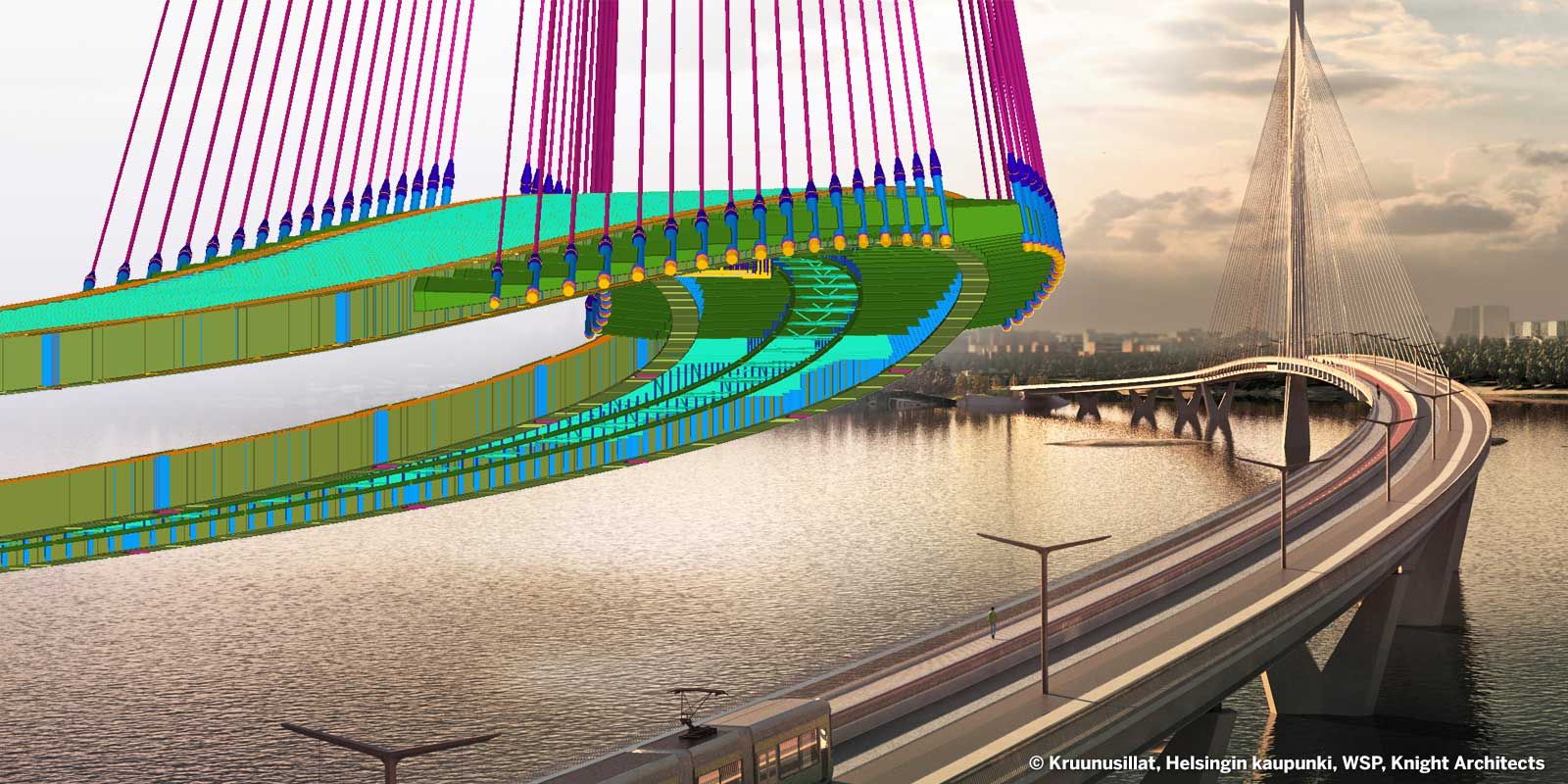
Imagine this. What if you could change the number of columns on a bridge deck by adjusting a single value and every other part of the design that is affected by that change would automatically change as well? It would allow you to explore complex design alternatives faster than ever before – all without the need for repetitive tasks or manual updates and without programming knowledge. Does this sound out of reach? It shouldn’t because it’s possible today with algorithm enabled parametric modeling.
What if you could change the number of columns on a bridge deck by adjusting a single value and every other part of the design that is affected by that change would automatically change as well?
What is algorithm enabled parametric modeling?
First, there is “parametric design” and “parametric modeling.” Parametric design is based on defining parameters, or in other words, data inputs that are connected with modeled objects. When adjusting one parameter, such as changing the number of columns or extending the width of a deck, all of the model objects affected by that change are automatically updated. When that parametric design is combined with a proper parametric BIM tool, the parameters can simultaneously be used to drive information-rich BIM data beyond simple geometry, thus the benefits of parametric BIM are far-reaching.
This might sound complicated, but it’s all about overcoming limitations and rapidly creating design alternatives for complex shapes. For structural engineers willing to give it a try, this requires a new workflow. In this two-part article series, we’ll explain algorithmic modeling, provide examples of how structural engineers are using it today and share some ways that you can start applying it to your work.
It’s all about overcoming limitations and rapidly creating design alternatives for complex shapes.
In practice, algorithm enabled parametric BIM allows structural engineers to easily and visually create data input schema using an algorithm-based editor and then output objects to a parametric BIM tool, such as Tekla Structures.
Today, structural engineers are leveraging this workflow without prior knowledge of programming through direct links between BIM software and visual programming tools such as Grasshopper, which is a pre-installed plugin for Rhinoceros 6, a 3D computer graphics and computer-aided design (CAD) application. This is especially beneficial for creating complex shapes like curved structures and architecturally challenging design intent.
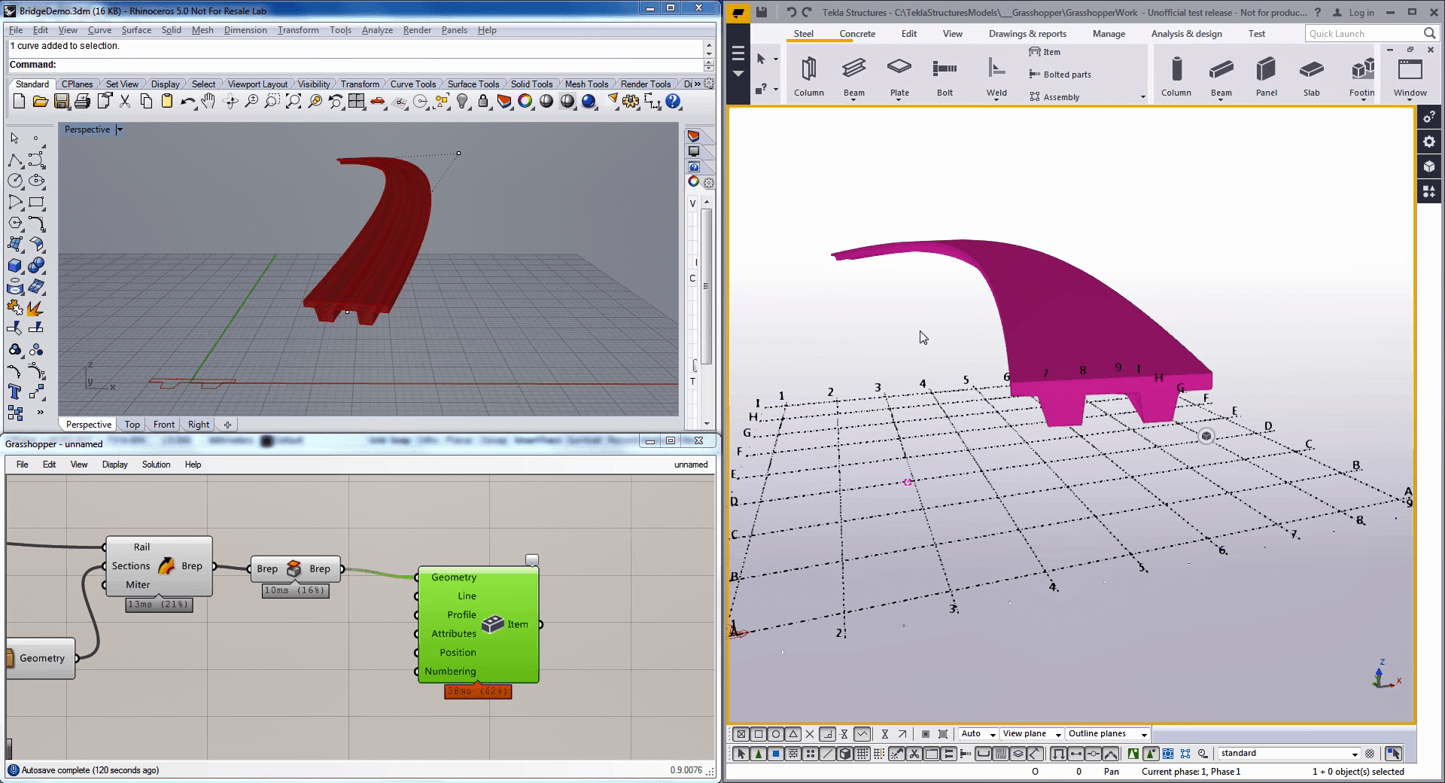
Linking Grasshopper with Tekla Structures, for example, results in constructible, information-rich structural models that can be used throughout the project lifecycle from managing changes and avoiding errors to finding clashes and producing better quality structures with less waste, all the way to asset management.
But really, how does it work?
By adding a visual programming editor, such as Grasshopper, to your design workflow, you can define input parameters such as coordinates, dimensions, curves or even complex NURBS, and then visually script rules that act on these parameters in order to generate the desired geometry or other output, which can then be applied directly to live objects in parametric BIM software, such as Tekla Structures, which contains all of the necessary attributes to meet industry requirements.
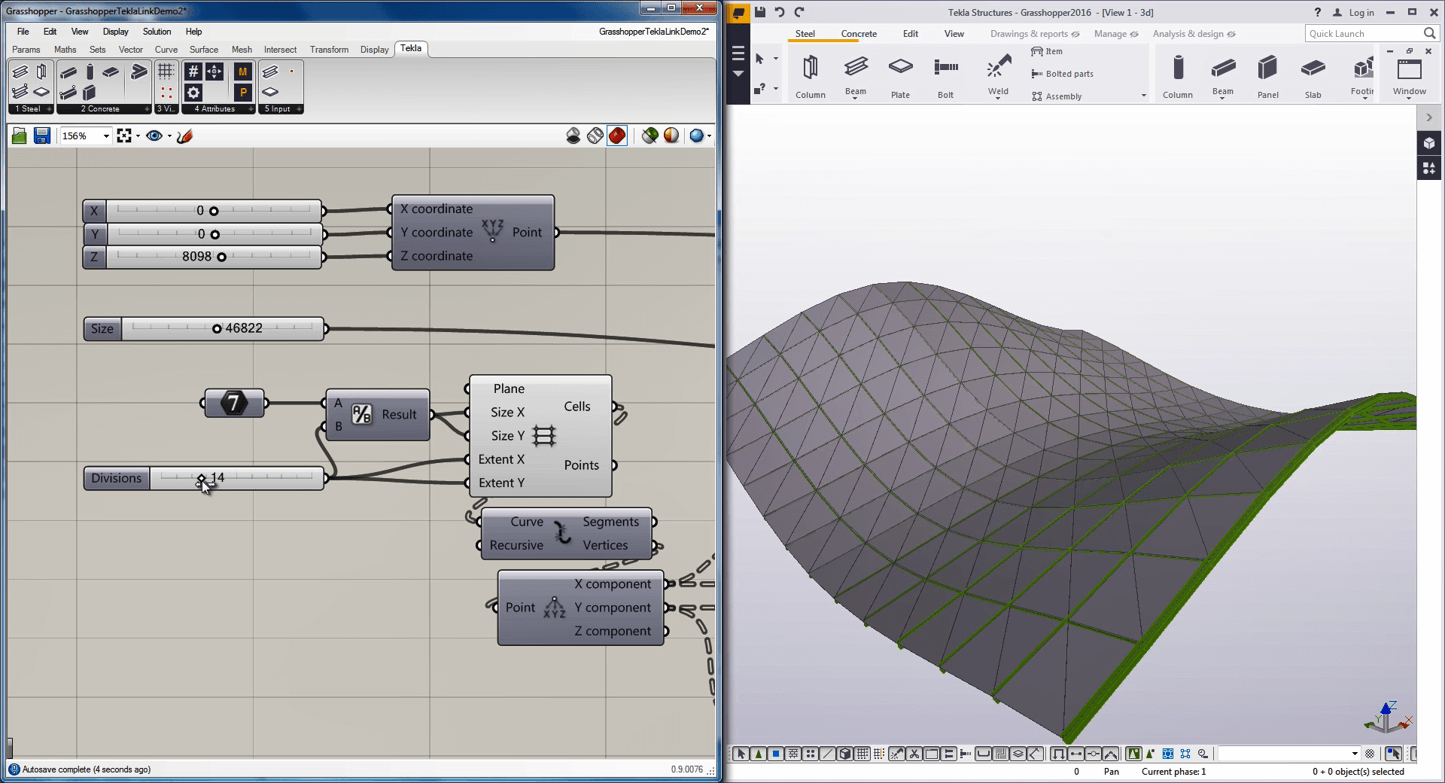
Based on the attributes you define, the effects of any change to the design are automatically populated throughout the model. Essentially, Grasshopper takes your inputs, does the calculations and produces an output that is applied to the model. This eliminates the need to manually apply changes across the model and allows you to quickly generate and visualize multiple iterations of complex designs in 3D by simply adjusting the attributes. This workflow is especially beneficial when modeling structures, such as bridges, that have complex geometries and curved surfaces.
What can algorithm enabled parametric BIM do for me?
As a structural engineer, it’s likely that you want to eliminate manual processes so you can work more efficiently and be more productive. At the same time, architects are pushing the boundaries of design and collaboration between all project stakeholders is occurring earlier in the process. Parametric design linked with parametric modeling, that is, algorithm enabled parametric BIM can help you meet all of these demands with a workflow that:
Simplifies modeling complicated geometry
Enables fast structural form iterations and design option investigations
Significantly increases productivity by reducing the time it takes to modify designs
Brings significant efficiency gains and benefits to the design of complex bridges and junctions
Encourages and enables collaboration in the design process with better visualization and simulation across disciplines
Allows you to simultaneously create calculations and see them populate the model in real-time
Allows you to design repetitive geometries with less work, such as similar connections or geometries that follow a new alignment
Is a step toward generative design which combines artificial intelligence with parametric BIM
Want to learn more? Sign up for a free webinar "Easy steps to more efficient bridge design workflow"