The heat pump has been ubiquitous, and not just since the German government's hotly debated Building Energy Act. It is regarded as the climate-friendly and energy-efficient heating technology of the future and is already being used successfully in numerous construction projects. Correctly calculating the heat load of a heat pump is essential if it is to provide comfortable temperatures.
But which factors are decisive for a correct result? And how high is the electricity consumption of a heat pump anyway? In this article, we provide a detailed overview of the key facts for a precise heating load calculation.
The most important facts in brief
The heat load calculation lays the foundation for correct dimensioning of the heat pump
Incorrectly designed heat pumps can result in higher operating costs
Software-supported calculation facilitates application in complex construction projects
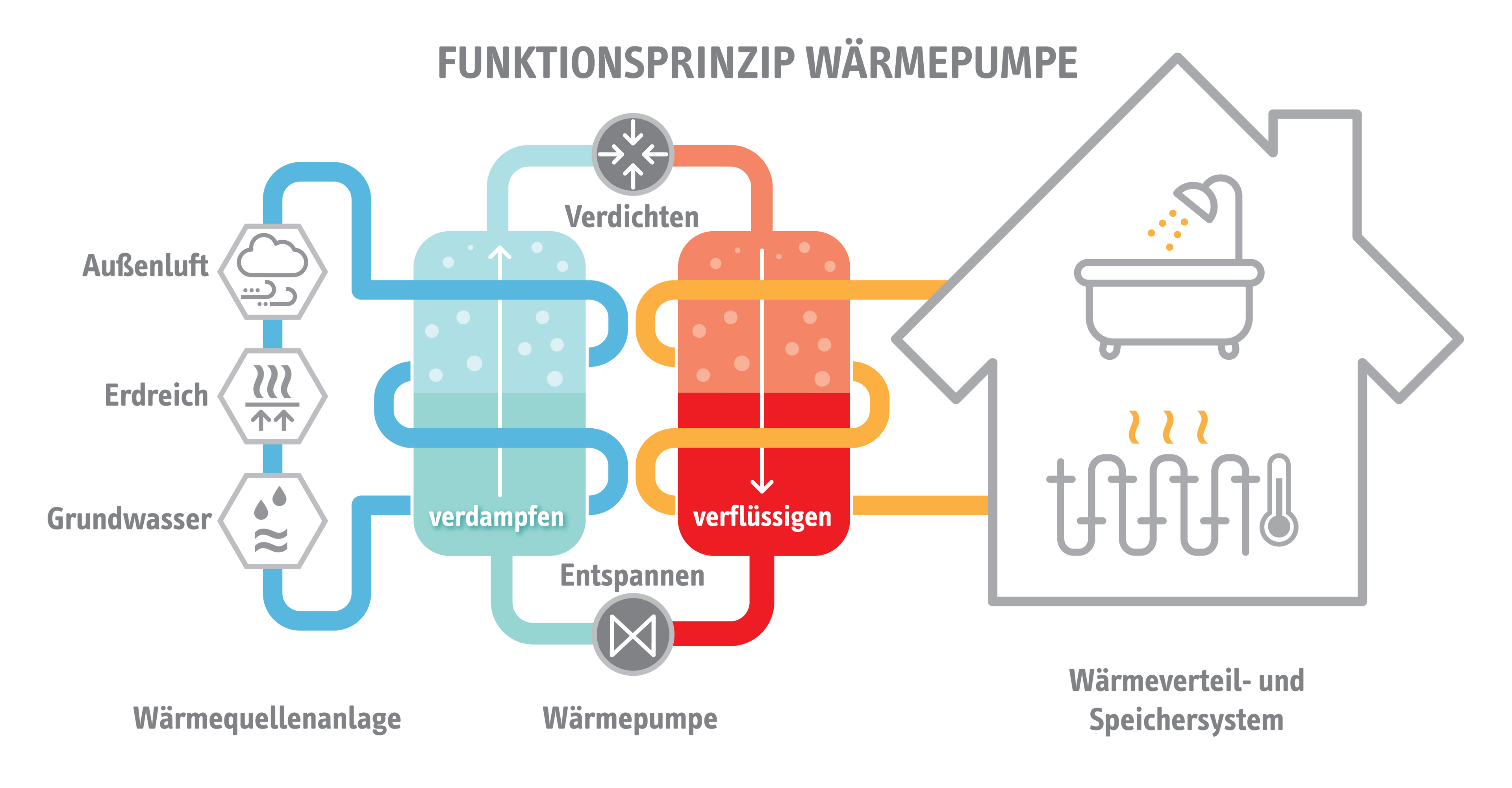
How much heating load does a heat pump need?
The heat pump has established itself as a promising heating technology that promises both ecological and economic benefits. However, before implementation, it is essential to determine the heating load precisely. This value indicates how much heat energy it must supply to effectively heat a building.
This is because the heating output of a system is of crucial importance. It marks the amount of energy that a heating system must generate on cool days. All rooms in a building are included in this calculation.
It is important to find a happy medium here. This is because undersizing the heating system leads to insufficient heating of the house. If, on the other hand, the system is oversized, it operates inefficiently and wastes excessive amounts of energy. This can lead to increased electricity consumption in heat pumps.
The heat load of a heat pump basically depends on various factors. These include the construction of the building, the thermal insulation, the room sizes and uses as well as the climatic conditions of the region. It is therefore essential to determine this heating load precisely in order to dimension the system optimally.
How can you calculate the heat load of a heat pump?
The procedure for calculating the heating load can basically be categorized into four different sub-areas. All of these sub-areas must be taken into account for precise results.
Determine transmission heat losses
The transmission heat loss quantifies the heat loss of a building through factors such as the roof, windows, doors and walls. Optimum insulation is described by the U-value. This is crucial for containing energy loss.
A low U-value of the building materials results in a reduced loss of thermal energy. Temperature differences between the interior and exterior as well as potential thermal bridges are also taken into account when determining the transmission heat loss.
Determine ventilation heat losses
When calculating ventilation heat losses, thermal energy is included in the analysis. This refers to energy that is lost during the ventilation process. At the same time, leaks in the building envelope are taken into account, as they also make a significant contribution to determining ventilation heat losses. Increased air exchange in a building results in an increased loss of thermal energy.
Hot water consumption
In addition to generating space heating, the heating system is often also responsible for the preparation of drinking water. The level of consumption is significantly influenced by the type of hot water preparation. Storage systems generally consume less energy than instantaneous systems.
Hot water preparation is particularly important for new or renovated buildings. This ensures that the system is not undersized and can effectively cover both heating and hot water requirements.
Heating reserves
During a heating break, the stored heat flows from the ceilings, floors and walls into the cooler room. As soon as the heating is reactivated, these materials absorb the released heat again. During this phase, the heating system has to use additional energy for a short time to restore the desired temperature level.
This additional heating capacity is also taken into account when calculating the heat load of the heat pump. This ensures that the heating system covers all aspects of a building's heating requirements.
How do you calculate the power consumption of a heat pump?
Heating costs for gas or oil heating systems have risen massively - but so have electricity prices. An exact calculation of electricity consumption is essential. Otherwise, savings made by the heat pump will be offset by excessive electricity consumption.
The basic formula for calculating electricity consumption is as follows:
Consumption (in kilowatt hours) = output (in kilowatts) × operating time (in hours)
The output of a heat pump is specified by its manufacturer. It describes how much energy it can absorb and release per unit of time. The operating time depends on the heating duration and the heat requirement of the building.
However, the actual power consumption is influenced by various factors. These include the temperature differences between the source and sink. The efficiency of the heat pump technology used also plays a role. The quality of the building insulation and the correct dimensioning of the system are also important aspects.
The annual coefficient of performance (COP) is a key indicator of efficiency. It represents the ratio of heat output to electrical power input. A higher seasonal performance factor indicates more efficient operation. This means that the heat pump generates more heating output per kilowatt hour of electricity consumed.
Does a heat pump lose performance over time?
Heat pumps are generally long-lasting systems. If they are installed and maintained correctly, they will work reliably for many years. However, like any technical system, they can also show signs of wear and tear over time.
Factors such as component wear, sealing problems or changes in the refrigerant circuit have an effect on performance.
Trust is good - maintenance is better
Regular maintenance is essential to minimize the potential loss of performance. Filters should be cleaned or replaced, seals checked and replaced if necessary. An annual inspection by specialists is also recommended. They will check the system for potential problems and can take appropriate action if necessary.
The service life and performance maintenance depend heavily on the quality of the system. Professional installation and use also play a role here. High-quality heat pumps are generally designed to work efficiently for many years. Models with a particularly low-cost design, on the other hand, may lose performance more quickly.
Overall, it is therefore possible that it will lose performance over time. However, this effect can be minimized with correct care and maintenance. To ensure a long and efficient use of a heat pump, 2 points are particularly important - professional installation and regular inspection.
Conclusion - The heat pump - a climate-friendly heating system
The heat pump is a key component of the energy transition towards more climate-friendly and efficient heating systems. Accordingly, the topic will become even more important in the future. The correct calculation of the heat load of heat pumps will become even more important. This calculation is essential, especially when designing construction projects and heating systems.
With good software, the results for an efficient BIM workflow can be smoothly integrated into construction processes. This is where Trimble Novacomes into play. Trimble Nova is an outstanding CAD and calculation software. It enables even highly complex buildings and heating systems to be modeled realistically. Trimble Nova thus proves to be an indispensable tool for the efficient and technologically appropriate implementation of heat pumps.
Seamless integration with Trimble Connect offers additional efficiency benefits. It plays a key role in creating a shared data environment. This connection ensures that the data collected is available to all relevant project stakeholders in real time. Without any loss of efficiency or time.
By correctly implementing the heat load calculation for heat pumps, both tools make the transition to more climate-friendly heating systems much easier.

