

If you're a design tech leader at an AEC firm and you don’t wake up dreading misaligned files, endless rework or the Revit export that turns clean models into chaos—congrats! You’re either a unicorn… or your firm has already figured out what most haven’t: it’s not about more tools. It’s about the right ones—tools that actually talk to each other.
Design tech is drowning in digital debt
Your team’s top output isn’t just high-quality design—it’s rework prevention. And your team depends on tech that reduces workflow friction to deliver accurate, feasible designs on time.
Unfortunately, the average AEC tech stack is more patchwork than platform, and erodes time, talent and trust. A recent survey by Dodge Construction Network found that 35% of firms cite software integration challenges as a top productivity killer, second only to RFIs and schedule changes. Layer on top of that the fact that 73% of design teams regularly juggle three or more modeling and documentation tools, and you’ve got a recipe for chaos.
Architects and designers thrive on collaboration—but ironically, most tools don’t. Proprietary formats, fragile exports and brittle plug-ins slow down even the most brilliant teams. That’s not just a design problem; it’s a business catastrophe.
In medium-to-large firms, the average handoff between planning, design and construction involves at least five different platforms. With each handoff comes potential risk, confusion and delay. In fact, FMI research shows that miscommunication and disconnected project data account for 48% of all rework on construction projects—costing firms over $31 billion annually in the U.S. alone.
Time is the only non-renewable resource in the design process, and your firm is spending it decoding file types instead of advancing design.
Explore how SketchUp can help your business reduce digital debt and deliver innovation at scale without bogging down your workflows.
Open standards, real value
There's a better way, and it starts with open standards. Tools that embrace IFC, BIM interoperability and more real-time collaboration protocols enable your teams to model, annotate and iterate without pausing to ask, “Will this break our workflow?” These tools also nest within your tech stack to reduce complexity and redundancies.
That means round-tripping industry-standard files into a creative modeler for flexibility through the design process, ensuring the vision can evolve and adapt without constraints. It’s about bringing point cloud data into a lightweight design environment and iterating in hours—not days. It’s about sharing a live model link with a stakeholder and getting threaded feedback in real-time, not a 17-comment PDF marked up digitally, or worse, on paper.
Interoperability is not a “nice to have.” It’s a strategic imperative.
If your firm is scaling, your design stack has to be able to scale with it. So what can you do to ensure your tools aren’t holding you back?
Audit your tools for:
File type friction: Are designers frequently exporting DWGs or IFCs simply to get alignment?
Versioning entropy: Do you have more than two "final_final_FINAL_v6" files per project phase?
Data silos: Can your MEP, structural and design models be layered and interrogated in one shared environment, or are they each trapped in their own software’s UI?
Evaluate your capabilities. Every design stack should include:
Round-trip file support for data compatibility and seamless transitions across tools
Point cloud integration for visually referencing or modeling real-world conditions
Collaboration capabilities and access controls to securely share progress and streamline design conversations and decisions
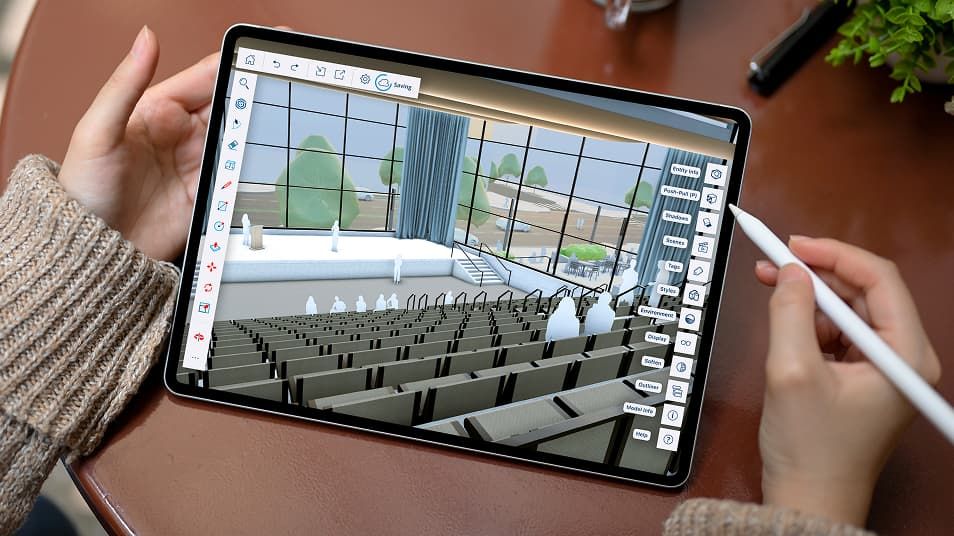
Cloud-based model management accessible from desktop, tablet and mobile
Visualization capabilities that accurately convey the project's vision to achieve alignment and reduce errors
If these capabilities exist in your toolset but aren’t being used, that’s another red flag. Underutilized features often signal clunky UX, insufficient onboarding or tech that simply doesn’t fit your workflows.
Delete your digital debt
The pain of shifting project scopes, bloated workflows and incoherent feedback loops all trace back to one core issue: fragmented tech. The firms that win don’t have the most tools; they have the most integrated and aligned tools.
Changing tools can be arduous and expensive, but it’s short-term pain for long-term gain.
Curious what the future of AEC workflows looks like when interoperability isn’t a blocker but a baseline?

