

You didn't start a contracting business because you love accounting. You started it to build things. Whether you’re running an MEP crew, managing a heavy civil project or acting as a general contractor, your day should be spent on the jobsite—not in the back office buried under a pile of paperwork.
Unfortunately (or fortunately, depending on how you look at it), when your business grows, being a great builder is only half of the battle. You also have to become a great business owner. Over time, you find yourself managing more crews, more equipment and more complex projects, and suddenly controlling your finances becomes a painful and confusing task.
The problem isn't you; it’s your accounting software.
If the concept of doing your books makes you want to toss your iPad into the nearest ditch, you’re in the right place. In this article, we’ll walk you through how you can take the stress and guesswork out of your construction accounting with simple tools to track job costs, stay profitable and grow.
Eliminate the guesswork in your bidding

A profitable project starts long before the first shovel hits the dirt. If you are building proposals based on your best guess job costs, you’re leaving any hopes for profitable projects to chance. An accurate bid requires knowing your exact costs long before the first crew arrives on site.
Professional proposals should be built by the phase and cost type—breaking a job down into labor, equipment, materials and subcontractors and they should reflect your exact cost of each at every stage. Once you’ve identified your input costs, based on real numbers, not guesses, you’ll have the foundation to create accurate bids with clear pricing that give your clients or prime contractors more transparency and give you peace of mind knowing exactly how much you’ll make on a project before you ever sign the contract.
See your job costs in real time
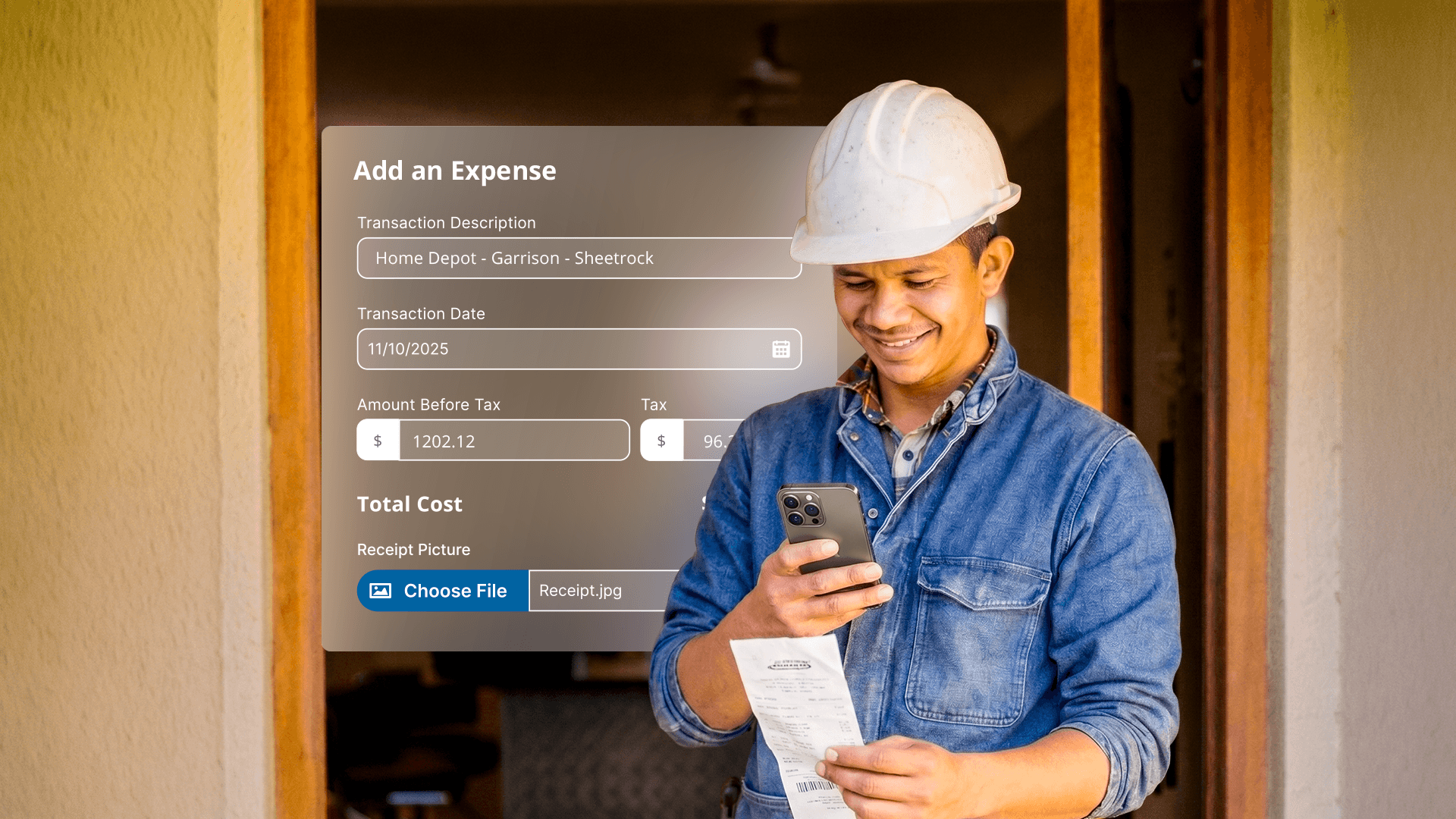
If you’re like many small contractors out there, one of the biggest financial fears you have every month is finishing a job, paying your subs and realizing (four weeks too late) that you actually lost money.
Just like a concrete pour, construction financial data has a short shelf life. If you’re looking at outdated project reports, you’re not getting the full picture needed to stay profitable and grow your company.
Finding out if you were over- or under-budget on a project at the end of the month is fine, but by the time you see the report, the money is gone, and the next project has already started. Instead, moving from a small contractor to a large-scale operation takes proactive leadership to identify potential profit risks as they happen, not weeks or months later.
To keep your company in the black, you should be tracking expenses with a dedicated construction job costing tool in the field as they occur. For example, taking a few minutes to code an expense to the right job, phase and cost type (or even just taking a photo of the receipt) while you're in the Home Depot parking lot could save you hours of searching later.
Tracking your expenses this way lets you see your committed costs versus your actual spending in real time, so you can make the necessary adjustments to keep a project profitable.
Protect your cash flow with faster billing

Cash flow is the lifeblood of a growing contractor, and one of the hallmarks of a well-run contractor is a phased billing process that is clear, consistent and easy for the customer to understand. After all, you're laying out money for materials and labor before you collect it, so even an otherwise profitable construction business can fail if the cash is tied up in slow billing or unorganized invoices.
The first step in protecting your cash flow is understanding how much you’ve spent on each job, phase and cost type, so it’s clear exactly when the money was spent and what it was spent on. Next, you need to bill your customer or general contractor quickly and regularly to minimize the gap between costs going out and revenue coming in. The smaller the gap, the less you need to tap cash reserves or a line of credit to complete a job.
This transparency does more than just help you get paid faster; it also helps you build a reputation as a professional organization that is honest and easy to work with. Finally, when you know exactly where every dollar is on a project, you can more easily stay within your original estimate and make more informed decisions about hiring, equipment or larger company expansion.
See the full picture of your company’s finances

You’re an expert at your trade and no doubt skilled at managing every aspect of the project you’re working on, but what happens when one project turns into five, ten, twenty and so on?
When your labor costs are in one place, your cash flow is in another and your overhead expenses are scattered across various spreadsheets and legal pads, it’s incredibly difficult for your bookkeeper, CPA or fractional CFO to help you make critical decisions about your company’s direction and long-term growth plans.
Whether you’re talking to a banker about a line of credit or meeting with your CPA for financial advice, bringing all your financial data into a single, unified system makes it easy to see exactly where your company stands financially without spending hours searching through outdated reports and miscellaneous files. This visibility will allow you to become a more strategic business leader and make well-informed decisions for your company's future.
Why generic accounting software doesn’t cut it
Most generic accounting software was made for bookkeepers and accountants managing bakeries, dry cleaners, advertising agencies, etc., not construction. The “quick” accounting software (not naming any names) has no concept of projects, contracts, proposals or job costs, so trying to use it to accurately manage your construction finances is like trying to build a new skyscraper from napkin drawings.
Using the right tools on the jobsite can mean the difference between success and failure on a project; the same applies to your finances. To grow as a contractor, you need financial software built to handle the nuances of construction labor, materials and subcontracts.
Build your future with the right tools
Moving from a small contractor to an enterprise operation means making more business decisions, but that doesn’t necessarily mean more hours in the back office.
Trimble Financials handles the heavy lifting of job costing and accounting so you can focus on growing the construction side of your business, not on back-office bookkeeping. This new platform is specifically designed for growing contractors like you who don’t have time to mess around with generic accounting tools but don't want the headache of complex enterprise systems, allowing you to easily:
Build proposals with phases and cost types.
Convert bids to jobs where you can track project, phase and overhead expenses.
See at a glance how profitable each project, phase and cost type is vs. your estimate.
Bill customers accurately, with your estimate and prior billing by phase visible.
Produce the financial statements your bookkeeper and CPA will love far more than the usual shoebox of receipts.
Instead of generic reporting and confusing spreadsheets, Trimble Financials puts projects and jobs front and center—taking the numbers you already track for your jobs and automatically turns them into powerful financial reports displayed in plain language that don’t take a CPA to understand. This gives you the financial control you need to build a stronger financial foundation for the next phase of growth.
Ready to turn your books from a confusing chore into a quick and easy task?
Learn how Trimble Financials can help
The only construction financial software built for small-business contractors. Streamline bidding, track real-time job costs and protect your profits.


