Photo credit: Weedon Architects
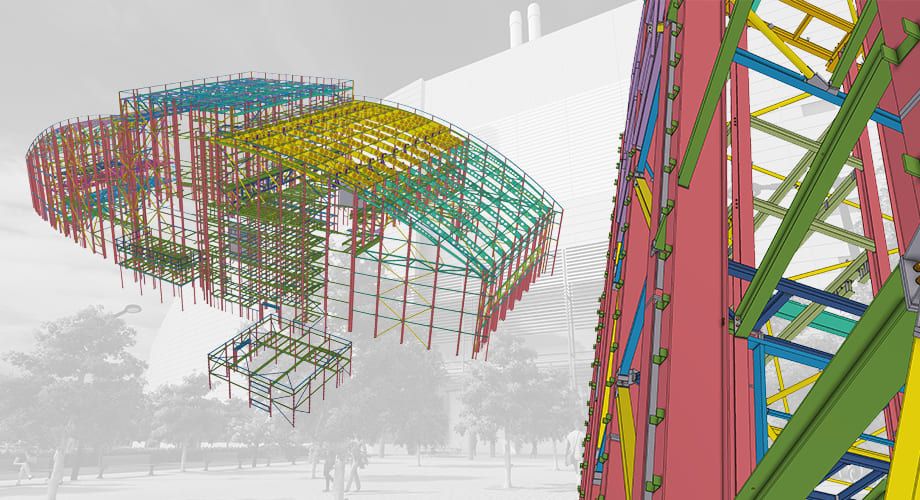
Skelton Grange Energy from Waste (EfW) represents a significant addition to the UK’s waste management infrastructure, poised to deliver crucial sustainable waste treatment solutions and aid in achieving the region’s Net Zero target. Given the scale of the project, digital workflows were essential, with model data feeding into the design, erection, temporary works and lifting processes.
Located in South Leeds, West Yorkshire, Skelton Grange EfW is designed to process 410,000 tonnes of residual waste each year and is forecasted to generate 49 MW (gross) of electricity, providing renewable baseload electricity for over 100,000 UK homes. As well as helping to reduce the reliance on fossil fuels and cut carbon emissions, Skelton Grange also aligns with the UK’s efforts to diminish landfill waste and enhance material recovery through recycling.
Marking the 14th EfW project for Hitachi Zosen Inova (HZI) in collaboration with SSE and Wheelabrator Technologies, Billington Structures was contracted to fabricate, supply and erect the facility’s structural steel frame, including the detailed design and supply of connections, decking, stairs and all temporary works. The primary steelwork encompassed various essential structures, including the waste bunker, boiler hall, turbine hall, tipping hall, and an administrative and storage building.
Considering the complex and challenging architectural elevations, as well as the sheer size of the project, steel construction provided the ideal framing solution. From the intricate process support requirements to the curving roof, steelwork provided flexibility, simplicity of design and speed of erection compared to any other material. Coordinating the erection of steelwork with the installation of process equipment demanded flexible sequencing and the ability to temporarily support significant structural elements without interrupting other on-site operations.
Simon Thrift, Technical Director at Billington Structures Ltd said: “Another crucial factor for us to consider during the design phase was fatigue. The waste bunker building features two overhead gantry cranes, which run along crane beams supported by main columns. Considering the cranes’ 24-hour operation, all connections associated with the crane had to be meticulously designed and detailed to withstand the demanding fatigue conditions arising from their continuous usage.”
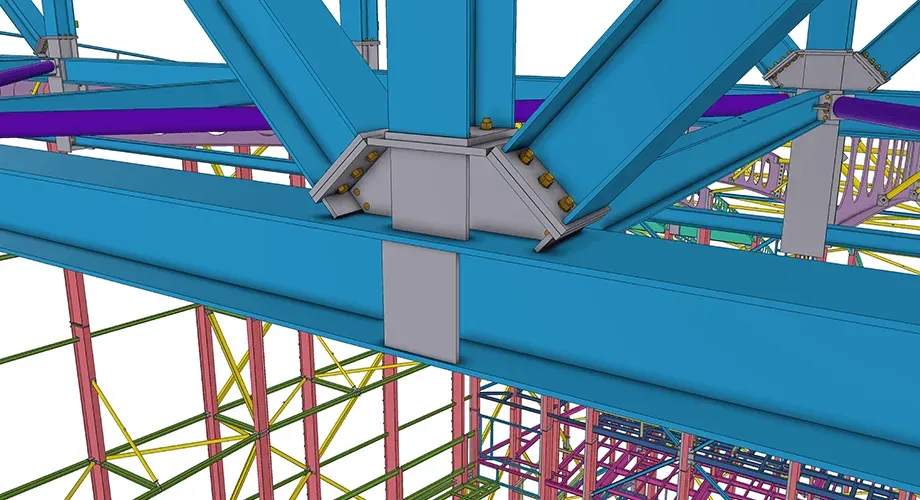
“This, combined with the need to coordinate and programme with other works, were perhaps some of the main challenges on the project. Several IFC reference models were provided by both the architect and engineer teams, which we were able to import into our 3D modelling environment to help facilitate model coordination and verification. Given the intricate nature of the project, which involved numerous elements like plant machinery and ducting, it was imperative to navigate around them.”
“The ability to digitally model the steel structure in 3D within Tekla Structures and combine with similar models from other disciplines proved invaluable in terms of coordination and clash detection, as well as allowing us to picture and visualise complex parts of the project with ease. It would be next to impossible to carry out all the necessary visualisations and checks using 2D media.”
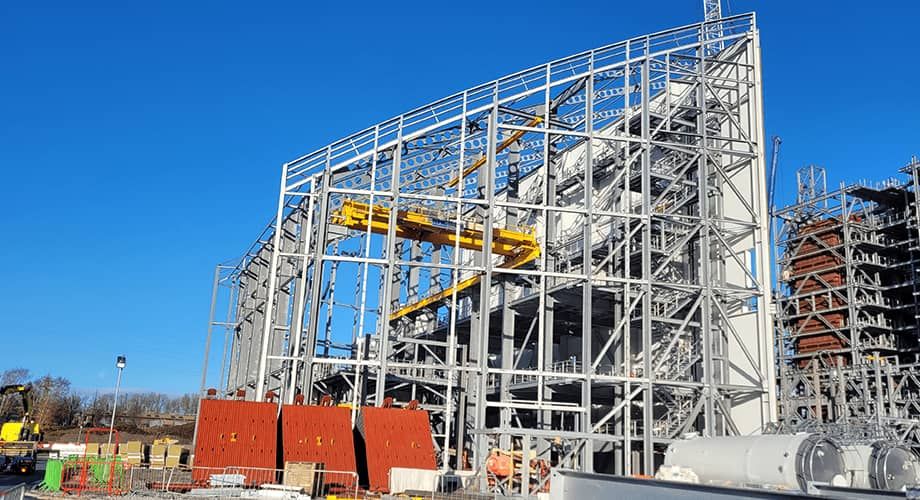
Due to the project's scale, extensive planning was undertaken to modularise steel components and implement associated temporary stability measures, including temporary lifting frames, trestles, and diagonal props. For example, rafters were delivered to site as single pieces and assembled on the ground into separate roof modules, before then being lifted and positioned entirely in single lifts to minimise work at significant heights. Trestles were also designed to support the modular assemblies in an upright position until installation, with temporary lifting eyes bolted to the top of the rafters.
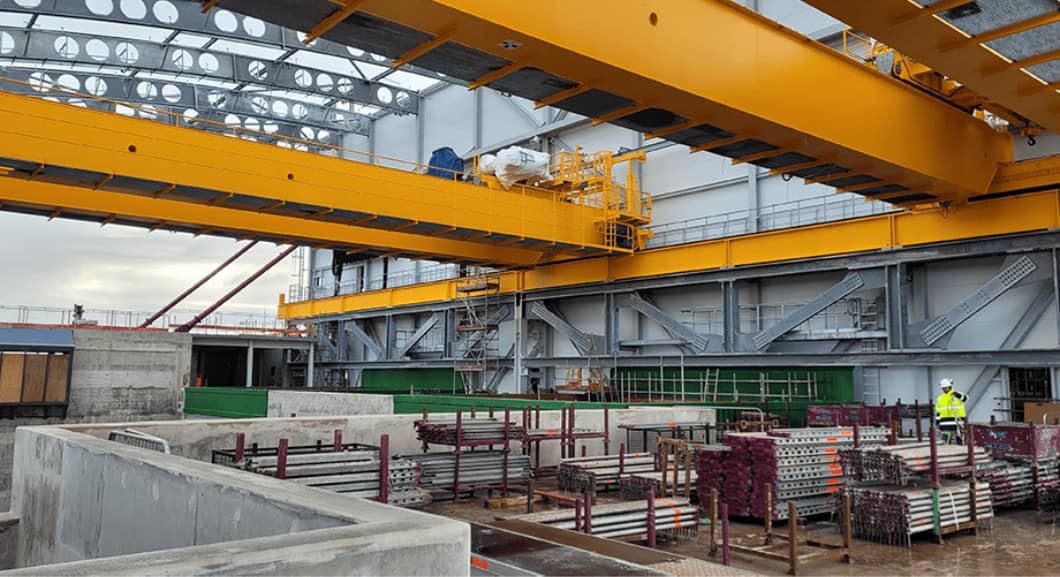
Simon continued: “This modular approach is something that is often desired on projects but not always put into practice. The gains include improved programme delivery on site and improved health and safety, with less working at height required. However, such an approach does also require greater attention to detail in terms of the pre-planning of enabling works and lift plans for the larger and more complex lifts. Using BIM and Tekla software enabled our production team to generate 3D views and obtain additional dimensions during fabrication, as well as facilitating production assessments at various stages, enhancing our overall project workflows.
“At Billington Structures, we always detail any temporary stability measures as part of the overall model. This allows for seamless coordination and ensures everything will progress as intended on site, in terms of both the erection and the removal of temporary components."
“As well as using our central model to plan the installation process, lifts and associated temporary works, this digital approach and data flow also continued through to our fabrication of the steelwork. NC1 production data files were exported from the 3D model by the drawing office to various automated CNC machinery and processing systems for production, including plate cutting machines and saw and drill lines. This ability to use the digital model’s data to feed material procurement, quantity measurement, production machinery and to inform programme progress all contributed to massive productivity gains and error reduction.”
All of this was supported by Billington Structures’ use of Trimble Connect, as Simon explained: “Trimble Connect provided a collaborative environment in which we could communicate our design intent, modular approach and lift plans. Easily accessible, the platform offers an easy and convenient way for less technical parties to be able to view and interrogate the latest model version on an ongoing basis.”
Skelton Grange EfW is expected to be operational by 2025. Billington Structures’ work on the project saw the team win the ‘Industrial Project’ category in the 2024 UK Tekla Awards, with judges praising their strategic planning of the on-site installation and heavy coordination within Trimble Connect.
Simon concluded: “The implementation of Tekla software allowed for meticulous clash detection when coordinating multiple trades, each with their respective sections. By overlaying each drawing, potential issues were easily identified and addressed before fabrication and construction commenced. The software's collaborative features ensure everyone involved has access to the same information, which speeds up the process of addressing any concerns or issues that arise.”
To learn more about Billington Structures Ltd, please visit billington-structures.co.uk

