Evaluating the merits of modular & prefabrication construction in healthcare
Healthcare construction has been historically slow to adopt prefabricated and modular design due to the complexity of the build, such as specialized facility rooms like those that house x-ray equipment, seismic requirements, and regularly changing codes and standards, among other reasons. However, the supply backlog stemming from the pandemic, and more positively, the merits of modular and prefabrication construction, have prompted the industry to re-evaluate this alternative strategy.
Trimble Unity Construct, powered by e-Builder for healthcare
Prefabrication offers healthcare construction managers several specific benefits by increasing the quality and safety of construction, decreasing the project timeline while making milestones more predictable, and reducing the need to find expensive and skilled contractors.
If managed well, this approach can ultimately result in a more budget-friendly project delivered as well. But let’s dig deeper to explore how prefabrication and modular approaches to construction are gaining steam within the healthcare industry.
The role of prefabrication & modular construction in a healthcare context
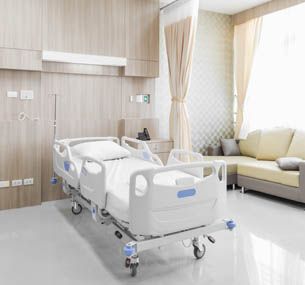
Patient bathrooms, exam rooms, and patient-overhead utilities are all examples of areas that can be prefabricated, off-site, and then brought to the project site for installation. A study by Dodge Data & Analytics is encouraging, stating that, “prefabricated single-trade assemblies (such as plumbing assemblies behind the wall in hospital rooms) is widely practiced, with 62% of respondents using prefabricated single-trade assemblies in the last three years.”
In this piece, we’ll explore two other key benefits that come from building healthcare facilities with prefabrication and modular options in mind.
Quality & safety of pre-fab facilities
Quality and safety are two of the most pressing priorities for any healthcare facility, and consequently some of the most important goals for construction leads.
Structurally speaking the quality of modular buildings are generally stronger than site-built construction because each module is engineered independently to withstand the rigors of transportation and installation. Additionally, building off site practically ensures regulated construction as manufacturing plants have stringent QA/QC programs with independent inspection and testing protocols that promote superior quality of construction at each part of the process. So, while modules are being assembled at the factory, site work can begin as well, and this favorably impacts the time needed for the total construction project. In fact, modular buildings are often completed 30% – 50% faster than conventional structures.
Not only is the quality of control and safety environment far more effective in an off-site manufacturing location, it also provides an optimal approach for preventing the spread of contagious diseases.
Beyond quality management and improved completion time, modular construction offers numerous other benefits. According to the Modular Building Institute, ”removing approximately 80% of the building construction activity from the site location significantly reduces site disruption, vehicular traffic, and improves overall safety and security.” Highly active, occupied businesses such as those in the healthcare industry, have a safety need for reduced on-site activity, and offsite construction removes a large part of any ongoing construction hazards.
Bonus, by creating safer construction environments, projects using prefabricated and modular design also have the potential to help hospitals increase their Hospital Consumer Assessment of Healthcare Providers and Systems (HCAHPS) scores, which in turn, increases potential reimbursements for the facility.

Not only is the quality control and safety environment far more effective in an off-site manufacturing location, it also provides an optimal approach for preventing the spread of COVID-19 and other contagious diseases. The pandemic forced project leaders to stagger contractor schedules and ensure that social distancing guidelines are property implemented on the job site. With pre-fabricated materials being assembled offsite in a factory, construction managers have had less subs and suppliers to deal with on the main job site. Prefabrication, due to the very nature of its operations, is pandemic ‘resistant’.
Boosts for the healthcare construction’s bottomline
Healthcare construction budgets have been stagnant of late, forcing project leaders to turn to more creative approaches towards accomplishing project goals while remaining on strict timelines and budgets.
Prefabricated & modular designs allow for such reduced operational inefficiencies and costs. According to research conducted by McKinsey & Company, “technological improvements, economic demands, and changing mind-sets is attracting an unprecedented wave of interest and investment” in prefab construction, which has the potential to claim $130 billion of the U.S. and European market by 2030 and deliver annual cost savings of $22 billion.
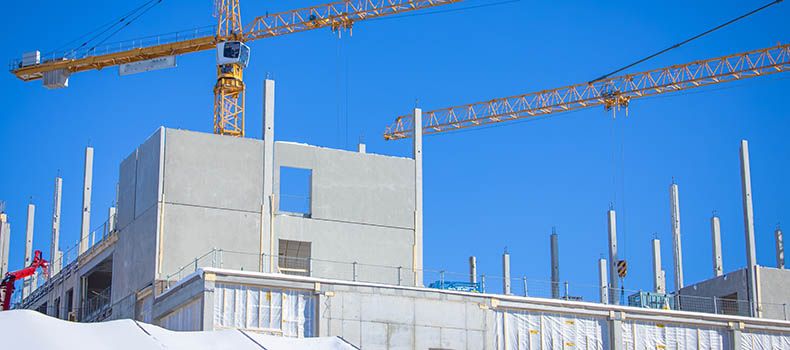
Take for example a hospital in the Pacific Northwest that’s saving roughly $1 million dollars a year as a result of prefabrication construction enabling much needed medical spacing to remain open and functional, despite on-going renovations. With prefab manufacturers focusing on creating such precise conditions and environments to repeatedly and efficiently produce high quality constructions, owners will find themselves coming in under budget when purchasing through prefabricated suppliers.
Additionally, “Architects, engineers, and contractors report improved productivity, improved quality, increased schedule certainty, improved cost predictability, reduced construction waste, improvements in client satisfaction, and improved safety,” according to Dodge Data & Analytics. All of these equate to overall project cost savings.
Closing thoughts
As one of the most historically inefficient and wasteful industries on earth, construction is ripe for innovation and improvements in efficiency. The improvements touched on—whether changes to the building process, technology incorporation, design enhancements, or material upgrades, will have positive impacts on owner projects across all verticals. Adoption of prefabrication & modular construction is a testament towards the construction industry's growing desire to move into the future.


