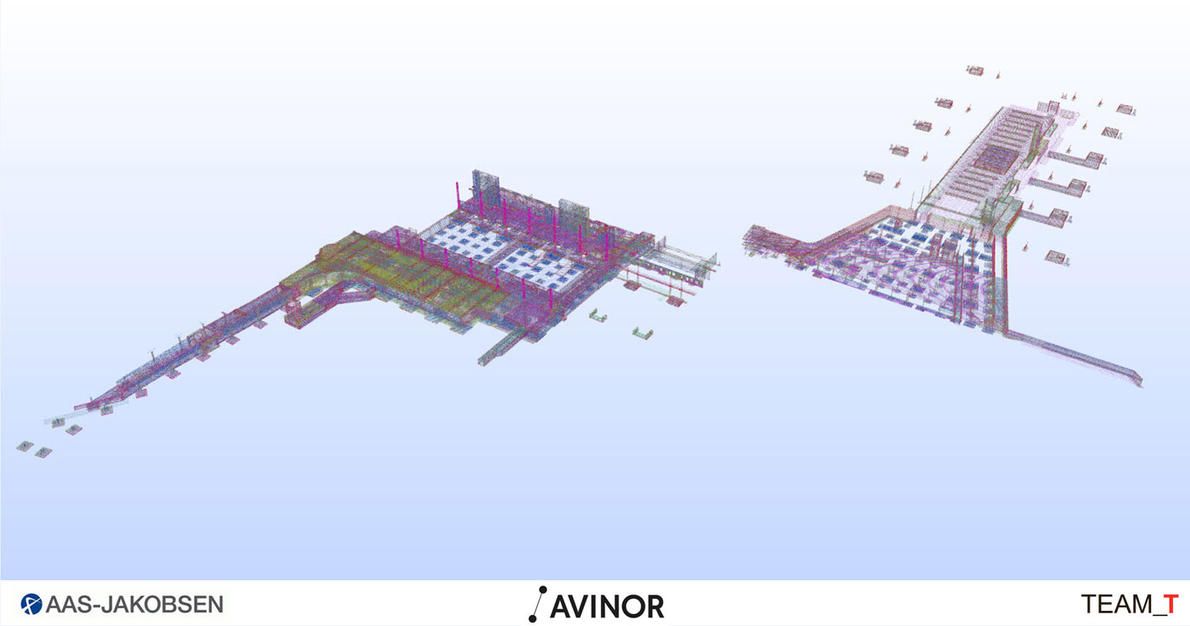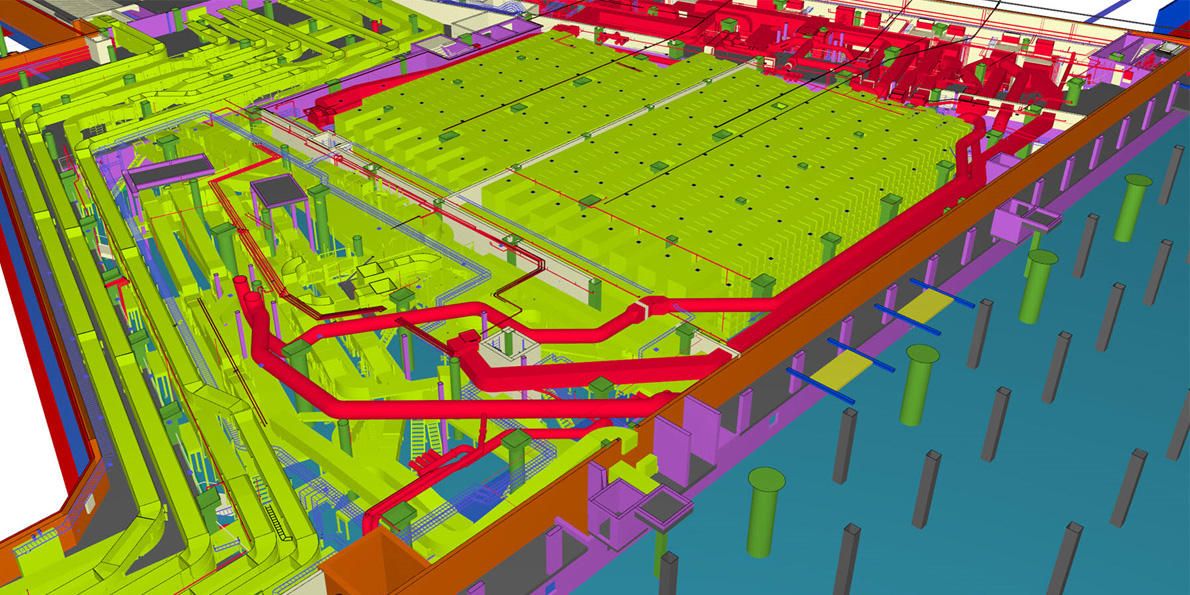
Oslo Airport Terminal 2 is a huge construction project involving more than 100 related companies and a functional international airport in Oslo, Norway. The project presented a challenge to the main structural engineer, Aas-Jakobsen, as the construction company had to ensure the safety and security of the airport on a day-to-day basis, as well as the smooth and reliable execution of normal operations.
The project required modeling by the companies involved, with the requirement for smooth collaboration with Avinor, the airport management company, the end client, etc. Aas-Jakobsen used geometric and reference models as well as information from the existing structure as a starting point for the design. The design of the Oslo airport was based on the design design of the airport. For Oslo Airport, there are more than 100 reference models, including almost everything from the design, HVAC, and electrical systems to the airport's unique baggage handling system and the hundreds of meters of airside areas (areas of the airport that are only accessible to passengers and airport personnel).
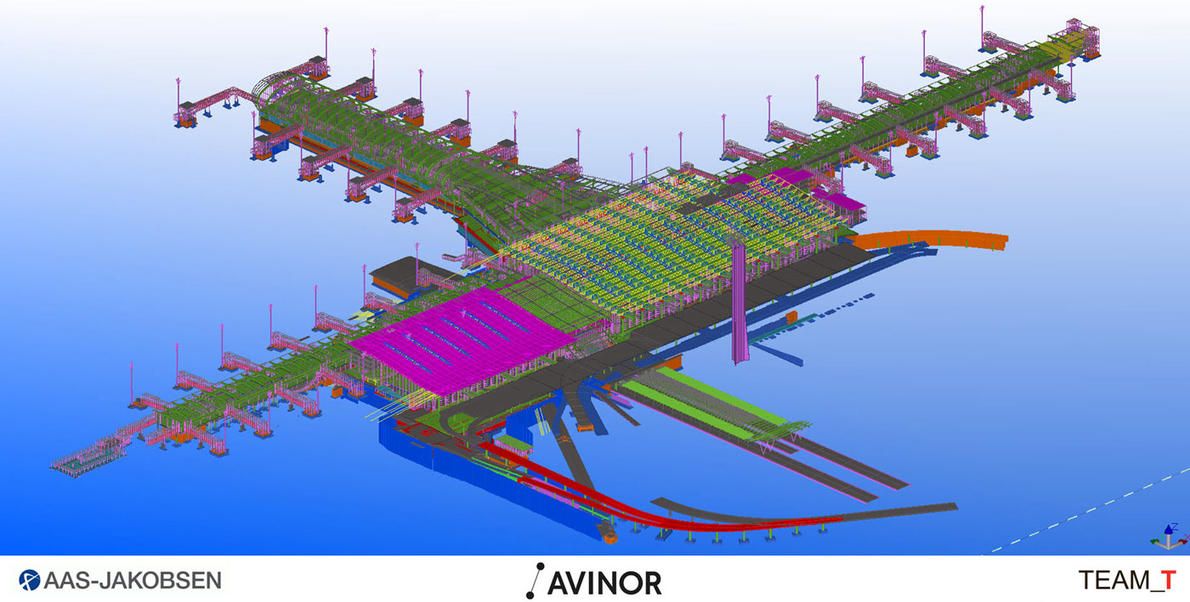
After trying several software solutions, Avinor decided to use Tekla Structures for this project. Markussen's job is to push BIM forward and create best practices, a team effort that involves 15 to 20 companies creating information and numerous other parties using the model information.
Open BIM and the IFC format are essential," Markussen said.
IFC after 50 years
We are continually renovating our airports to serve the market and our passengers," Markussen says. Construction companies anticipate renovations in the not-too-distant future, and they believe that accurate information about the existing structures will make renovations easier and less expensive.
Avinor, the airport management company, required the use of a compatible IFC format in addition to creating the model. in the 2060s, it may be difficult to find software that is compatible with the proprietary file format used in the 2010s, but since IFC is essentially a text-based format and newly developed tools should be able to access the model. Because of these future concerns, everyone needed to deliver the model data for Terminal 2 in IFC format.
Other advantages include the fact that with IFC, affiliates and clients have a very free choice of software, and are no longer bound by compatibility to a specific file format.
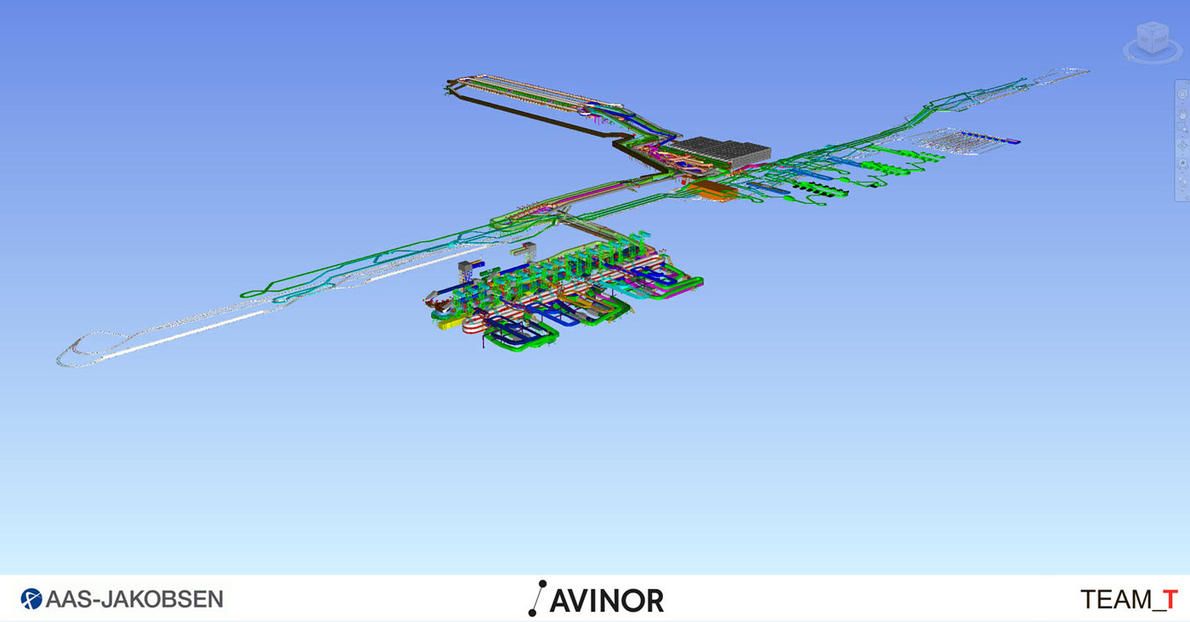
Collaboration, Integration and Innovation
In recent years, these promising models have been widely used. The company uses Tekla Structures models for visualization, which also facilitates the creation of rebar, generation of forms, and scheduling, and the models are useful to the companies involved. After developing an application that works with Tekla Structures using Tekla Structures' Open API, the model information is also used for rebar fabrication.
Aas-Jakobsen delivers high quality models and performs quantity estimating," Markussen says.
One of the challenges was to ensure uniform BIM knowledge among the 250-300 employees doing the modeling. However, the team has modeled almost everything in the airport, so the quality of the models has proven to be solid, according to Markussen.
Taking Advantage of BIM
Avinor's goal for the project was to improve collaboration and an effective design process, to design and build accurately from the beginning of the project, and to create a great building. Aas-Jakobsen has benefited from the use of Open BIM and the choice to manage changes on a 3D model rather than 2D drawings, which provide limited information.
It's cheaper to solve interference points in the model than in the field," Markussen said.
According to Markussen, the use of rich model information, compared to the use of a simple topographic model, will greatly affect the future of Oslo Airport Terminal 2. It is not only construction companies that will benefit from this. This building information will be an asset for Avinor long after Aas-Jakobsen has moved on to new projects.