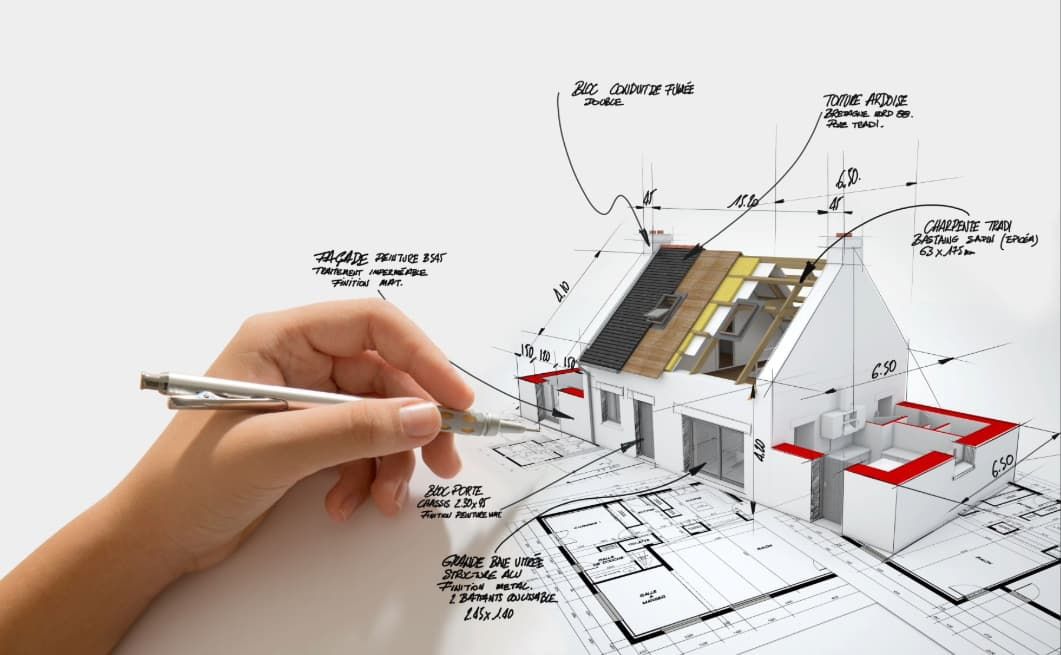
While constructibility is an accepted industry project management concept, its value can be undermined by poor construction documentation. Constructible data addresses this by moving beyond visualization to address doubt and put BIM into production. Constructible models contain the data and accuracy needed to build, create predictable plans and drive downstream efficiencies in the field and factory. They enable prefabrication, off-site fabrication, supply chain optimization, and jobsite automation.
Traditionally, building designs weren’t finished before construction. Many of the decisions about how to do things were left to the last minute. And even today, most buildings aren’t designed down to the last detail. However, the technology is available today that makes this possible and puts constructible models within reach so that project stakeholders can start modeling at a constructible level earlier in the process.
With the solutions available, it should be common practice to create, share and use high-precision, construction-ready models to leverage the full potential of BIM for planning, fabrication, construction and operation. But how?
It all begins with data. Starting early in the project lifecycle, use fabrication quality data along with construction quantities and historical data to optimize project delivery. It’s important to understand the role that data plays in producing a constructible model.
Level of Development
Data is the key to creating, sharing and using constructible models. Moving beyond BIM into true constructibility requires an understanding of the level of development (LOD) and what makes a model constructible.
LOD was published by the American Institute of Architects in 2009 and then further developed by the Associated General Contractors of America, which has been steadily expanding the definition. It refers to the reliability of the model and is the degree to which an element’s geometry and attached (non-graphic) information, such as manufacturer-specific properties, have been thought through.
The different LODs are defined as:
LOD 100 - Conceptual design. Elements are not represented geometrically but are represented with symbols or another generic representation. LOD 100 is typically relevant to the work of city planners and architects.
LOD 200 - Design development. Elements are represented with generic placeholders and the size/shape of elements and systems are shown. LOD 200 is typically relevant to the work of architects, highway designers, and structural designers.
LOD 300 - Documentation. The model includes information about the size, shape, location, orientation, and quantity of the elements, and measurements can be derived directly from the geometry. LOD 300 is typically relevant to the work of architects, engineers, quantity surveyors, cost estimators, and construction managers.
LOD 350 - Model coordination. For modeling and coordination, LOD 350 is often required. Parts that are needed for coordination with other building systems are included in the model. This means that interfaces with other building systems are graphically represented and supports and connections are included. LOD 350 is typically relevant to the work of facade estimation teams, structural estimation teams cost control, quantity surveyors, building control, building inspection, fenestration supplier, finishes contractor, crane suppliers, and operators.
LOD 400 - Ready for construction. LOD 400 is a truly constructible model. At this level, models include specific system information, and elements are modeled with the necessary level of detail and accuracy for the fabrication of the components. The model contains graphic and non-graphic information that will guide the fabrication, assembly and installation processes. Prefabrication sheets and cutting lists can be derived from the model and components can be ordered. At this LOD level, the model is ready for construction and fabrication. LOD 400 is typically relevant to the work of facade detailers, quantity surveyors, purchasing, cost control, project management, crane suppliers, site safety consultants, steel detailers, roofing contractors, quality control, erection teams, project scheduling, rebar placement, formwork contractors, concrete contractors, window manufacturers, MEP manufacturers and installers, and lighting suppliers.
LOD 500 – As-built. This is the highest possible LOD, as it is field verified to be “as-built” — a digital twin to the physical component. LOD 500 is typically relevant to the work of owners, facilities managers, suppliers, manufacturers, architects, MEP designers, MEP fabricators, building control, planning control and highway designers.
Why does LOD matter for constructability?
One of the greatest challenges facing every construction project is uncertainty. When a model lacks a crucial bit of data, or the measurements or placement information is even slightly ambiguous, it introduces doubt among project stakeholders. No one wants to risk making a costly mistake under these circumstances, so doubt drives requests for information back to the engineers or detailers, which cost time, energy, and money to address. In turn, this leads to bottlenecks in the project timeline, budget overruns, and loss of profit margin. On the other hand, if fabricators and contractors move ahead without questioning the model, costly rework and other waste can lead to the same results.
Constructible models can address these challenges. The higher the LOD of each component modeled, the more every project stakeholder can rely on it. The most value is in a component that is modeled to the highest level of development that’s both possible and practical. That value is realized by:
engineers and detailers who avoid RFIs and rework;
the fabricator who has no problem feeding the data into the robotic machines and producing the component;
the contractor who can quickly and confidently install it without last-minute problem solving;
the general contractor whose project moves ahead on schedule and on a budget because mistakes and delays are minimized; and
perhaps most importantly, the owner — who ends up with a quality structure without the inflated cost and timeline the above issues would have produced if they hadn’t been mitigated.
Every bit of data that is incorporated into a model is another step closer to optimal speed, efficiency, accuracy, and profitability. Data-rich models drive smarter, content-enabled workflows and are the heart of a truly constructible process in which all phases and trades are connected. Producing constructible models early in the process and building on them throughout the project lifecycle is not only possible today, but it’s also practical.
Visit our solution pages to learn more about how we can help with your next steps of the constructible process.

